

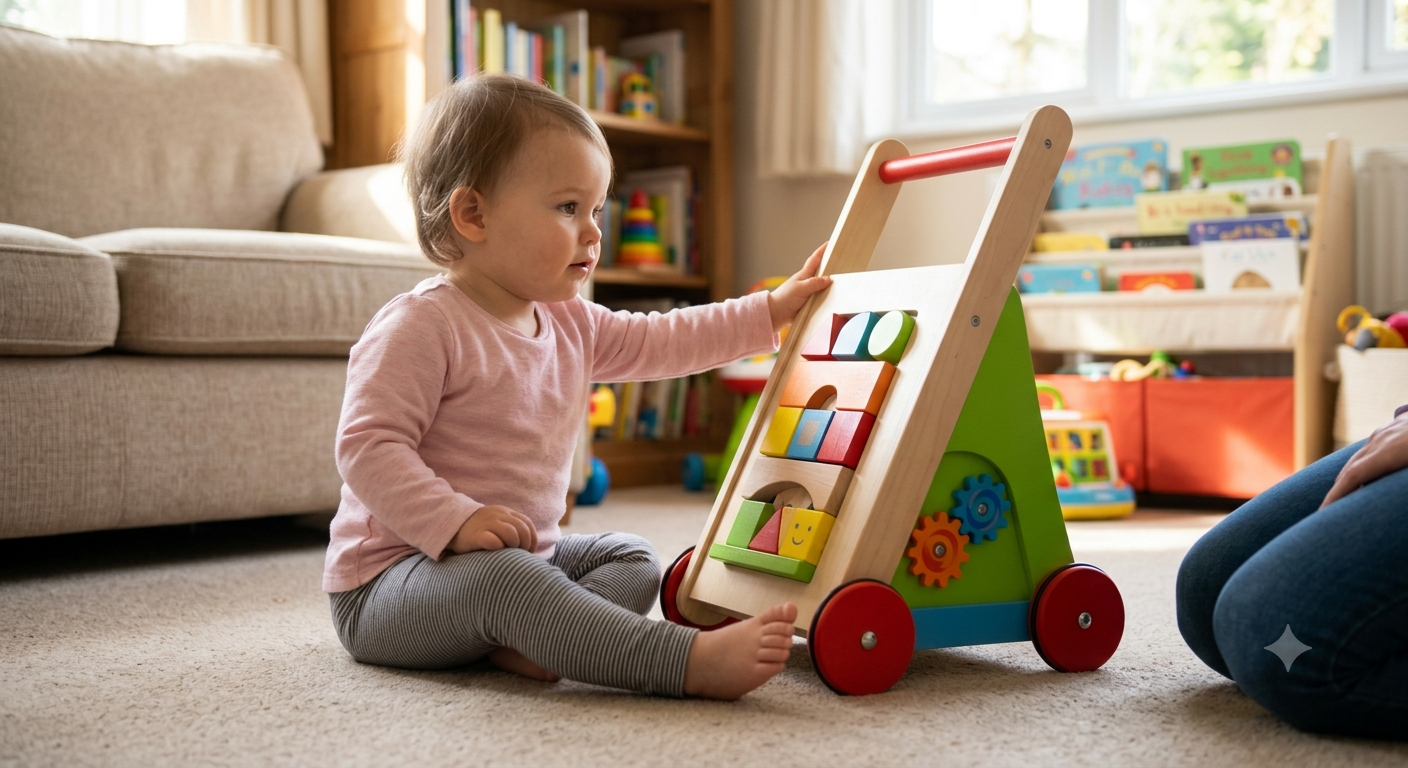
Quick Answer: If your 18-month-old is not walking independently, it is worth discussing with your pediatrician, although it does not automatically mean something is seriously wrong. Children develop at different rates, but walking is an important 18-month milestone. A developmental evaluation can check motor skills, communication, social interaction, strength, balance, and coordination. Seek prompt medical attention if your child loses previously acquired skills, cannot bear weight, seems unusually stiff or floppy, or has delays in multiple developmental areas.
Watching your child take those first steps is a special moment. Some children walk early, while others take their time. So when a child reaches 18 months and is still not walking independently, it is understandable for parents to feel worried.
At my practice, I often hear questions such as, “Is my child just a late walker?” or “Should I have my child evaluated?”
The short answer is that not walking independently by 18 months is worth discussing with your pediatrician. However, it does not automatically mean that something is seriously wrong. Children develop at different rates, but walking is an important developmental milestone, and a medical evaluation can help determine whether your child simply needs more time or whether additional support would be helpful.
As a board-certified pediatrician with more than two decades of experience caring for infants, children, and adolescents, my approach is always to look at the whole child rather than one milestone by itself.
What Is Expected at 18 Months?
Developmental milestones are skills that most children, meaning at least 75%, can do by a certain age. According to the CDC’s current 18-month milestone checklist, most children by this age can walk without holding onto another person or an object.
Walking is only one part of development, though.
At 18 months, I also look at a child’s:
- Language and communication
- Social interaction
- Fine motor skills
- Problem-solving
- Ability to follow simple directions
- Ability to play
- Balance and coordination
Overall growth and health
For example, the CDC lists trying to say three or more words besides “mama” or “dada,” following a one-step direction, scribbling, feeding themselves with their fingers, and climbing on and off a chair or couch without help among 18-month milestones.
This broader picture is important.
A toddler who is not walking but is otherwise developing well may have a different situation from a child who has delays in several areas.
Should I Be Worried if My 18-Month-Old Is Not Walking?
You should not worry if your 18-month-old is not walking, but you also should not simply ignore it.
The CDC specifically advises parents to talk with their child’s doctor if the child is not meeting one or more milestones, has lost skills they previously had, or if the parent has other developmental concerns.
Not walking at 18 months can have many possible explanations.
Some children are simply later to develop certain motor skills. Others may have difficulty with muscle strength, balance, coordination, joint movement, or another aspect of physical development. Sometimes a child has a broader developmental delay that becomes more noticeable around this age.
The purpose of an evaluation is not to label your child. It is to understand what is happening.
Why Does My Child Still Not Walk?
There is no single reason why an 18-month-old may not be walking.
Possible factors can include:
1. Normal Variation in Development
Children do not all reach milestones on the exact same day.
Some toddlers walk early, while others take longer. A child’s temperament and opportunities to practice movement can also influence how quickly certain skills emerge.
However, because walking independently is an expected 18-month milestone, a child who is not walking at this age deserves a conversation with their pediatrician.
2. Delayed Motor Development
Some children have a delay in gross motor skills. Gross motor skills involve larger movements such as sitting, standing, walking, running, and climbing.
A pediatrician may look at the child’s history and current abilities to determine whether the delay appears isolated or whether other developmental areas are also affected.
The American Academy of Pediatrics (AAP) recommends developmental surveillance during every health supervision visit and standardized developmental screening at 9, 18, and 30 months.
3. Muscle Strength or Coordination Problems
Walking requires strength and coordination in the legs, hips, trunk, and feet.
A child may be able to stand while holding onto furniture but have difficulty balancing without support.
During an examination, I may observe how the child sits, stands, reaches, bears weight, moves from one position to another, and uses both sides of the body.
These observations can provide useful clues.
4. Premature Birth
If your child was born prematurely, developmental progress may need to be considered using corrected age during the early years.
The CDC advises using corrected age for children born more than three weeks prematurely when checking its milestone checklist.
This is one reason I always ask about pregnancy, birth history, and whether a child was born early.
What Other Signs Should Parents Watch For?
Not walking is more concerning when it occurs along with other developmental differences.
Talk with your pediatrician if your 18-month-old also:
- Has lost a skill they previously had
- Does not appear to use both sides of the body normally
- Has difficulty sitting or standing
- Does not bear weight on their legs
- Seems unusually stiff or unusually floppy
- Does not point to show you something interesting
- Has very limited communication
- Does not follow simple directions
- Does not engage in age-appropriate play
- Does not seem to respond to familiar people or sounds
- Has difficulty using their hands for simple activities
Loss of previously acquired skills is particularly important. The CDC advises parents to tell their child’s doctor if a child loses skills they once had.
Parents should not wait for a routine appointment if a child experiences a sudden loss of movement or other sudden neurological symptoms.
Does Not Walking Mean My Child Has Autism?
No.
Not walking at 18 months does not by itself mean that a child has autism.
Autism involves differences in social communication and interaction and restricted or repetitive behaviors. Developmental screening looks at several areas rather than making a diagnosis from one milestone.
The AAP recommends autism-specific screening for all children at 18 and 24 months along with ongoing developmental surveillance.
This is another reason I look at the entire developmental picture.
How Can Parents Encourage Walking at Home?
If your child is otherwise healthy and your pediatrician has not identified a medical reason to restrict movement, you can give your toddler safe opportunities to practice.
1. Encourage Floor Play
Give your child time to move around safely on the floor rather than spending most of the day in restrictive equipment.
2. Place Toys Within Reach
Put a favorite toy slightly out of reach so your child has a reason to move toward it.
3. Encourage Supported Standing
Let your child stand while holding sturdy furniture, provided the environment is safe.
4. Offer encouragement
Celebrate attempts rather than pressuring your child to walk.
5. Keep the environment safe
Remove sharp objects and unstable furniture, use safety gates where needed, and supervise your child as they practice new movements.
Should I Use a Baby Walker?
Traditional baby walkers are not a good way to teach children to walk and can create safety risks.
The American Academy of Pediatrics has advised against the use of baby walkers because they can allow infants to move quickly into dangerous situations, including falls down stairs.
If you are considering a device to help your child stand or move, talk with your pediatrician or physical therapist about safer options.
When Should Parents Contact a Pediatrician?
If your child is 18 months old and not walking independently, I recommend discussing it with your pediatrician.
You should contact a pediatrician for a child developmental screening in Sugar Land if your child:
- Stops using a skill they previously had
- Cannot stand or bear weight
- Seems unusually stiff or floppy
- Uses one side of the body much more than the other
- Has significant difficulty moving
- Has delays in several developmental areas
- Has concerning changes in communication or social interaction
- Has another symptom that worries you
Child Developmental Screening at Gentle Pediatrics
At Gentle Pediatrics, I believe developmental concerns deserve time and attention.
An 18-month visit is not simply about measuring height and weight. It is an opportunity to discuss how your child moves, communicates, plays, interacts, and learns.
If you are concerned that your toddler is not walking, I can review their developmental history, perform an examination, and determine whether screening, monitoring, early intervention, or specialist evaluation may be appropriate.
Early identification does not mean something is necessarily wrong. It means we are paying attention and giving your child the best opportunity to receive support when needed.
About Dr. Shahid Hasnain
I have been Board Certified by the American Board of Pediatrics since 1998. My training includes a pediatric internship at Lincoln Hospital in New York and residency at the University of Tennessee Medical Center in Knoxville, where I served as Chief Resident during my final year.
I also earned a Master’s in Public Health specializing in Maternal & Child Health after receiving a full scholarship.
My approach combines medical knowledge with patience and clear communication. When parents are worried about a developmental milestone, I want them to leave the visit with a better understanding of their child’s development and a clear plan for the next step.
Final Thoughts
An 18-month-old who is not walking independently deserves attention, but it does not automatically mean that something is seriously wrong.
Every child develops at their own pace. Still, because independent walking is an 18-month movement milestone, parents should bring the concern to their pediatrician rather than simply waiting and hoping it resolves.
A careful developmental assessment can help determine whether your child is simply developing at a different pace or whether additional evaluation and support may be helpful.
Most importantly, trust your observations. You know your child better than anyone.
If something concerns you, bring it up. Early conversations can make a meaningful difference.
Schedule a Pediatric Visit
If your 18-month-old is not walking yet or you have other concerns about your child’s development, our team at Gentle Pediatrics is here to help.
Gentle Pediatrics proudly serves families throughout:
- Sugar Land
- Richmond
- Rosenberg
- Stafford
- Katy
- Houston
Gentle Pediatrics — Sugar Land, Texas
Contact our office today or fill out the online patient registration form to book an appointment and discuss your child’s walking, development, communication, and overall health.
Frequently Asked Questions
1. Is it normal for an 18-month-old not to walk?
Walking independently is a milestone that most children reach by 18 months. If your child is not walking at this age, it is appropriate to discuss the concern with their pediatrician. It does not automatically mean that your child has a serious developmental problem.
2. Should I wait until my child turns 2 to see if they start walking?
It is better to discuss the concern with your pediatrician at 18 months rather than waiting until age 2 without an evaluation. The AAP recommends standardized developmental screening at 18 months, and the CDC advises parents to act early when a child is not meeting milestones.
3. What if my child can stand but cannot walk?
Being able to stand while holding onto furniture is encouraging, but your pediatrician should still know that your child is not walking independently at 18 months. An examination can help determine whether balance, strength, coordination, or another factor may be affecting walking.
4. Can developmental screening diagnose a developmental disorder?
No. Developmental screening is designed to identify children who may need a closer evaluation. A positive screening result does not by itself establish a diagnosis. Further assessment may be recommended when concerns are identified.
5. What should I do if my child loses a skill they already had?
Contact your child’s pediatrician promptly. Loss of a previously acquired developmental skill is an important concern that should be evaluated rather than simply monitored at home. The CDC specifically advises parents to act early when a child loses skills they once had.
This article is intended for general educational purposes and does not replace an examination, diagnosis, or personalized medical advice. Children develop at different rates, and developmental concerns should be assessed individually. If your child is not meeting milestones, has lost previously acquired skills, or you are concerned about their movement, communication, or development, speak with their pediatrician.