

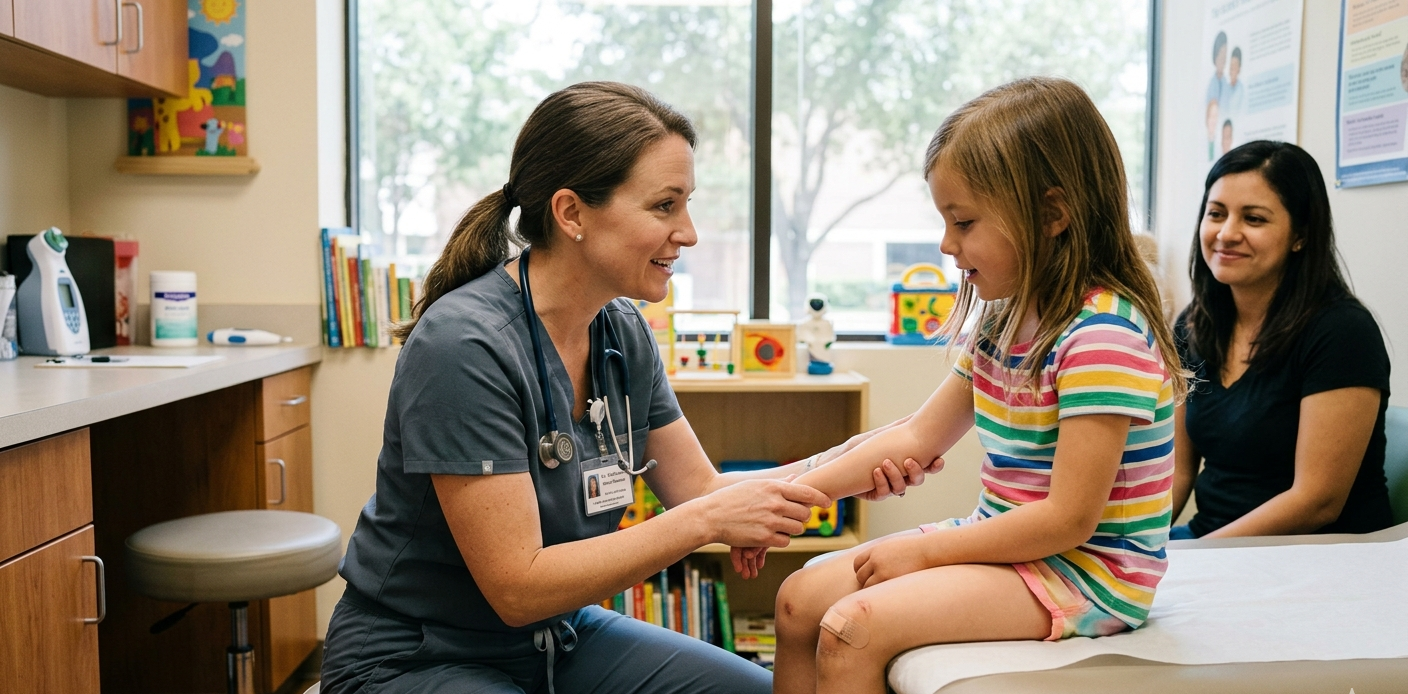
Children are naturally active, curious, and energetic. They spend their childhoods running on the playground, riding bikes, or playing sports. This is why small bumps and injuries are often part of growing up.
For parents, however, even a minor injury can be very stressful. It can be difficult to know whether a scrape, bruise, or cut can safely be treated at home or if medical care is urgently needed.
The good news is that many minor pediatric injuries can be managed safely with proper first aid and observation. Understanding how to respond calmly and appropriately can help your child recover comfortably while reducing the risk of complications.
At Gentle Pediatrics, families often rely on our trusted children’s doctor in Sugar Land for guidance and treatment when injuries happen unexpectedly.
This guide explains how to safely manage common minor injuries in children and when professional care may be necessary.
Why Minor Injuries Are Common in Children
Children are still developing:
- Coordination
- Balance
- Judgment
- Motor skills
Because of this, falls and minor accidents happen frequently during:
- Sports
- Outdoor play
- School activities
- Everyday movement
Most injuries are not serious, but proper care is still important to support healing and prevent infection.
Common Types of Minor Pediatric Injuries
Children may experience a wide variety of mild injuries throughout childhood.
1. Cuts and Scrapes
Small cuts and abrasions are among the most common childhood injuries.
They often happen from:
• Falls
• Playground accidents
• Bike rides
• Rough surfaces
Most superficial cuts can heal well with basic wound care.
2. Bruises
Bruises occur when small blood vessels under the skin break after an impact.
Common areas include:
• Knees
• Elbows
• Shins
Bruising is usually mild and improves over time.
3. Minor Burns
Minor burns may occur from:
• Hot food or drinks
• Sun exposure
• Warm surfaces
Prompt cooling and proper care help reduce discomfort and skin damage.
4. Sprains and Mild Strains
Twisting or overusing muscles and joints can lead to:
• Mild swelling
• Tenderness
• Pain with movement
Ankle sprains are especially common in active children.
5. Nosebleeds
Children may develop nosebleeds due to:
• Dry air
• Nose picking
• Minor injuries
Most nosebleeds stop with simple pressure and positioning.
First Steps After an Injury: The 3-Step Assessment
When an accident happens, your emotional response sets the tone. Children mirror their parents’ anxiety, so taking a deep breath is your true first step.
- Assess: Check for deformities, severe swelling, uncontrolled bleeding, or altered mental states.
- Comfort: Use a calm, low voice to lower their heart rate and adrenaline.
- Clean: Always wash your own hands before touching an open wound.
Managing Common Minor Injuries at Home
Here’s how you can manage common injuries:
Caring for Cuts and Scrapes
- Cleaning the Wound: Wash the area gently with mild soap and running water. Correction: Never use hydrogen peroxide or rubbing alcohol on a cut or scrape. While the bubbling looks like it’s working, hydrogen peroxide is cytotoxic—it kills healthy new skin cells, causes unnecessary pain, and actually delays wound healing.
- Ointment and Protection: Apply a thin layer of plain petroleum jelly (Vaseline) or Bacitracin rather than Neosporin, which frequently triggers allergic skin rashes in children. Cover with a sterile bandage.
- Tetanus Check: Always verify if your child is up to date on their tetanus vaccine (DTaP or Tdap). If a cut is deep or contaminated by dirt or metal, they may need a booster if their last shot was more than 5 years ago.
Treating Bruises
For mild bruising:
- Apply a cold pack for 15–20 minutes
- Elevate the area if possible
- Encourage rest if sore
Bruises usually fade gradually over several days.
Managing Minor Burns
For small burns:
- Cool the area under cool (not ice-cold) running water
- Avoid applying butter or home remedies
- Cover loosely with a clean dressing if needed
Seek care for burns involving large areas or blistering.
Caring for Sprains and Strains
The P.R.I.C.E. method is commonly recommended:
- Protection: Protect the joint from further injury using a splint, brace, or wrap
- Rest the injured area
- Ice to reduce swelling
- Compression with an elastic wrap if advised
- Elevation above heart level when possible
This approach helps reduce pain and swelling.
Managing Nosebleeds
- Positioning: Sit the child upright and lean their head slightly forward.
- The Right Pressure: Pinch the soft part of the nose just below the bony bridge. Hold firm, continuous pressure for a full 10 minutes without letting go to check if it stopped. Letting go early disrupts the blood clot forming.
Signs an Injury May Need Medical Attention
While many injuries are mild, some symptoms should not be ignored.
Contact a children’s doctor in Sugar Land if your child experiences:
- Deep cuts or uncontrolled bleeding
- Severe swelling
- Difficulty walking or moving
- Persistent pain
- Signs of infection
- Head injuries with vomiting or confusion
Early medical care can help prevent complications.
Understanding Minor Injury Procedures
Sometimes injuries require simple in-office treatment.
A minor injury procedure may include:
- Wound cleaning
- Bandaging
- Skin adhesive or stitches for cuts
- Splinting mild injuries
- Burn care
These procedures help support proper healing and reduce infection risks.
Preventing Infection After Injuries
Good wound care is important for preventing infection.
Watch for:
- Redness spreading around the wound
- Swelling
- Warmth
- Pus or drainage
- Fever
If these signs develop, your child should be evaluated by a medical provider.
How to Help Children Heal Comfortably
Children recover best when they feel supported and cared for.
Helpful steps include:
- Encouraging rest
- Offering fluids and healthy meals
- Following wound care instructions
- Limiting rough activity until healing improves
Patience is important, especially with active children eager to return to play.
Injury Prevention Tips for Parents
While accidents cannot always be avoided, many injuries are preventable.
1. Encourage Safe Play
Teach children:
- Playground safety
- Safe bike riding habits
- Sports safety rules
2. Use Protective Equipment
Children should wear:
- Helmets
- Knee and elbow pads
- Proper footwear
3. Childproof the Home
Reduce injury risks by:
- Securing furniture
- Using safety gates
- Keeping hot items out of reach
4. Supervise Young Children
Close supervision helps prevent many common accidents.
Common Parent Concerns About Minor Injuries
Here are some common concerns parents have:
1. Should I Wake My Child After a Minor Head Injury?
According to the American Academy of Pediatrics, if your child is acting normally, has not lost consciousness, and hasn’t vomited, it is safe to let them sleep. Simply monitor their breathing and skin color while they sleep, and watch for concussion signs over the next 24 to 48 hours.
2. When Does a Cut Need Stitches or Skin Adhesive?
A cut likely needs professional medical closure if it is deep, has jagged edges that stay open, or is located on a cosmetic area like the face or lips, where minimizing scars is a priority.
3. Is Swelling Normal After an Injury?
Mild swelling is common, but severe or worsening swelling should be evaluated.
4. How Long Should Pain Last?
Minor discomfort usually improves within a few days. Persistent pain may need medical attention.
Pediatric Injury Care at Gentle Pediatrics in Sugar Land
At Gentle Pediatrics, we provide compassionate care for a wide range of childhood injuries.
We focus on:
- Evaluation of cuts, scrapes, and bruises
- Sprain and strain assessments
- Wound care and minor injury procedure services
- Guidance for home recovery
- Follow-up care when needed
As a trusted children’s doctor in Sugar Land, we aim to help children recover safely and comfortably.
Why Families Choose Gentle Pediatrics
Families across Sugar Land and surrounding communities trust Gentle Pediatrics for reliable pediatric care.
We offer:
- Personalized care for every child
- Calm and supportive visits
- Thorough injury evaluations
- Preventive guidance for families
- Long-term support for healthy development
Our goal is to help children stay healthy, active, and safe.
Final Thoughts
Minor injuries are a common part of childhood, but knowing how to respond can make a big difference in your child’s recovery and comfort.
Simple first aid, careful observation, and timely medical care when needed help ensure safe healing.
If your child has a scrape, sprain, bruise, or requires a simple minor injury procedure, having support from a trusted children’s doctor in Sugar Land can provide reassurance during stressful moments.
At Gentle Pediatrics, we are here to support your family with compassionate pediatric care whenever injuries happen.
Schedule a Visit in Sugar Land
If your child experiences an injury or needs evaluation for cuts, sprains, burns, or other minor concerns, early care can support safe healing.
Gentle Pediatrics proudly serves families in:
- Sugar Land
- Richmond
- Rosenberg
- Stafford
- Katy
- Houston
Gentle Pediatrics — Sugar Land, Texas
Call our office today to schedule an appointment and receive trusted pediatric care for your child.
Frequently Asked Questions
1. What should I do first after my child gets injured?
Stay calm, assess the injury, and clean the area if needed.
2. When should I seek medical care for a cut?
Deep cuts, uncontrolled bleeding, or cuts needing stitches should be evaluated.
3. How can I reduce swelling after an injury?
Use ice, rest, compression, and elevation when appropriate.
4. Are bruises normal after falls?
Yes, mild bruising is common in active children.
5. What signs suggest an injury may be infected?
Signs of a developing bacterial infection include redness spreading outward from the wound, increased warmth, throbbing pain, yellow pus, or a fever.