

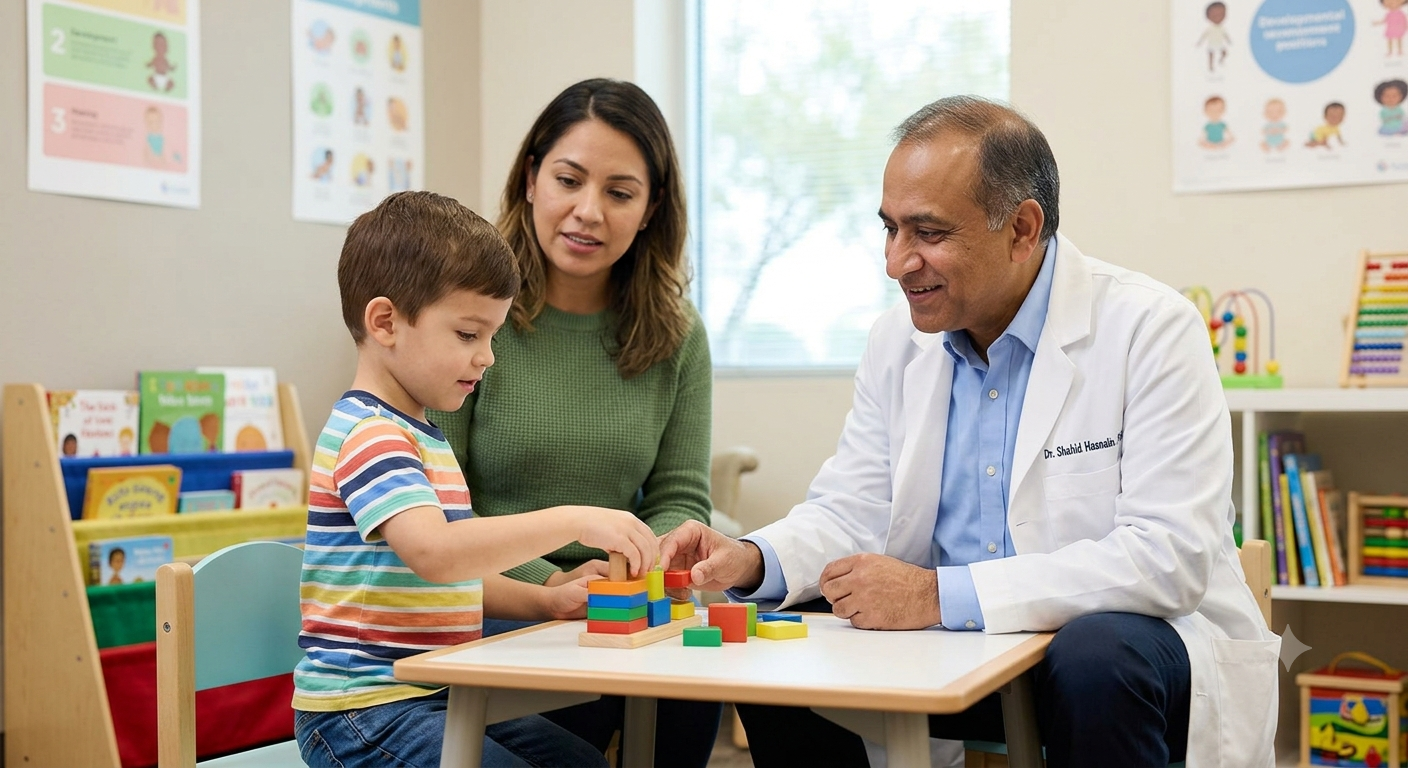
As a pediatrician, one of the most meaningful parts of my work is helping children reach their full potential. Every child develops at their own pace, but sometimes parents notice delays in speech, learning, behavior, social interaction, or motor skills that raise concerns.
I understand how stressful these concerns can feel. Many parents arrive at my office unsure of what is normal, what may need further evaluation, and what steps they should take next.
For more than two decades, I have had the privilege of caring for children and supporting families through every stage of development. My goal has always been to provide compassionate, evidence-based care that helps children thrive while giving parents the guidance and reassurance they need.
As a board-certified pediatrician in Sugar Land with extensive experience in developmental tracking and behavioral care, I work closely with families to identify developmental challenges early, create individualized care plans, and connect children with the resources they need to succeed.
In this guide, I would like to explain how I approach developmental care and how early intervention can make a meaningful difference in a child’s life.
Understanding Developmental Disorders
Developmental disorders affect how a child learns, communicates, behaves, moves, or interacts with others.
These conditions can range from mild to more significant and may impact one or several areas of development.
Some commonly diagnosed developmental disorders include:
- Autism Spectrum Disorder (ASD)
- Attention-Deficit/Hyperactivity Disorder (ADHD)
- Speech and language delays
- Learning disabilities
- Intellectual disabilities
- Developmental coordination disorders
- Social communication disorders
Each child is unique, which means no two developmental journeys are exactly alike.
Why Early Recognition Matters
One of the most important lessons I have learned throughout my career is that early identification can significantly improve outcomes.
Early intervention helps children develop critical skills during important periods of brain development.
Parents are often the first to notice concerns such as:
- Delayed speech
- Limited eye contact
- Difficulty interacting with peers
- Repetitive behaviors
- Trouble following instructions
- Challenges with attention or learning
When concerns arise, I encourage families not to wait and see for extended periods. Early evaluation allows us to better understand what may be happening and determine whether additional support is needed.
My Approach to Developmental Evaluations
When a family visits my office with developmental concerns, I begin by listening carefully.
Parents know their children better than anyone else.
I want to understand:
- What concerns prompted the visit
- When symptoms first appeared
- How the child functions at home and school
- Family medical history
- Previous evaluations or therapies
Every child deserves an individualized assessment.
Rather than focusing solely on symptoms, I strive to understand the whole child and the family’s unique circumstances.
Comprehensive Developmental Assessments
A developmental evaluation often includes several components.
These may include:
1. Medical History Review
I carefully review:
- Pregnancy history
- Birth history
- Developmental milestones
- Previous illnesses
- Family history
This information often provides important clues about a child’s development.
2. Physical Examination
A thorough physical examination helps identify medical conditions that may contribute to developmental concerns.
3. Behavioral and Developmental Screening
Screening tools help evaluate areas such as:
- Language development
- Motor skills
- Social interaction
- Cognitive development
- Emotional regulation
These assessments help determine whether additional testing or intervention may be beneficial.
4. Collaboration With Parents
Parents play a central role throughout the evaluation process.
I encourage families to ask questions and share observations because their insights are invaluable.
Supporting Children with Autism Spectrum Disorder
One area of developmental care I frequently help families navigate is Autism Spectrum Disorder (ASD).
Children with autism may experience challenges with:
- Communication
- Social interactions
- Sensory processing
- Repetitive behaviors
Because autism presents differently in every child, individualized care is essential.
My role includes:
- Early identification
- Diagnostic evaluation
- Family education
- Ongoing developmental monitoring
- Coordination of therapy services
Many children with autism make remarkable progress when provided with appropriate support and early intervention.
Helping Children with ADHD
Attention-Deficit/Hyperactivity Disorder (ADHD) is another common developmental condition I evaluate and manage.
Children with ADHD may struggle with:
- Focus and attention
- Impulsivity
- Organization
- Hyperactivity
These challenges can affect school performance, friendships, and family life.
My approach involves:
- Comprehensive assessment
- Behavioral recommendations
- School collaboration
- Parent education
- Ongoing monitoring
Treatment plans are tailored to each child’s specific needs and strengths.
Addressing Speech and Language Delays
Speech and language development play a crucial role in learning and social interaction.
Some children may experience:
- Delayed first words
- Difficulty forming sentences
- Challenges in understanding language
- Trouble communicating effectively
As a child developmental pediatrician in Sugar Land, I work closely with speech therapists and families to ensure children receive appropriate support as early as possible.
Supporting Families Beyond the Diagnosis
Receiving a developmental diagnosis can be emotional for parents.
Many families experience:
- Anxiety
- Confusion
- Grief
- Uncertainty
One of my most important responsibilities is helping families understand that a diagnosis does not define a child’s future.
I focus on helping parents:
- Understand the condition
- Learn available treatment options
- Access community resources
- Build confidence in supporting their child
Families should never feel alone during this process.
Monitoring Development Over Time
Developmental care is not a one-time evaluation.
Children grow and change rapidly, and their needs may evolve over time.
Regular follow-up visits allow me to:
- Track progress
- Adjust treatment plans
- Address new concerns
- Support transitions into school and adolescence
Ongoing monitoring helps ensure children continue moving forward.
Helping Parents Advocate for Their Children
Parents are their child’s strongest advocates.
I encourage families to:
- Communicate with teachers
- Request evaluations when needed
- Participate in therapy programs
- Keep records of progress
- Ask questions during appointments
The more informed and involved parents become, the better equipped they are to support their child’s development.
Evidence-Based Care You Can Trust
As a board-certified pediatrician since 1998, my approach is guided by established medical research and recommendations from respected organizations, including:
- The American Academy of Pediatrics (AAP)
- The Centers for Disease Control and Prevention (CDC)
- Developmental and behavioral pediatric guidelines
I believe families deserve accurate, evidence-based information presented in a clear and understandable way.
My goal is always to help parents make informed decisions with confidence.
Why Families Choose Dr. Shahid Hasnain
Over the years, I have been honored to care for generations of families throughout the Sugar Land community.
Parents often tell me they appreciate:
- A patient and compassionate approach
- Thorough developmental evaluations
- Clear explanations without medical jargon
- Personalized treatment plans
- Strong relationships with families
- Long-term support and guidance
As both a physician and a parent, I understand the trust families place in their child’s healthcare provider.
I take that responsibility seriously every day.
Developmental Care Services at Gentle Pediatrics
At Gentle Pediatrics in Sugar Land,we provide comprehensive developmental care for children of all ages.
Our approach includes:
- Developmental screenings
- Autism evaluations
- ADHD assessments
- Speech and language delay evaluations
- Behavioral health support
- Growth and developmental monitoring
- School readiness assessments
As a trusted child developmental pediatrician in Sugar Land and pediatrician in Sugar Land, I am committed to helping every child reach their fullest potential.
Final Thoughts
Every child develops differently, and developmental challenges do not define a child’s abilities, potential, or future success.
Early recognition, timely intervention, and compassionate support can make a tremendous difference in helping children build confidence and achieve important milestones.
If you have concerns about your child’s development, trust your instincts and seek professional guidance.
As a board-certified pediatrician in Sugar Land with more than two decades of experience caring for children, I am committed to partnering with families every step of the way.
Together, we can create a plan that supports your child’s growth, learning, and long-term success.
Schedule a Developmental Evaluation in Sugar Land
If you have concerns about your child’s development, early evaluation can provide answers, guidance, and peace of mind.
At Gentle Pediatrics,we proudly serve families from:
- Sugar Land
- Richmond
- Rosenberg
- Stafford
- Katy
- Houston
Gentle Pediatrics — Sugar Land, Texas
Contact our office today at (832) 222-5437 to schedule an appointment with Dr. Shahid Hasnain, a trusted child developmental pediatrician in Sugar Land and experienced pediatrician in Sugar Land dedicated to helping children thrive.
Frequently Asked Questions
1. When should I be concerned about developmental delays?
If your child is missing developmental milestones, experiencing speech delays, or having social or behavioral challenges, it is a good idea to schedule an evaluation.
2. Does a developmental delay always mean a serious condition?
No. Some delays are temporary, while others may require additional support. An evaluation helps determine the cause.
3. Can developmental disorders improve with treatment?
Many children make significant progress with early intervention, therapy, and ongoing support.
4. What happens during a developmental evaluation?
The evaluation may include medical history review, developmental screening, physical examination, and discussions with parents.
5. How can parents support a child with developmental challenges?
Parents can support their child by participating in therapies, maintaining regular follow-up appointments, and creating a positive, encouraging environment at home.