
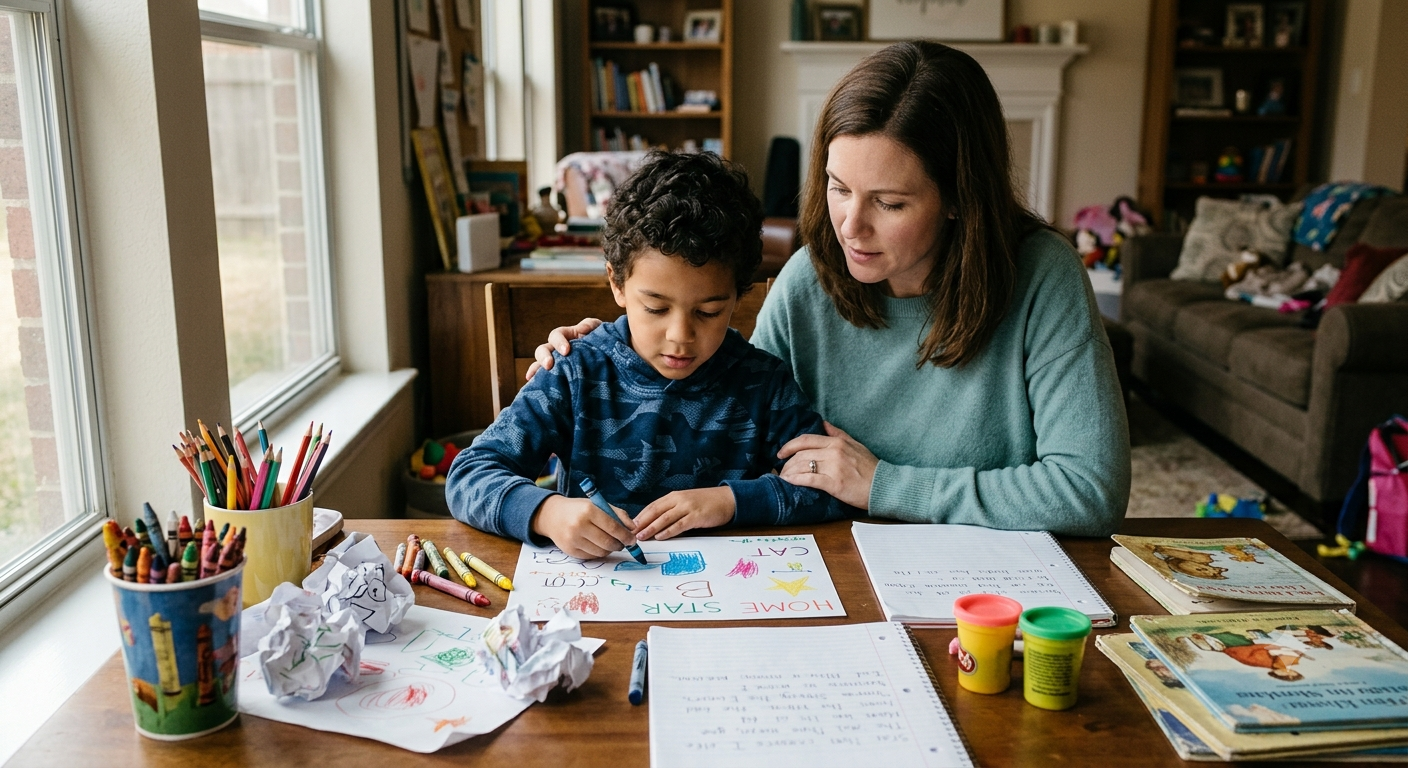
Quick Answer: Writing disorders, like dysgraphia, impact a child’s ability to express ideas and are not signs of laziness. Early intervention is crucial for success. Parents can support their children at home by creating a quiet, comfortable writing space, breaking assignments into small, manageable steps, and encouraging daily practice that focuses on ideas over perfection. If difficulties persist or hinder school performance, consulting a pediatrician is vital to coordinate evaluations and access necessary academic accommodations to boost your child’s confidence.
As a pediatrician, I often meet parents who are concerned because their child struggles with writing. They may notice messy handwriting, incomplete school assignments, frequent spelling mistakes, or frustration whenever writing is required.
Writing is a complex skill. It requires children to combine language, memory, attention, fine motor coordination, organization, and planning all at the same time. When one or more of these areas are affected, writing can become much more difficult.
A writing disorder is not a sign of laziness or lack of intelligence. With early recognition, proper evaluation, and consistent support at home and school, many children learn strategies that help them become confident writers.
As a board-certified pediatrician with more than two decades of experience caring for children and adolescents, I have helped many families understand developmental and learning challenges. My goal is always to identify concerns early, guide families toward appropriate evaluations, and help children reach their full potential.
In this guide, I will explain what writing disorders are, common warning signs, and practical ways parents can support their children at home.
What Is a Writing Disorder?
A writing disorder, sometimes called dysgraphia, is a learning disorder that affects a child’s ability to express ideas through writing.
Children with a writing disorder may have difficulty with:
- Forming letters correctly
- Organizing thoughts on paper
- Spelling words accurately
- Writing complete sentences
- Maintaining neat handwriting
- Using proper grammar and punctuation
Some children struggle mainly with handwriting, while others have difficulty organizing ideas or completing written assignments.
Every child is different, which is why a thorough evaluation is important.
Why Early Recognition Matters
Writing skills affect nearly every school subject.
Children use writing to:
- Complete homework
- Answer test questions
- Write stories
- Take notes
- Explain ideas
When writing becomes difficult, children may begin avoiding schoolwork or lose confidence in their academic abilities.
Early recognition allows families to access support before frustration grows and school performance declines.
Signs Your Child May Have a Writing Disorder
Every child develops writing skills at a different pace. However, certain patterns may suggest that additional evaluation is needed.
Parents may notice:
- Extremely messy handwriting
- Slow writing speed
- Frequent letter reversals beyond early elementary years
- Difficulty spacing words
- Poor spelling despite practice
- Trouble copying from the board
- Incomplete written assignments
- Complaints that writing makes their hand hurt
- Difficulty organizing ideas into paragraphs
Some children can explain ideas clearly when speaking but struggle to write those same ideas on paper.
If these challenges continue over time, discussing them with your pediatrician is recommended.
What Causes Writing Disorders?
Writing disorders are not caused by poor parenting or lack of effort.
Instead, they often involve differences in how the brain processes language, planning, and motor coordination.
Several factors may contribute, including:
- Learning disorders
- Fine motor coordination difficulties
- Language processing differences
- Attention challenges
- Developmental disorders
Sometimes writing difficulties occur alongside conditions such as ADHD or dyslexia. A complete developmental evaluation helps identify the underlying causes.
How a Pediatrician Can Help
Parents are often unsure where to begin when concerns arise.
As your child’s pediatrician, one of my responsibilities is to evaluate overall development and determine whether further assessment may be beneficial.
During an evaluation, I consider:
- Developmental milestones
- School performance
- Learning concerns
- Fine motor development
- Medical history
- Family history
- Behavioral observations
If appropriate, I may recommend additional testing by educational specialists, psychologists, occupational therapists, or speech-language pathologists.
Families looking for a child developmental pediatrician in Sugar Land often begin with their primary pediatrician, who can help coordinate the evaluation process and guide referrals when needed.
Ways Parents Can Help at Home
Children benefit most when parents provide encouragement, patience, and consistent practice.
Here are several effective strategies I frequently recommend.
1. Create a Comfortable Writing Space
Choose a quiet area with:
- Good lighting
- A comfortable chair
- Minimal distractions
- Writing supplies within easy reach
A calm environment helps children focus on writing tasks.
2. Break Writing Into Small Steps
Large assignments can feel overwhelming.
Instead of asking your child to write an entire paragraph, divide the task into manageable parts.
For example:
- Brainstorm ideas
- Create a simple outline
- Write one sentence at a time
- Review together
- Make corrections gradually
Small successes help build confidence.
3. Encourage Daily Writing Practice
Practice does not have to feel like homework.
Fun writing activities include:
- Keeping a journal
- Writing grocery lists
- Creating comic strips
- Writing thank-you notes
- Making short stories
- Keeping a travel diary
Short practice sessions are usually more effective than long, frustrating ones.
4. Focus on Ideas Before Perfection
Many children become discouraged if every spelling mistake or grammar error is corrected immediately.
I encourage parents to praise their child’s ideas first.
Afterward, work together on improving spelling, punctuation, or sentence structure.
This approach builds confidence while continuing to improve writing skills.
5. Strengthen Fine Motor Skills
Writing depends on strong hand muscles and coordination.
Helpful activities include:
- Drawing
- Coloring
- Cutting with child-safe scissors
- Building with blocks
- Playing with modeling clay
- Stringing beads
These activities improve hand strength while making learning enjoyable.
6. Read Together Every Day
Reading and writing support one another.
Children who regularly hear stories often develop stronger vocabulary, grammar, and sentence structure.
Reading together also exposes children to different writing styles.
Ask questions about the story and encourage your child to describe what happened using their own words.
7. Use Technology When Appropriate
Technology can reduce frustration for some children.
Helpful tools may include:
- Speech-to-text software
- Word prediction programs
- Spell-check tools
- Typing practice programs
Technology should support learning, not replace writing practice.
8. Celebrate Progress
Children with writing disorders often work much harder than others to complete assignments.
Celebrate small improvements, such as:
- Better handwriting
- Longer sentences
- Improved spelling
- Greater confidence
Positive encouragement motivates children to keep trying.
Supporting Your Child Emotionally
Writing difficulties can affect more than school performance.
Children may experience:
- Embarrassment
- Anxiety
- Low self-esteem
- Frustration
- Fear of making mistakes
As parents, your words matter.
Remind your child:
- Everyone learns differently.
- Mistakes are part of learning.
- Progress takes time.
- You are proud of their effort.
Emotional support is just as important as academic support.
Working With Your Child’s School
Parents and teachers make the best team.
Share your concerns with your child’s teacher and ask how your child performs in the classroom.
Depending on the child’s needs, schools may provide formal, legally binding accommodations established through an Individualized Education Program (IEP) under the Individuals with Disabilities Education Act (IDEA) or a Section 504 Plan. These structured frameworks ensure your child receives:
- Extra writing time
- Reduced copying assignments
- Occupational therapy
- Classroom accommodations
- Individualized educational support
Regular communication helps ensure everyone is working toward the same goals.
When Should Parents Seek Professional Help?
Parents should schedule an evaluation if writing difficulties:
- Continue for several months
- Interfere with school performance
- Cause significant frustration
- Affect self-confidence
- Occur alongside reading or attention difficulties
- Do not improve despite consistent practice
Seeking help early allows children to receive support before academic challenges become more severe.
Families searching for a child developmental pediatrician in Sugar Land often benefit from an initial developmental assessment to better understand their child’s learning needs.
Why Families Choose Gentle Pediatrics
At Gentle Pediatrics, we understand that every child develops at their own pace.
Our practice provides:
- Developmental evaluations
- Learning and behavioral assessments
- Growth and developmental monitoring
- Family-centered guidance
- Coordination with specialists when needed
Our goal is to partner with families to help children succeed both inside and outside the classroom.
About Dr. Shahid Hasnain
I am Dr. Shahid Hasnain, a board-certified pediatrician who has cared for infants, children, and adolescents for more than twenty years.
My background includes:
- Master of Public Health in Maternal and Child Health
- Pediatric Internship at Lincoln Hospital in New York
- Pediatric Residency at the University of Tennessee Medical Center
- Chief Resident during my final year of residency
- Board Certified by the American Board of Pediatrics since 1998
Throughout my career, I have remained committed to combining evidence-based medicine with compassionate, individualized care that helps children and families feel supported every step of the way.
Final Thoughts
A writing disorder can be challenging, but it does not define your child’s future.
With early recognition, consistent practice, educational support, and encouragement from parents, children can develop stronger writing skills and greater confidence.
Remember that every child learns differently. Progress may come gradually, but each small step forward is meaningful.
At Gentle Pediatrics, we are honored to support families as they navigate developmental and learning challenges and help every child reach their full potential.
Schedule a Developmental Evaluation
If your child struggles with writing, handwriting, or written expression, early evaluation can help identify the cause and guide the next steps.
Gentle Pediatrics proudly serves families throughout:
- Sugar Land
- Richmond
- Rosenberg
- Stafford
- Katy
- Houston
Gentle Pediatrics — Sugar Land, Texas
Contact our office today to schedule an evaluation and learn how our team can help your child build confidence and succeed at school.
Frequently Asked Questions
1. What is a writing disorder?
A writing disorder, often called dysgraphia, is a learning disorder that affects handwriting, spelling, written expression, or organizing ideas on paper.
2. Can children outgrow a writing disorder?
Writing disorders generally do not disappear on their own, but early intervention and appropriate educational support can significantly improve writing skills.
3. Should I make my child practice writing every day?
Yes. Short, enjoyable practice sessions are usually more effective than long writing exercises that lead to frustration.
4. Can occupational therapy help?
Yes. Occupational therapists can improve fine motor skills, handwriting, and pencil control for children who have motor-related writing difficulties.
5. When should I contact a pediatrician?
If writing problems consistently interfere with school performance, cause emotional distress, or continue despite practice, schedule an evaluation with your pediatrician.
This article is intended for educational and informational purposes only and should not be considered medical advice, diagnosis, or treatment. Every child is unique, and concerns about your child’s writing, learning, or development should be discussed with a qualified healthcare provider or developmental pediatrician for a personalized evaluation and recommendations.