

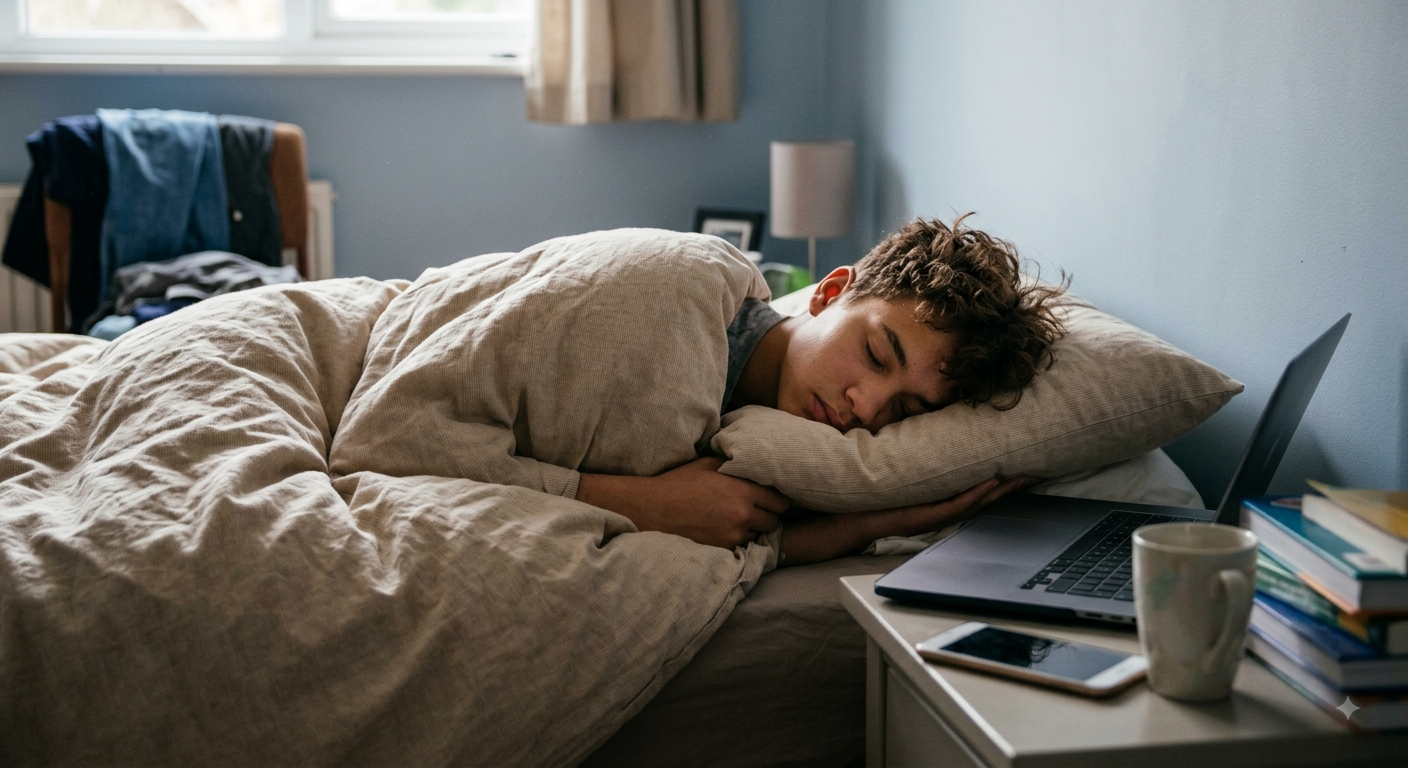
Quick Answer: Teenagers may feel tired despite getting 8–10 hours of sleep because sleep quality, circadian changes, screen time, stress, nutrition, anemia, thyroid problems, mental health concerns, medications, or other health conditions can affect energy levels. Consistent sleep routines, limiting late-night screens and caffeine, morning sunlight,balanced nutrition, and supportive conversations may help. If fatigue persists for several weeks, affects school or activities, or occurs with dizziness, headaches, breathing problems, weight changes, or mood changes, consult a pediatrician.
Teenagers are often tired.
Between school, homework, activities, friendships, sports, and changing schedules, it can sometimes seem normal for a teenager to feel exhausted. But on many occasions, a teen is getting what appears to be enough sleep and still feels tired every day.
Many parents ask me: “Why is my teenager always exhausted?” “My child sleeps eight or nine hours but still wakes up tired. Is that normal?”
These are important questions.
As a board-certified pediatrician with more than two decades of experience caring for children and adolescents, I have seen many teenagers experience ongoing fatigue for different reasons.
Sometimes the cause is a busy schedule or poor-quality sleep. In other situations, tiredness may be related to nutrition, stress, anemia, thyroid problems, sleep disorders, medications, or another health condition.
The key is to look at the complete picture.
This guide explains some common reasons teenagers feel tired, what parents can watch for, and when professional evaluation may be appropriate.
How Much Sleep Does a Teenager Need?
The American Academy of Pediatrics recommends that teenagers ages 13 to 18 regularly get about 8 to 10 hours of sleep each night.
However, getting enough hours does not always mean getting good-quality sleep.
For example, a teenager may spend nine hours in bed but have poor sleep because of:
- Frequent nighttime waking
- Loud snoring
- An inconsistent sleep schedule
- Late-night screen use
- Anxiety or stress
- An uncomfortable sleep environment
- Certain medications
- An underlying sleep disorder
This means parents should consider both how long their teenager sleeps and how well they sleep.
A teenager who regularly wakes up feeling refreshed will generally function differently from one who sleeps for the same number of hours but wakes feeling exhausted.
The Biology of Teen Sleep: Circadian Phase Delay
Teenagers experience a natural biological shift in their internal clock during puberty known as Adolescent Circadian Phase Delay.
The Science Behind the Shift
- During pubertal development, the brain’s pineal gland delays the evening release of melatonin by approximately two hours compared to adults or younger children.
- As a result, most teenagers naturally do not feel sleepy until 11:00 p.m. or midnight.
- When early school start times require a 6:00 a.m. alarm, teens suffer from chronic sleep debt and “social jet lag,” leaving them waking up in the middle of their biological night feeling groggy and exhausted.
Could Poor Sleep Quality Be the Problem?
Sometimes the issue is not the number of hours your teen sleeps but the quality of that sleep.
Parents should pay attention to signs such as:
- Loud or frequent snoring
- Gasping during sleep
- Restless sleep
- Frequent nighttime waking
- Morning headaches
- Difficulty waking up
- Excessive daytime sleepiness
- Falling asleep during class
- Difficulty concentrating
Sleep apnea, for example, can interfere with normal sleep and cause daytime tiredness.
If your teenager snores loudly or regularly appears to struggle with breathing during sleep, discuss these symptoms with a pediatrician.
Screen Time Can Affect Sleep
Phones, tablets, computers, and gaming devices are a normal part of many teenagers’ lives.
However, using screens late at night can make healthy sleep more difficult.
Teenagers may stay awake because they are:
- Texting friends
- Watching videos
- Playing games
- Using social media
- Completing schoolwork
Smartphones, tablets, and gaming consoles emit high-intensity blue light (waves around 450–480 nm). Blue light actively suppresses melatonin production in the brain, fooling the body into thinking it is daytime and delaying REM and deep sleep cycles.
I encourage families to create a consistent bedtime routine and reduce stimulating screen activities before bed.
Keeping phones and other devices outside the bedroom at night can also make it easier for teenagers to follow a regular sleep schedule.
Stress and School Pressure Can Cause Fatigue
Teenagers face many pressures.
They may be managing:
- School assignments
- Exams
- College planning
- Sports
- Friendships
- Family changes
- Social expectations
- Financial concerns
- Future career decisions
Stress can affect both sleep and daytime energy.
A teenager may technically spend eight hours in bed but still wake feeling tired if they have difficulty relaxing or are frequently worrying.
Parents should create opportunities for calm, judgment-free conversations.
Simple questions can help:
- “How have you been feeling lately?”
- “Is anything making school difficult?”
- “Are you feeling stressed?”
- “Is there something you are worried about?”
Sometimes, emotional concerns are easier for teenagers to discuss when parents listen first rather than immediately trying to solve the problem.
Could Nutrition Be Contributing to Fatigue?
Teenagers are growing rapidly and need adequate nutrition.
Busy schedules can sometimes lead teenagers to skip meals or rely heavily on convenience foods.
Poor nutrition may contribute to low energy.
A balanced diet should include:
- Fruits
- Vegetables
- Whole grains
- Lean proteins
- Dairy or suitable alternatives
- Healthy fats
Iron is particularly important because iron deficiency can contribute to anemia and fatigue.
Teenagers who have restrictive diets, heavy menstrual bleeding, poor dietary intake, or other risk factors may need additional evaluation.
Parents should speak with their child’s healthcare provider before starting iron supplements. Too much iron can be harmful, so supplementation should be based on medical advice.
Could Anemia Make My Teen Tired?
Anemia occurs when the body does not have enough healthy red blood cells or hemoglobin to carry oxygen effectively.
Iron-deficiency anemia is one possible cause of fatigue in adolescents.
Other symptoms may include:
- Pale skin
- Weakness
- Headaches
- Dizziness
- Shortness of breath with activity
- Difficulty concentrating
Teenagers who menstruate heavily may have an increased risk of iron deficiency because of blood loss.
If fatigue is persistent or accompanied by other symptoms, a pediatrician may recommend blood testing to look for anemia or other causes.
Could a Thyroid Problem Cause Fatigue?
The thyroid helps regulate many body functions, including metabolism.
When thyroid function is too low, a condition called hypothyroidism can develop.
Possible symptoms include:
- Tiredness
- Feeling unusually cold
- Constipation
- Dry skin
- Changes in weight
- Slower heart rate
- Difficulty concentrating
- Changes in mood
Not every tired teenager has a thyroid problem.
However, persistent fatigue combined with other symptoms may warrant an evaluation.
Mental Health Can Also Affect Energy Levels
Physical fatigue and mental health are deeply connected in adolescents. Depression, generalized anxiety disorder, academic burnout, and chronic stress directly alter sleep architecture and energy levels.
Red Flag Signs of Adolescent Depression or Anxiety
- Persistent sadness, irritability, or social withdrawal from friends and family
- Anhedonia: Loss of interest in hobbies, sports, or activities they used to love
- Significant shifts in appetite or weight
- Expressing feelings of hopelessness or worthlessness
- Immediate Danger: If your teenager expresses thoughts of self-harm or suicide, call or text the Suicide & Crisis Lifeline at 988 or go to the nearest emergency room immediately.
Medications and Other Health Conditions May Play a Role
Certain medications can cause drowsiness or changes in energy.
Fatigue may also occur with some infections and chronic medical conditions.
For this reason, I recommend telling your pediatrician about all medications and supplements your teenager takes.
These may include:
- Prescription medications
- Over-the-counter medicines
- Vitamins
- Herbal products
- Sports supplements
Do not stop a prescribed medication without discussing it with the healthcare professional who prescribed it.
What Can Parents Do at Home?
Parents can start by helping teenagers establish healthy daily routines.
- Set a Tech Curfew: Have devices docked outside the bedroom at least 30 to 60 minutes before bedtime.
- Keep Weekend Schedules Consistent: Limit weekend sleeping-in to no more than 1 to 2 hours beyond their normal weekday wake time to prevent worsening social jet lag.
- Limit Afternoon Caffeine: Ban energy drinks and caffeinated beverages after 2:00 p.m.
- Prioritize Morning Sunlight Exposure: Natural sunlight exposure in the morning helps reset the brain’s circadian clock and promotes earlier melatonin release at night.
When Should My Teen See a Pediatrician?
Make an appointment if fatigue:
- Continues for several weeks
- Interferes with school
- Affects sports or activities
- Makes it difficult to stay awake during the day
- Is accompanied by weight changes
- Occurs with frequent headaches
- Occurs with dizziness
- Is associated with mood changes
- Occurs with shortness of breath
- Is accompanied by significant changes in appetite
- Continues despite adequate sleep and healthy routines
A pediatrician can review your teenager’s symptoms and determine whether further testing is appropriate.
Adolescent Care at Gentle Pediatrics
At Gentle Pediatrics, we provide comprehensive care for children and teenagers as they move through each stage of development.
Our care includes:
- Well-child visits
- Adolescent health visits
- Growth monitoring
- Nutrition guidance
- Sleep concerns
- Mental health screening
- Sports physicals
- Preventive care
- Chronic condition management
As a pediatrician, I believe teenagers deserve a safe and respectful environment where they can discuss health concerns openly.
Our approach to adolescent care focuses on education, prevention, early identification of concerns, and individualized support.
About Dr. Shahid Hasnain
I am Dr. Shahid Hasnain, a board-certified pediatrician with more than two decades of experience caring for infants, children, and adolescents.
I earned a full scholarship to complete my Master of Public Health specializing in Maternal and Child Health in Birmingham.
I then completed my pediatric internship at Lincoln Hospital in New York and my residency at the University of Tennessee Medical Center in Knoxville, where I served as Chief Resident during my final year.
I have been Board Certified by the American Board of Pediatrics since 1998.
Throughout my career, I have remained committed to evidence-based medical care delivered with patience, clarity, and a gentle approach.
Final Thoughts
It is not unusual for teenagers to feel tired.
Their changing biological rhythms, demanding schedules, school responsibilities, and busy social lives can all affect their energy.
However, persistent fatigue should not automatically be dismissed as “normal teenage behavior.”
If your teen continues to feel tired despite getting adequate sleep, it is worth looking at the bigger picture.
Sleep quality, nutrition, stress, mental health, anemia, thyroid conditions, medications, and other health concerns may all play a role.
The good news is that many causes of fatigue can be identified and managed with appropriate care.
At Gentle Pediatrics, we are here to help families understand these changes and support teenagers as they grow into healthy, confident adults.
Schedule an Adolescent Health Visit
If your teenager has been feeling unusually tired, our team is here to help.
Gentle Pediatrics proudly serves families throughout:
- Sugar Land
- Richmond
- Rosenberg
- Stafford
- Katy
- Houston
Contact our office today or fill the online patient registration form to schedule an appointment and learn more about comprehensive adolescent care for your teenager.
Frequently Asked Questions
1. How much sleep does a teenager need?
Most teenagers ages 13 to 18 need about 8 to 10 hours of sleep each night.
2. Why is my teen tired after getting enough sleep?
Possible reasons include poor sleep quality, an inconsistent sleep schedule, stress, nutrition problems, anemia, mental health concerns, thyroid problems, medications, or other medical conditions.
3. When should fatigue in a teenager become a concern?
Talk with a healthcare provider when fatigue persists, interferes with school or activities, affects daily functioning, or occurs with symptoms such as weight changes, dizziness, headaches, breathing problems, or mood changes.
4. Can stress make my teenager physically tired?
Yes. Ongoing stress can affect sleep, concentration, mood, and energy. Teenagers experiencing significant stress may benefit from supportive conversations and professional guidance.
5. Can anemia cause teenage fatigue?
Yes. Iron-deficiency anemia can cause tiredness, weakness, headaches, dizziness, and difficulty concentrating. A healthcare provider can determine whether testing is appropriate.
This article is intended for educational and informational purposes only and should not be considered medical advice, diagnosis, or treatment. Every teenager has unique healthcare needs. Always consult your pediatrician or another qualified healthcare professional regarding persistent fatigue, changes in sleep, mood concerns, or other symptoms. If your teenager is experiencing a medical emergency or is at immediate risk of harming themselves, seek emergency medical care immediately.