

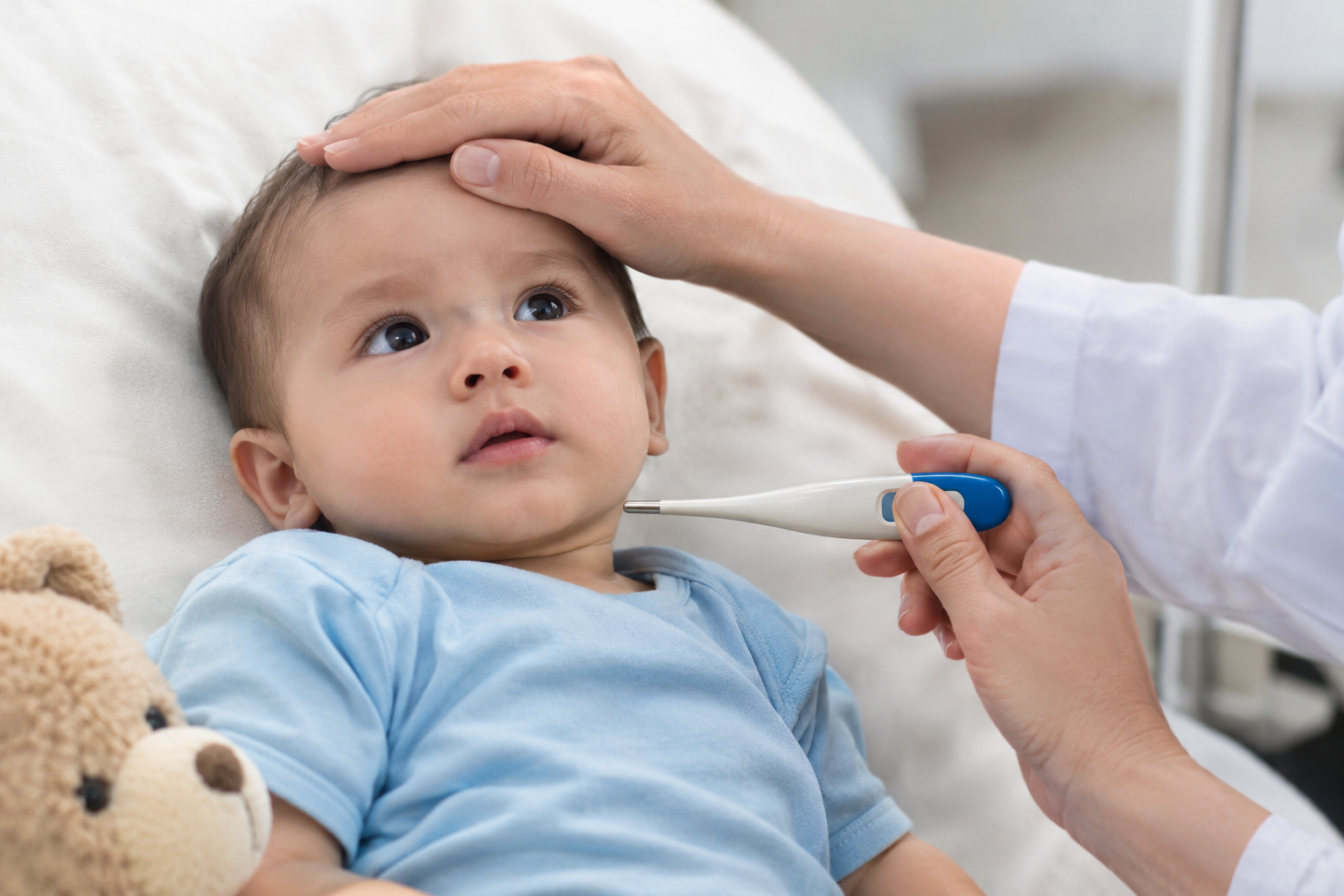
Quick Answer: A mild fever after baby vaccination is common and usually resolves within one to two days, although timing varies by vaccine. Comfort your baby with cuddling, frequent breast milk or formula feeds, comfortable clothing, and a cool cloth on the injection site. A temperature of 100.4°F (38°C) or higher in babies younger than three months requires immediate medical evaluation. Seek emergency care for breathing difficulties, facial or throat swelling, or unresponsiveness. Contact your pediatrician if symptoms worsen or persist.
Seeing your baby develop a fever after vaccination can be worrying, especially when your little one is too young to explain how they feel. You may wonder whether the fever is a normal reaction, how long it should last, and what you can safely do to help your baby feel better.
The good news is that a mild fever after vaccination is a common, usually short-lived reaction. Babies may also feel sleepy, become fussy, eat a little less, or have soreness where the injection was given. Most of these reactions improve within a day or two. However, some fevers need prompt medical attention, particularly in very young infants.
As a board-certified pediatrician with more than two decades of experience caring for infants, children, and adolescents, I encourage parents to understand what to expect after vaccines and to contact a healthcare professional whenever they are unsure about their baby’s symptoms.
Is Fever After Baby Vaccination Normal?
Yes, fever can occur after some vaccines. Vaccines help the immune system learn to recognize and respond to specific infections. A temporary fever can be part of the body’s response to vaccination.
Along with fever, your baby may experience:
- Mild fussiness or increased crying.
- Tenderness, redness, or swelling at the injection site.
- More sleepiness than usual.
- A temporary decrease in appetite.
- Restlessness or changes in sleep.
These reactions are generally mild and improve within a short time. With many vaccines, fever begins during the first 24 hours and lasts around one to two days. The American Academy of Pediatrics (AAP) notes that some vaccines, including the measles, mumps, and rubella (MMR) vaccine, can cause a fever later. The timing depends on the vaccine given.
A fever does not automatically mean something has gone wrong. However, do not assume every fever following vaccination is caused by the vaccine. Babies can develop unrelated infections around the same time.
What Temperature Counts as a Fever in a Baby?
A temperature of 100.4°F (38°C) or higher is considered a fever in an infant. How you measure the temperature matters, so follow the thermometer’s instructions and tell your healthcare professional how the reading was taken.
Pay attention to more than the number. Notice whether your baby is feeding, making eye contact, waking normally, and responding as usual.
Most importantly, if your baby is younger than three months and has a temperature of 100.4°F (38°C) or higher, seek immediate medical evaluation, even if the fever started after vaccination. Do not give fever medicine before the baby is assessed unless a healthcare professional specifically instructs you to do so.
How Can Parents Comfort a Baby After Vaccination?
If your baby is otherwise alert, feeding reasonably well, and has no warning signs, gentle care can help them feel more comfortable.
1. Offer breast milk or formula frequently
Babies may drink less than usual for a short time after vaccination. Offer breast milk or formula more often, and monitor wet diapers for signs of dehydration. Do not give plain water to young infants unless your healthcare professional recommends it.
2. Hold and soothe your baby
Cuddling, gentle rocking, breastfeeding, and speaking softly can help calm a fussy infant. Some babies may want more comfort than usual for a day or two.
3. Dress your baby comfortably
Use light, comfortable clothing and avoid wrapping your baby in too many layers. Keep the room at a comfortable temperature.
4. Use a cool cloth on the injection site
The CDC notes that if the injection area is sore or swollen, a clean, cool, damp cloth may help. Avoid pressing hard on the area or applying ice directly to the skin.
5. Ask before giving fever medicine
Do not give medicine automatically or use an adult dose. Ask your pediatrician whether a medicine such as acetaminophen is appropriate and what dose is safe for your baby’s age and weight. Do not give aspirin to children.
When Should You Call a Doctor About Fever After Vaccination?
Contact your baby’s doctor promptly if:
- Your baby is younger than three months and has a temperature of 100.4°F (38°C) or higher.
- Your baby’s fever is very high, or the fever lasts longer than expected.
- Your baby is feeding poorly or has noticeably fewer wet diapers.
- Your baby is unusually sleepy, irritable, or difficult to comfort.
- Your baby develops persistent vomiting or other symptoms that concern you.
- The injection-site redness or swelling continues to worsen.
A fever above 104°F (40°C), a fever lasting more than three days, or a fever that returns after going away warrants medical advice. In very young infants, do not wait for the fever to last several days before seeking care.
Seek Emergency Care for Serious Symptoms
Call 911 or your local emergency number if your baby has difficulty breathing, swelling of the face or throat, becomes unresponsive, or is too weak to respond normally. These may be signs of a severe allergic reaction or another emergency.
Trust your instincts. If your baby looks seriously unwell, seek urgent medical help even if the temperature does not seem very high.
How Long Does a Post-Vaccination Fever Last?
For many vaccines, a fever begins within the first day and settles within one to two days. Other reactions, such as soreness at the injection site, may last a little longer. Some vaccines can cause a delayed fever, so the expected timing depends on which vaccine your baby received.
If your baby’s fever is getting worse, lasts longer than expected, or appears with new symptoms, contact your pediatrician. An examination may be needed to determine whether the fever is a vaccine reaction or an unrelated illness.
Baby Vaccination Care at Gentle Pediatrics
At Gentle Pediatrics, I believe parents should feel informed and supported before and after their baby’s vaccinations. We help families understand expected reactions, discuss safe ways to comfort their babies, and recognize symptoms that need medical attention.
If you have concerns about your baby’s fever or vaccination schedule, an appointment can help you understand the next steps based on your child’s age, symptoms, and medical history.
About Dr. Shahid Hasnain
I am a board-certified pediatrician with more than two decades of experience caring for infants, children, and adolescents. I have been board-certified by the American Board of Pediatrics since 1998.
My training includes a Master’s in Public Health specializing in Maternal & Child Health, a pediatric internship at Lincoln Hospital in New York, and residency at the University of Tennessee Medical Center in Knoxville, where I served as Chief Resident in my final year.
At Gentle Pediatrics, I combine clinical experience with a gentle approach and clear communication to help families make informed decisions about their children’s health.
Final Thoughts
A mild fever after vaccination is common and usually settles within a day or two. You can often help your baby feel more comfortable with cuddling, regular breast milk or formula feeds, and gentle care. Still, pay attention to your baby’s age, temperature, feeding, and behavior. A baby younger than three months with a temperature of 100.4°F (38°C) or higher needs immediate medical evaluation, even if the fever follows vaccination. Seek emergency help for breathing difficulties, facial or throat swelling, or reduced responsiveness.
At Gentle Pediatrics, I encourage parents to ask questions and seek guidance whenever they are concerned. If you need help understanding your baby’s symptoms or vaccination aftercare, schedule a visit with a trusted baby vaccination doctor in Sugar Land. Our team is here to help you make informed decisions and support your baby’s health.
Schedule a Pediatric Visit
If your baby has a fever after vaccination or you have questions about vaccine aftercare, our team at Gentle Pediatrics is here to help.
Gentle Pediatrics proudly serves families throughout:
- Sugar Land
- Richmond
- Rosenberg
- Stafford
- Katy
- Houston
📍 Gentle Pediatrics, Sugar Land, Texas
Schedule an appointment with a trusted baby vaccination doctor in Sugar Land to discuss your baby’s vaccination needs, post-vaccine symptoms, and overall health.
Frequently Asked Questions
1. Is it normal for a baby to have a fever after vaccination?
Yes. Some vaccines can cause a temporary fever, fussiness, or soreness. Many reactions improve within one to two days, although timing varies by vaccine.
2. What temperature is concerning for a young baby?
A temperature of 100.4°F (38°C) or higher in a baby younger than three months needs immediate medical evaluation, even after vaccination.
3. Can I give my baby acetaminophen after vaccination?
Ask your pediatrician first, especially if your baby is very young. The correct dose depends on age and weight, and fever medicine should not delay assessment of a young infant with a fever.
4. How can I comfort my baby after shots?
Hold and cuddle your baby, offer breast milk or formula frequently, dress them comfortably, and use a cool, damp cloth on a sore injection site. Contact your doctor if symptoms concern you.
5. When is a fever after vaccination an emergency?
Seek emergency care for difficulty breathing, swelling of the face or throat, unresponsiveness, or severe weakness. Contact a healthcare professional promptly if your baby looks very unwell or has a fever that is high, persistent, or accompanied by other concerning symptoms.
This article is for general educational purposes and does not replace professional medical advice, diagnosis, or treatment. Because fever in young infants can have serious causes, seek immediate medical evaluation for a baby younger than three months with a temperature of 100.4°F (38°C) or higher. For other concerns, contact your child’s healthcare professional.