

Quick Answer: If your child frequently watches TV at a high volume, it may be more than just a habit. Hearing difficulties caused by ear infections, fluid behind the eardrum, earwax buildup, or other hearing conditions could be responsible. Watch for signs such as asking people to repeat themselves, delayed speech, or difficulty following instructions. Schedule a pediatric evaluation and hearing screening if concerns persist. Early diagnosis and appropriate pediatric ear infection treatment in Sugar Land can help protect your child’s hearing, speech, and development.
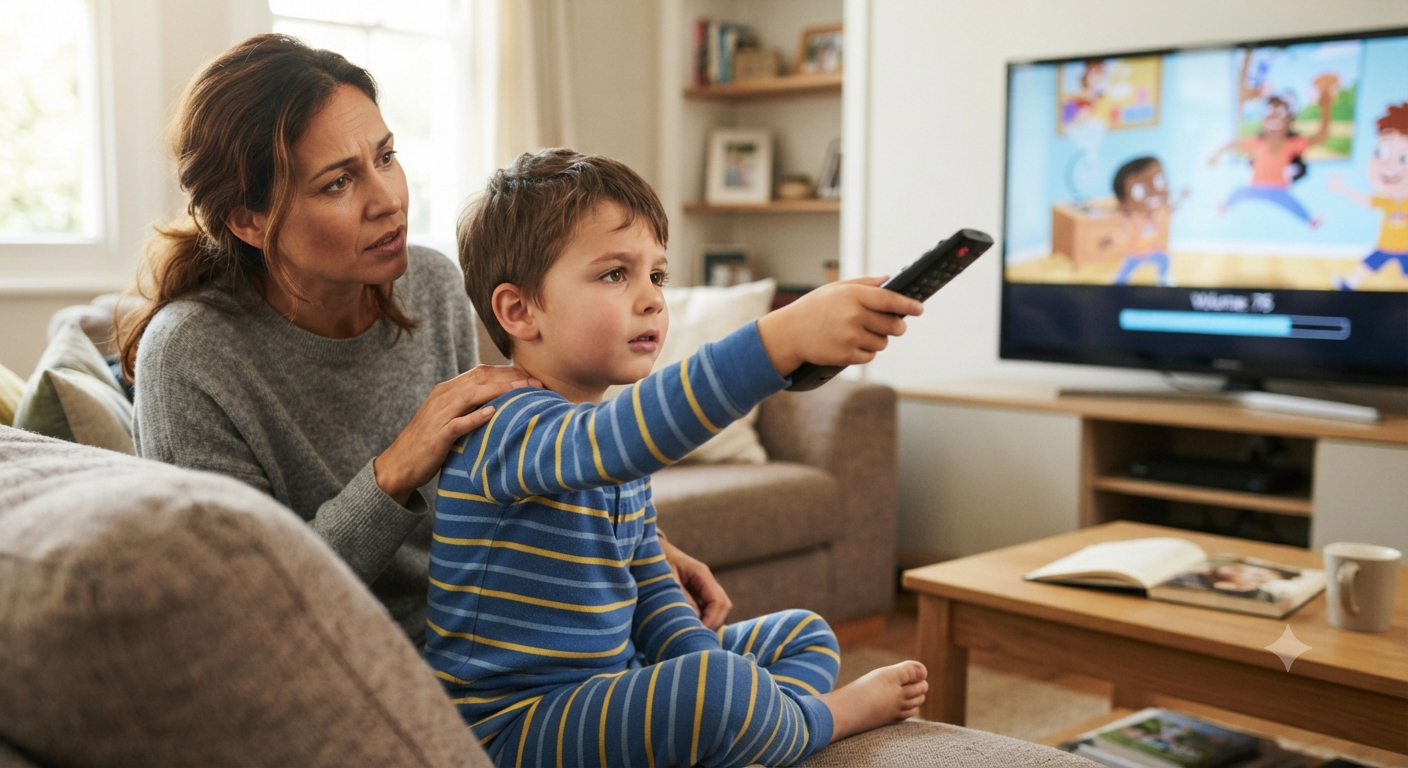
Does your child keep turning up the television even when everyone else thinks the sound is too loud? Do you often ask them to lower the volume, only to find it turned up again a few minutes later?
While some children simply enjoy loud sounds, repeatedly watching TV at a high volume can sometimes indicate a hearing problem. Ear infections, fluid behind the eardrum, earwax buildup, and other hearing conditions may make it harder for a child to hear clearly.
As a parent, it is important not to ignore this habit, especially if your child also asks people to repeat themselves or struggles to follow conversations.
As a board-certified pediatrician at Gentle Pediatrics, I encourage parents to pay attention to small changes in their child’s behavior because they can sometimes reveal an underlying health concern.
Let’s look at the possible reasons your child watches TV at high volume and what parents can do.
Could Your Child Have a Hearing Problem?
One of the first things to consider is whether your child can hear clearly.
Children with mild hearing loss may still respond to some sounds but struggle with softer voices or conversations in noisy rooms. They may compensate by turning up the television, sitting closer to the screen, or asking others to speak louder.
Other signs may include:
- Frequently saying “What?” or “Huh?”
- Asking people to repeat instructions.
- Speaking louder than usual.
- Having trouble following conversations.
- Struggling to understand teachers in class.
- Showing delayed speech or unclear pronunciation.
The CDC lists turning up the TV or radio volume as a possible sign of hearing loss in children. If you notice this behavior regularly, ask your child’s doctor about a hearing screening.
Common Causes of Hearing Difficulties in Children
Several conditions can affect how well a child hears. Some cause temporary hearing changes, while others may need longer-term care.
1. Ear Infections
Middle ear infections are common during childhood. They can cause pain, fever, irritability, and fluid buildup behind the eardrum.
This fluid can prevent sound from passing through the middle ear normally. As a result, your child may temporarily hear sounds less clearly and turn up the TV volume.
Even after an infection improves, fluid may remain behind the eardrum for several weeks. If hearing does not seem to return to normal, your child may need another examination.
2. Fluid Behind the Eardrum
Not every child with fluid in the middle ear has an active ear infection. Sometimes fluid remains after a cold or ear infection without causing obvious pain or fever.
Parents may notice that their child:
- Turns the television volume up.
- Does not respond to quiet sounds.
- Seems distracted when someone speaks.
- Has trouble understanding instructions.
- Experiences speech or language difficulties.
Persistent middle ear fluid can affect hearing and, in some children, speech and learning.
3. Earwax Buildup
Earwax helps protect the ear canal, but too much wax can sometimes block sound. A child may complain that one ear feels blocked or that sounds seem muffled.
A pediatrician can examine the ear canal and decide whether the wax needs to be removed. Avoid using cotton swabs or other objects inside your child’s ears because they can push wax deeper or cause injury.
4. Other Types of Hearing Loss
Some children have hearing loss related to the inner ear or the nerves that carry sound signals to the brain. It may be present from birth or develop later.
This type of hearing loss may not cause ear pain or other visible symptoms. A child may pass an early hearing screening and develop a hearing concern later, which is why parents should continue watching for changes.
Could It Simply Be a Habit?
Yes. Not every child who watches TV at high volume has a hearing problem.
Some children enjoy loud cartoons, action scenes, music, or video games. Others may be used to a noisy home environment or may not understand that the volume is uncomfortable for other people.
To understand whether it is a habit or a possible hearing concern, notice how your child responds in other situations.
For example, does your child hear you when you speak softly from behind them? Can they follow instructions without seeing your face? Do they respond to quiet sounds in another room?
If your child hears normally in everyday situations but prefers loud entertainment, the behavior may be related to personal preference. However, repeated high-volume viewing should still be addressed to protect hearing.
How Can Parents Help Protect Their Child’s Hearing?
You can take a few practical steps at home while arranging an evaluation if you suspect a hearing problem.
- Set a comfortable volume: Keep the television at a level that allows everyone to hear without shouting.
- Reduce background noise: Turn off other devices when your child is watching TV or listening to someone speak.
- Observe their responses: Notice whether your child reacts to soft voices and everyday sounds.
- Avoid loud headphones: Keep headphone volume low and limit prolonged listening.
- Talk about hearing health: Explain why very loud sounds can damage hearing over time.
The National Institute on Deafness and Other Communication Disorders recommends reducing volume and limiting exposure to loud sounds to help protect children’s hearing.
These steps can help reduce noise exposure, but they do not replace a hearing evaluation when a child repeatedly struggles to hear.
When Should You Take Your Child to a Pediatrician?
Arrange a pediatric appointment if your child regularly turns up the TV volume or shows other signs of hearing difficulty.
A hearing assessment is especially important if you notice:
- Delayed speech or unclear speech.
- Frequent ear infections.
- Difficulty following instructions.
- Poor responses when called from another room.
- School or learning difficulties.
- Complaints of muffled hearing or blocked ears.
The American Academy of Pediatrics (AAP) recommends prompt hearing screening when parents or healthcare professionals have concerns about a child’s hearing. If a screening is not passed, a complete hearing evaluation by an audiologist may be needed.
Seek medical attention sooner if your child has significant ear pain, fever with ear symptoms, or fluid draining from the ear.
What Happens During a Hearing Evaluation?
Your pediatrician will usually ask about your child’s symptoms, previous ear infections, speech development, and medical history. The doctor will also examine the ears to look for wax, inflammation, or fluid behind the eardrum.
Depending on your child’s age and symptoms, the next steps may include:
- A hearing screening in the clinic.
- A tympanometry test to check how the eardrum moves and whether middle ear fluid may be present.
- A full hearing evaluation with an audiologist.
These tests help determine whether hearing is affected and whether your child needs treatment or specialist care.
About Dr. Shahid Hasnain
I am a board-certified pediatrician with more than two decades of experience caring for infants, children, and adolescents. I have been board-certified by the American Board of Pediatrics since 1998. My training includes a Master’s in Public Health specializing in Maternal & Child Health, a pediatric internship at Lincoln Hospital in New York, and residency at the University of Tennessee Medical Center in Knoxville, where I served as Chief Resident.
At Gentle Pediatrics, I combine medical experience with a gentle approach and clear communication to help families make informed decisions about their children’s health.
Final Thoughts
A child who regularly watches TV at high volume may simply enjoy loud sounds, but the habit can also be an early sign of hearing difficulty. Ear infections, fluid behind the eardrum, earwax buildup, and other hearing conditions can affect how clearly children hear.
If you notice this behavior along with speech delays, frequent requests for repetition, or difficulty following instructions, arrange a hearing assessment. Early attention can help protect your child’s communication, learning, and development.
Schedule a Pediatric Visit
If your child regularly watches TV at a high volume, has frequent ear infections, or seems to struggle with everyday conversations, our team at Gentle Pediatrics is here to help.
Gentle Pediatrics proudly serves families throughout:
- Sugar Land
- Richmond
- Rosenberg
- Stafford
- Katy
- Houston
📍 Gentle Pediatrics, Sugar Land, Texas
Contact our office today or fill out the online patient registration form to discuss your child’s hearing, ear health, and development.
Frequently Asked Questions
1. Is watching TV at high volume a sign of hearing loss?
It can be. Children with hearing difficulties may turn up the TV because they cannot hear normal volume levels clearly.
2. Can an ear infection cause temporary hearing loss?
Yes. Fluid in the middle ear can block sound and cause temporary hearing changes. Hearing often improves as the fluid clears.
3. Can hearing problems affect speech development?
Yes. Hearing difficulties can make it harder for children to learn sounds, understand words, and develop clear speech.
4. Should I get my child’s hearing tested?
If your child repeatedly turns up the TV, asks people to repeat themselves, or has speech or learning concerns, discuss a hearing screening with your pediatrician.
This article is for general educational purposes and does not replace professional medical advice, diagnosis, or treatment. If you are concerned about your child’s hearing or ear health, consult a qualified healthcare professional for an appropriate evaluation.