

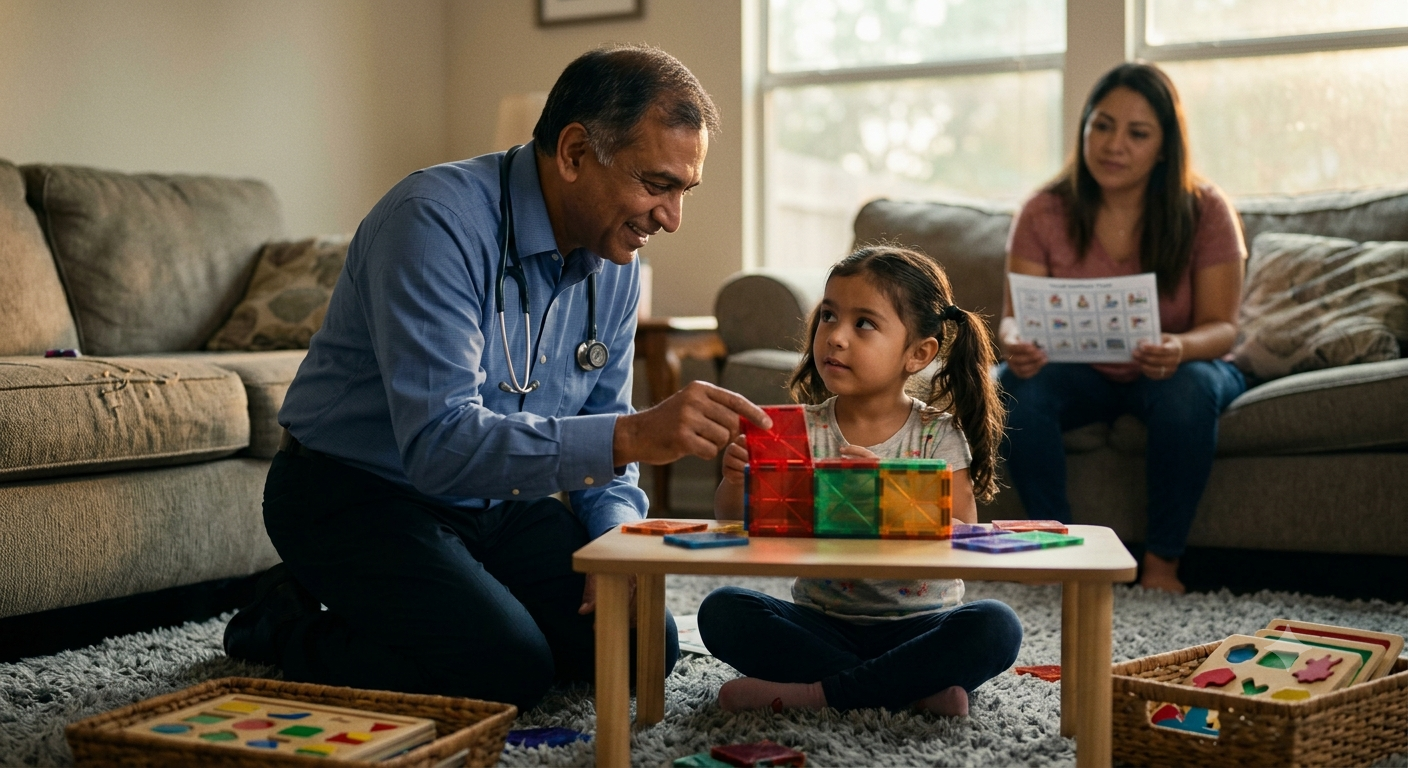
Quick Answer: Autism Spectrum Disorder (ASD) is a neurodevelopmental condition that affects communication, social interaction, behavior, and sensory processing. Early signs may include delayed speech, limited eye contact, repetitive behaviors, and sensory sensitivities. Early screening, diagnosis, and intervention can significantly improve outcomes. Every child with autism is unique and may require different levels of support. Parents can help through structured routines, communication-building activities, and sensory-friendly environments while also prioritizing their own well-being and seeking professional guidance when concerns arise.
As a pediatrician, one of the most important conversations I have with families involves concerns about a child’s development, communication skills, social interactions, or behavior.
Many parents first notice subtle signs such as delayed speech, limited eye contact, repetitive behaviors, and more. These observations often lead parents to ask, “Could my child have autism?”
Receiving an Autism Spectrum Disorder (ASD) diagnosis can bring a mix of emotions, including concern, uncertainty, relief, and many questions about the future.
The good news is that children with autism can make meaningful progress when they receive early support, appropriate interventions, and a strong network of family and healthcare professionals.
As a board-certified pediatrician with more than two decades of experience caring for children and adolescents, I have worked closely with many families navigating autism diagnoses. My goal is always to provide clear information, compassionate guidance, and evidence-based care that helps children reach their fullest potential.
This guide explains Autism Spectrum Disorder, common signs, treatment options, and practical ways parents can support their child every day.
What Is Autism Spectrum Disorder?
Autism Spectrum Disorder (ASD) is a neurodevelopmental condition that affects how a child:
- Communicates
- Interacts socially
- Processes information
- Responds to sensory experiences
- Engages in certain behaviors
The word “spectrum” is important because autism affects every child differently. Some children may need significant support in daily life, while others may function independently and excel academically.
A Note for Parents: Autism is not caused by parenting style, discipline methods, or emotional experiences. It is a biological developmental condition that begins early in life.
Recognizing Early Signs of Autism
While every child develops at their own pace, certain behaviors may suggest the need for further evaluation.
Common signs include:
1. Communication Differences
A child may:
- Have delayed speech development
- Use limited gestures
- Struggle to maintain conversations
- Repeat words or phrases
2. Social Interaction Challenges
Children with autism may:
- Avoid eye contact
- Prefer playing alone
- Have difficulty understanding social cues
- Show limited interest in peer interactions
3. Repetitive Behaviors
Examples may include:
- Repetitive body movements
- Hand flapping
- Rocking
- Repeating routines
4. Sensory Sensitivities
Some children may be unusually sensitive to:
- Sounds
- Lights
- Textures
- Smells
- Certain foods
Recognizing these signs early can help families access appropriate support and services.
How Autism Is Diagnosed
There is no single blood test or imaging study that diagnoses autism.
Instead, diagnosis typically involves:
- Developmental screenings
- Behavioral observations
- Parent interviews
- Standardized assessment tools
- Medical evaluations
Healthcare providers look at patterns of behavior and development over time.
A thorough evaluation helps ensure that children receive the most accurate diagnosis and appropriate support.
The Mandated 18 and 24-Month Screenings: Because early signs can be subtle, the American Academy of Pediatrics (AAP) recommends that all children undergo standardized, universal screening specifically for Autism Spectrum Disorder at their 18-month and 24-month well-child checkups. These formal screenings (often using tools like the M-CHAT-R/F questionnaire) are integrated into routine care to catch markers early, even if parents haven’t noticed obvious delays yet.
Understanding That Every Child Is Unique
One of the most important things parents should remember is that no two children with autism are exactly alike.
Some children may:
- Develop strong language skills
- Excel academically
- Need minimal support
Others may require more assistance with:
- Communication
- Social interactions
- Daily living activities
Avoid comparing your child to other children with autism.
The focus should always be on your child’s individual strengths, challenges, and goals.
Practical Ways to Support Your Child at Home
1. Supporting Communication Development
Reading together regularly is an excellent way to build vocabulary and listening comprehension. Engage in simple, structured play like singing repetitive songs, playing interactive games, and practicing turn-taking to foster back-and-forth communication.
2. Creating Predictable Daily Routines
Many children with autism thrive when their daily environments are highly consistent. Predictability reduces anxiety and sensory overwhelm. Try maintaining regular meal times, consistent bedtimes, and clear visual schedules (using pictures or charts) to help your child visually anticipate daily transitions and upcoming changes.
3. Managing Sensory Sensitivities
Sensory overload can quickly exhaust a child’s coping mechanisms. Parents can support their child by identifying specific triggers, such as fluorescent lighting or loud appliances, and creating dedicated “calm spaces” in the home. Allowing proactive sensory breaks can significantly minimize environmental stress.
Caring for Yourself as a Parent
Parents often dedicate enormous amounts of time and energy to supporting their child.
However, caregiver well-being is equally important.
Parents should:
- Seek support when needed
- Maintain healthy routines
- Connect with trusted friends and family
- Participate in support groups if helpful
Taking care of yourself helps you better support your child.
Common Misconceptions About Autism
Several myths about autism continue to circulate.
Myth: Autism is caused by poor parenting.
Fact: Autism is a neurodevelopmental condition and is not caused by parenting practices.
Myth: Children with autism cannot form meaningful relationships.
Fact: Many children with autism build strong and loving relationships with family members and friends.
Myth: Autism always looks the same.
Fact: Autism affects every child differently.
Understanding these facts helps families make informed decisions based on evidence rather than misconceptions.
When Parents Should Seek an Evaluation
Parents should discuss developmental concerns with a healthcare provider if they notice:
- Delayed speech
- Limited eye contact
- Social difficulties
- Repetitive behaviors
- Developmental regression
- Sensory sensitivities affecting daily life
A comprehensive child behavior evaluation in Sugar Land can help determine whether further assessment is appropriate.
Early evaluation provides opportunities for earlier support.
Developmental and Behavioral Support at Gentle Pediatrics
Our practice provides comprehensive developmental and behavioral support, including:
- Developmental screenings
- Behavioral assessments
- Autism-related evaluations
- School readiness evaluations
- Growth and development monitoring
- Ongoing pediatric care
When concerns arise, a thorough child behavior evaluation in Sugar Land can help identify the next steps for your child’s care.
About Dr. Shahid Hasnain
I am Dr. Shahid Hasnain, a board-certified pediatrician with more than two decades of experience caring for infants, children, and adolescents.
My professional background includes:
- Master of Public Health, specializing in Maternal and Child Health
- Pediatric Internship at Lincoln Hospital in New York
- Pediatric Residency at the University of Tennessee Medical Center
- Chief Resident during residency training
- Board Certification through the American Board of Pediatrics since 1998
Throughout my career, I have remained committed to providing evidence-based, compassionate care for children and families navigating developmental and behavioral concerns.
Why Families Trust Gentle Pediatrics
Families choose Gentle Pediatrics because we provide:
Evidence-based pediatric care
Compassionate family support
Developmental screenings
Personalized treatment recommendations
Long-term partnerships with families
We believe every child deserves individualized care that respects their unique strengths and needs.
Final Thoughts
An Autism Spectrum Disorder diagnosis can feel overwhelming at first, but families should remember that they are not alone.
With early identification, evidence-based interventions, and a supportive care team, many children with autism make meaningful progress and achieve important developmental milestones.
Every child has unique strengths, talents, and potential.
The goal is not to change who a child is, but to provide the support and resources that help them thrive.
At Gentle Pediatrics, we are honored to partner with families throughout every stage of their child’s developmental journey.
Schedule a Developmental Evaluation
If you have concerns about your child’s behavior, communication skills, or developmental progress, our team is here to help.
Gentle Pediatrics proudly serves families throughout:
- Sugar Land
- Richmond
- Rosenberg
- Stafford
- Katy
- Houston
Gentle Pediatrics — Sugar Land, Texas
Contact our office today to schedule a comprehensive child behavior evaluation in Sugar Land and learn more about developmental support services for your child.
Frequently Asked Questions
1. What are the early signs of autism?
Common signs may include delayed speech, limited eye contact, repetitive behaviors, and difficulties with social interaction.
2. Can autism be diagnosed in young children?
Yes. Developmental screenings and evaluations can identify signs of autism in early childhood.
3. Does every child with autism have the same symptoms?
No. Autism is a spectrum condition, and symptoms vary widely among individuals.
4. Why is early intervention important?
Early intervention can support communication, learning, social skills, and overall development.
5. When should I schedule a behavioral evaluation?
If you have concerns about your child’s development, communication, behavior, or social interactions, discuss them with your pediatrician promptly.
This article is intended for informational and educational purposes only and should not be considered medical advice, diagnosis, or treatment. Always consult a qualified healthcare professional regarding any concerns about your child’s development, health, or medical condition.