
Quick Answer: Most newborns develop mild jaundice, causing yellow skin or eyes because their immature liver is still processing bilirubin. In many cases, it resolves with frequent feeding and monitoring, but jaundice appearing within the first 24 hours, worsening rapidly, or accompanied by poor feeding, fever, extreme sleepiness, or pale stools requires immediate medical evaluation. Early bilirubin screening, regular pediatric checkups, and timely treatment such as phototherapy when needed help prevent complications and ensure a healthy start for your baby.
Bringing your newborn home is an exciting and emotional time. As parents, you quickly become familiar with every tiny detail about your baby’s appearance, from their little fingers and toes to the color of their skin.
One concern I hear from many new parents is, “My baby’s skin looks yellow. Is something wrong?”
Seeing a yellow tint on your newborn’s face or body can certainly be alarming, especially if you’re a first-time parent. It’s natural to wonder whether this is normal or if your baby needs immediate medical attention.
As a board-certified pediatrician with more than two decades of experience caring for infants, children, and adolescents, I have helped countless families navigate newborn health concerns, including jaundice. In many cases, yellow skin in a newborn is common and temporary. However, there are situations where it requires prompt evaluation and treatment to prevent complications.
In this guide, I’ll explain why babies develop yellow skin, when jaundice is considered normal, the warning signs parents should watch for, and how early medical care helps keep newborns healthy.
What Does Yellow Skin Mean in a Newborn?
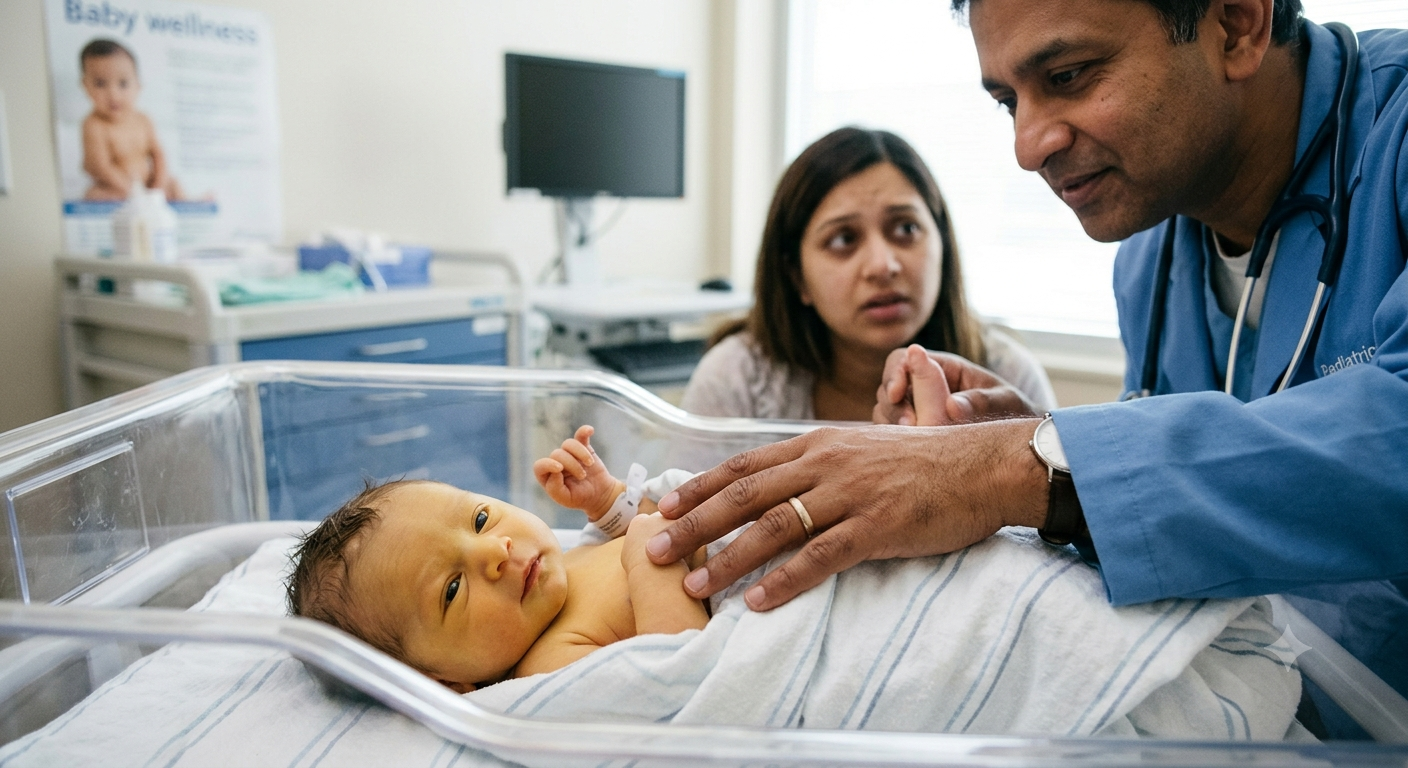
Yellow skin in a newborn is usually caused by a condition called jaundice.
Jaundice occurs when there is too much bilirubin in the baby’s bloodstream. Bilirubin is a yellow pigment produced when the body naturally breaks down old red blood cells.
Before birth, the placenta helps remove bilirubin from the baby’s body. After delivery, the baby’s liver must take over this job. Because a newborn’s liver is still developing, it may not remove bilirubin efficiently during the first few days of life. As bilirubin builds up, the skin and the whites of the eyes can begin to look yellow.
According to the American Pregnancy Association, the most common type of jaundice, physiologic jaundice, can affect up to 60% of full-term babies in the first week of life.
Is Newborn Jaundice Normal?
In many cases, yes. Most healthy newborns experience what is known as physiologic jaundice, which typically:
- Appears after the first 24 hours of life
- Peaks around days 3 to 5
- Gradually improves over one to two weeks
- Resolves as the baby’s liver matures and feeding is well established
Many babies recover without any treatment other than regular feeding and careful monitoring.
However, any jaundice that appears within the first 24 hours of life is considered pathologic (abnormal) until proven otherwise. This early-onset jaundice often indicates rapid red blood cell breakdown (hemolysis) or an underlying infection and requires immediate medical evaluation.
What Causes Jaundice in Babies?
Several factors can contribute to jaundice.
Common causes include:
- An immature liver
- Increased breakdown of red blood cells
- Breastfeeding challenges during the first few days
- Premature birth
- Blood type incompatibility between mother and baby
- Bruising during delivery
- Certain inherited blood disorders
- Infections, although these are less common
As a newborn care pediatrician in Sugar Land, I carefully evaluate each baby to determine whether jaundice is part of the normal newborn transition or a sign of an underlying medical condition.
How Can Parents Recognize Jaundice?
Jaundice often begins on the face before spreading downward.
Parents may notice yellow coloring on the:
- Face
- Whites of the eyes
- Chest
- Abdomen
- Arms
- Legs
In babies with darker skin tones, visual skin changes can be harder to spot. Parents should look closely at the whites of the eyes, inside the mouth (gums), and on the palms or soles.
In addition to skin changes, parents must watch their baby’s diapers. Pale, clay-colored, or white stools, or unusually dark, tea-colored urine, are abnormal signs that may indicate cholestasis (a blockage or dysfunction in the bile ducts) rather than simple newborn jaundice.
Risk Factors That Increase the Chance of Jaundice
Some newborns have a greater chance of developing significant jaundice.
Risk factors include:
- Premature birth
- Difficulty breastfeeding
- Excessive weight loss after birth
- Older siblings who required treatment for jaundice
- Blood group incompatibility
- Significant bruising during delivery
Having one or more risk factors does not necessarily mean your baby will develop severe jaundice, but it does mean closer monitoring may be needed.
Why Early Feeding Is Important
One of the best ways to help reduce bilirubin levels is to ensure newborns feed well.
Frequent feeding helps babies:
- Stay hydrated
- Pass stools more often
- Eliminate bilirubin through the digestive system
Whether breastfeeding or formula feeding, newborns should generally feed every two to three hours unless otherwise directed by their healthcare provider.
If breastfeeding is difficult, don’t hesitate to ask for help. Lactation consultants and pediatricians can often identify feeding problems early and provide support.
When Should Parents Be Concerned?
Although mild jaundice is common, certain symptoms require immediate medical evaluation.
Contact your pediatrician promptly if your baby:
- Develops yellow skin during the first 24 hours after birth
- Has yellowing that spreads rapidly
- Becomes difficult to wake
- Refuses to feed
- Has fewer wet diapers than expected
- Develops a high-pitched cry
- Seems unusually floppy or difficult to console
- Has a fever (rectal temperature of 100.4°F / 38°C or higher)
- Has worsening jaundice after going home from the hospital
These symptoms may indicate bilirubin levels that need prompt testing and treatment.
How Is Jaundice Diagnosed?
If I suspect jaundice during an examination, I first assess how your baby looks overall.
I evaluate:
- Skin color
- Feeding patterns
- Weight
- Hydration
- Activity level
- Birth history
- Risk factors
To determine bilirubin levels accurately, your baby may need:
- A transcutaneous bilirubin screening using a special skin scanner
- A blood test to measure bilirubin
These results help determine whether treatment is necessary.
Can Jaundice Become Dangerous?
Most newborn jaundice resolves without causing long-term problems.
However, extremely high bilirubin levels that are left untreated can affect the brain and lead to serious complications, including a rare condition called kernicterus.
Fortunately, this complication is uncommon because newborns are routinely screened before leaving the hospital and monitored during early pediatric visits.
Early diagnosis and timely treatment are highly effective in preventing these complications.
Newborn Care at Gentle Pediatrics
At Gentle Pediatrics, we understand that the first few weeks of your baby’s life can feel overwhelming.
Our newborn care includes:
- Newborn wellness examinations
- Jaundice evaluations
- Feeding assessments
- Weight monitoring
- Breastfeeding guidance
- Growth and developmental monitoring
- Immunizations
- Parent education and support
Our goal is to provide personalized, compassionate care while helping parents feel confident during this important stage of their baby’s life.
Why Families Trust Gentle Pediatrics
Parents trust our practice because we believe caring for a newborn involves caring for the entire family.
We provide:
- Comprehensive newborn care
- Evidence-based medical recommendations
- Personalized treatment plans
- Family-centered communication
- Gentle, compassionate care
- Ongoing support as your child grows
We are committed to helping every baby get the healthiest possible start in life.
About Dr. Shahid Hasnain
I am Dr. Shahid Hasnain, a board-certified pediatrician with more than two decades of experience caring for infants, children, and adolescents.
After earning a full scholarship to complete my Master of Public Health specializing in Maternal and Child Health in Birmingham, I completed my pediatric internship at Lincoln Hospital in New York and my residency at the University of Tennessee Medical Center in Knoxville, where I served as Chief Resident during my final year.
Since becoming Board Certified by the American Board of Pediatrics in 1998, I have remained committed to providing evidence-based, compassionate pediatric care that helps families feel informed, supported, and confident in caring for their children.
Final Thoughts
Seeing yellow skin on your newborn can be concerning, but in many cases, jaundice is a normal part of a baby’s adjustment after birth.
The most important step is not to ignore it.
Early evaluation allows your pediatrician to determine whether your baby’s jaundice is part of normal newborn development or whether treatment is needed.
With timely monitoring, proper feeding, and appropriate medical care, most babies recover completely and continue to grow into healthy children.
At Gentle Pediatrics, we are honored to partner with families through every stage of their child’s healthcare journey, beginning with those precious first days of life.
Schedule a Newborn Appointment
If your baby has yellow skin, feeding difficulties, or you have questions about newborn health, our team is here to help.
Gentle Pediatrics proudly serves families throughout:
- Sugar Land
- Richmond
- Rosenberg
- Stafford
- Katy
- Houston
Contact our office today to schedule an appointment and receive compassionate, comprehensive care for your newest family member.
Frequently Asked Questions
1. Is yellow skin normal in newborn babies?
Yes. Mild jaundice is very common during the first week of life because a newborn’s liver is still learning to process bilirubin. However, every baby with jaundice should be evaluated by a healthcare provider.
2. When should I worry about newborn jaundice?
Seek medical attention if jaundice appears within the first 24 hours after birth, becomes more severe, spreads rapidly, or is accompanied by poor feeding, extreme sleepiness, fever, or difficulty waking your baby.
3. Can breastfeeding cause jaundice?
Breastfeeding itself does not cause harmful jaundice, but babies who are not feeding effectively during the first few days may develop higher bilirubin levels. Frequent feeding usually helps reduce bilirubin.
4. How is jaundice treated?
Many babies only need regular feeding and close monitoring. Higher bilirubin levels may require phototherapy, which safely uses special blue light to help remove bilirubin from the body.
5. Can newborn jaundice be prevented?
Not all jaundice can be prevented, but early feeding, routine newborn screening, and timely pediatric follow-up appointments help detect and manage jaundice before it becomes severe.
This article is intended for educational and informational purposes only and should not be considered medical advice, diagnosis, or treatment. Every newborn’s health needs are unique. Always consult your pediatrician if you have concerns about your baby’s health or symptoms.