

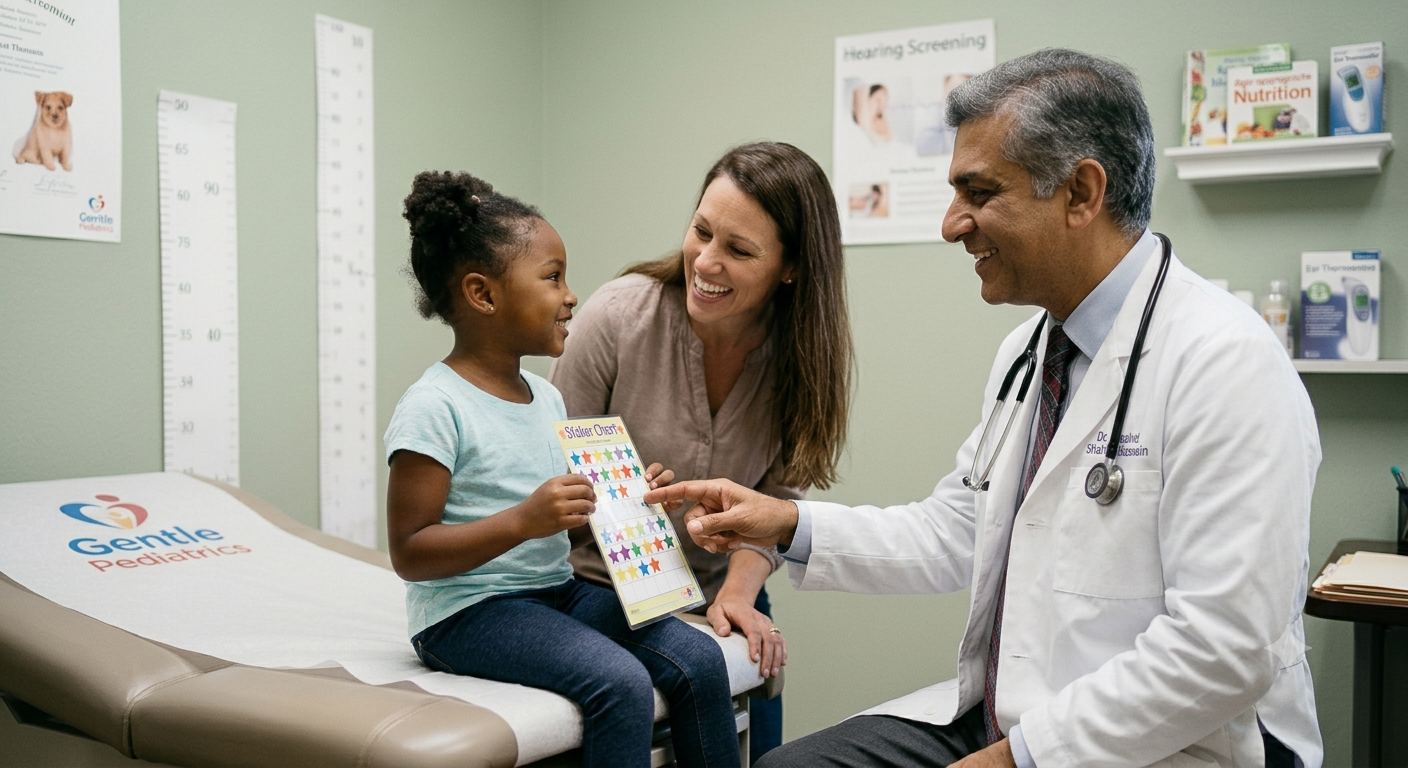
Quick Answer: Regular pediatric checkups help monitor your child’s overall health, growth, and development, even when they appear healthy. These visits allow a pediatrician to track milestones, update vaccinations, screen vision and hearing, and address nutrition, sleep, physical activity, and emotional well-being. They also help identify potential concerns early and provide age-appropriate guidance. If you’re looking for a trusted pediatrician in Sugar Land, TX, Gentle Pediatrics offers preventive care to support your child’s healthy development at every stage.
As a parent, you naturally want your child to stay healthy, grow well, and reach important developmental milestones. When your child looks active and feels fine, it may seem like a doctor’s visit is unnecessary. However, children need regular health checkups even when they are not sick.
A child may have a vision problem without telling you, struggle with hearing without showing obvious signs, or experience a growth or developmental concern that is difficult to notice at home. Regular pediatric checkups help identify these concerns early and give parents a chance to discuss their child’s health.
As a board-certified pediatrician with more than two decades of experience caring for infants, children, and adolescents, I believe preventive care is one of the most important parts of keeping children healthy. These visits help us understand how a child is growing physically, emotionally, socially, and developmentally.
Here is how routine checkups support your child’s overall health.
1. Track Your Child’s Growth and Development
One of the main purposes of a pediatric checkup is to monitor your child’s growth.
During these visits, I assess measurements such as:
- Height or length.
- Head circumference in infants and young children.
- Body mass index (BMI), when appropriate for age.
These measurements are recorded over time and compared with standard growth charts. A single measurement does not tell the whole story. What matters is how your child grows over several visits.
For example, a child who has consistently followed a particular growth pattern may need closer assessment if their weight suddenly drops or their height growth slows. This does not automatically mean there is a serious problem, but it gives us a reason to investigate.
Regular visits also help parents discuss appetite, nutrition, sleep, physical activity, and other factors that affect healthy growth.
2. Identify Developmental Delays Early
Children develop at different speeds, but certain skills are expected around specific ages. Pediatric checkups give us opportunities to review these milestones.
Depending on your child’s age, I may ask about:
- Sitting, standing, walking, and coordination.
- Speaking, understanding words, and communicating.
- Playing and interacting with others.
- Learning, memory, and problem-solving.
- Emotional responses and behavior.
The American Academy of Pediatrics (AAP) recommends developmental screening at 9, 18, and 30 months. Autism-specific screening is recommended at 18 and 24 months. Additional screening may be needed whenever parents or healthcare professionals have concerns.
Early identification matters because children may benefit from additional support, therapy, or further evaluation. Parents should not wait for the next scheduled checkup if they notice a developmental concern or their child loses a skill they previously had.
3. Keep Vaccinations Up to Date
Vaccines protect children from several serious infectious diseases. Regular checkups help parents review their child’s immunization record and understand which vaccines may be due.
The recommended schedule includes vaccines at different ages, from infancy through adolescence. If a child misses a dose, a pediatrician can review the record and discuss an appropriate catch-up plan.
During a visit, I also explain what a vaccine protects against, what mild reactions may occur, and what parents should watch for afterward. Keeping an accurate vaccination record is especially helpful when children start school, join sports teams, or change healthcare providers.
4. Check Vision and Hearing
Vision and hearing affect how children learn, communicate, and interact with the world. Some problems are not easy for parents to recognize.
A child with a vision concern may sit very close to the television, squint while reading, complain of headaches, or struggle to see the classroom board. Hearing difficulties may appear as delayed speech, frequent requests to repeat instructions, or trouble following conversations.
Routine pediatric visits can include age-appropriate vision and hearing assessments. If a screening suggests a possible problem, your pediatrician may recommend a more complete evaluation by an eye or hearing specialist.
5. Monitor Nutrition, Sleep, and Physical Activity
Healthy habits developed during childhood can support long-term well-being. Checkups give parents an opportunity to discuss everyday routines and ask questions about their child’s needs.
Some topics we may review include:
- Nutrition: Is your child eating a variety of foods and getting enough nutrients?
- Sleep: Is your child getting enough rest for their age?
- Physical activity: Does your child have regular opportunities to play, exercise, and move?
- Screen time: Is device use affecting sleep, activity, or family routines?
- Growth: Is your child’s eating pattern supporting healthy development?
If a child is gaining weight too quickly, not gaining enough, or frequently feels tired, a closer review may be helpful. Advice should always consider the child’s age, growth pattern, medical history, and daily routine.
6. Discuss Behavior and Emotional Health
A child’s health includes more than physical development. Emotional and behavioral changes also deserve attention.
During checkups, I encourage parents to discuss concerns such as:
- Frequent tantrums or sudden behavior changes.
- Difficulty making friends or interacting with others.
- School struggles or problems with concentration.
- Changes in sleep or appetite.
- Persistent worry, sadness, or irritability.
For teenagers, conversations may also include stress, peer relationships, body image, mood, and other age-related concerns. Some discussions are best held privately with the adolescent, while respecting safety and appropriate family involvement.
Regular visits create opportunities to notice patterns and decide whether further support is needed. The AAP’s preventive-care guidance includes age-appropriate psychosocial and behavioral assessments.
7. Build a Trusted Relationship With Your Pediatrician
Seeing the same pediatrician over time helps build familiarity and continuity. Your doctor can review previous growth measurements, medical history, medications, allergies, and earlier concerns instead of looking at each visit in isolation.
This history can be useful when a new symptom appears or when a child has an ongoing health condition. It also gives parents a familiar place to ask questions about everyday concerns, from feeding and sleep to puberty and school health.
The American Academy of Pediatrics emphasizes continuity of care as an important part of comprehensive child health supervision.
How Often Should Your Child Have a Pediatric Checkup?
The recommended schedule depends on your child’s age and health needs. Babies generally need more frequent visits during their first years because growth and development change quickly. Older children and teenagers usually have annual preventive visits.
The AAP Bright Futures schedule includes visits during the newborn period, infancy, early childhood, school years, and adolescence. Children with ongoing medical or developmental concerns may need additional appointments between routine checkups.
Do not wait for a routine appointment if your child develops a new or concerning symptom. Preventive checkups are important, but they do not replace visits for illness or urgent medical concerns.
Pediatric Care at Gentle Pediatrics
At Gentle Pediatrics, we believe regular checkups help families make informed decisions about their children’s health. We focus on growth, development, nutrition, preventive screenings, vaccinations, and age-appropriate guidance.
If you are looking for a trusted pediatrician in Sugar Land, TX, our team is here to support your family through every stage of childhood, from newborn care to adolescent health.
About Dr. Shahid Hasnain
I am a board-certified pediatrician with more than two decades of experience caring for infants, children, and adolescents. He has been board-certified by the American Board of Pediatrics since 1998.
My training includes a Master’s in Public Health specializing in Maternal & Child Health, a pediatric internship at Lincoln Hospital in New York, and residency at the University of Tennessee Medical Center in Knoxville, where I served as Chief Resident in my final year.
At Gentle Pediatrics, I combine clinical experience with a gentle approach and clear communication to help families make informed decisions about their children’s health.
Final Thoughts
Regular pediatric checkups help monitor more than your child’s height and weight. They provide opportunities to review development, vaccinations, vision, hearing, nutrition, sleep, behavior, and emotional health. They can also help identify concerns before they become more difficult to address.
As a board-certified pediatrician, I encourage parents not to wait until their child becomes sick to schedule a visit. Preventive care builds a foundation for healthy growth and gives families a trusted place to ask questions. At Gentle Pediatrics, we are committed to supporting children and parents through every stage of development.
Schedule a Pediatric Visit
If your child is due for a routine checkup or you have questions about their growth and development, our team at Gentle Pediatrics is here to help.
Gentle Pediatrics proudly serves families throughout:
- Sugar Land
- Richmond
- Rosenberg
- Stafford
- Katy
- Houston
📍 Gentle Pediatrics, Sugar Land, Texas
Contact our office today or fill out the online patient registration form to discuss your child’s preventive care, developmental progress, and overall health.
Frequently Asked Questions
- Why does my child need checkups if they are not sick?
Routine visits help monitor growth, development, vaccinations, and overall health. They can also identify concerns that may not cause obvious symptoms.
- How often should children visit a pediatrician?
Babies need more frequent visits during infancy and early childhood. Older children and teenagers generally need annual preventive checkups, although individual health needs may require additional visits.
- What happens during a routine pediatric checkup?
A visit may include measuring height and weight, checking vital signs, reviewing development, discussing nutrition and sleep, checking vaccinations, and completing age-appropriate screenings.
- Can pediatric checkups identify developmental delays?
They can help identify concerns through developmental monitoring and standardized screening. The AAP recommends general developmental screening at 9, 18, and 30 months, with autism screening at 18 and 24 months.
- Should teenagers continue seeing a pediatrician?
Yes. Adolescents still need preventive care. Visits provide opportunities to discuss physical development, emotional health, nutrition, sleep, relationships, and age-appropriate health concerns.
This article is for general educational purposes and does not replace professional medical advice, diagnosis, or treatment. Every child’s health needs are different. Consult your child’s healthcare professional for recommendations based on their age, medical history, growth, and development.