

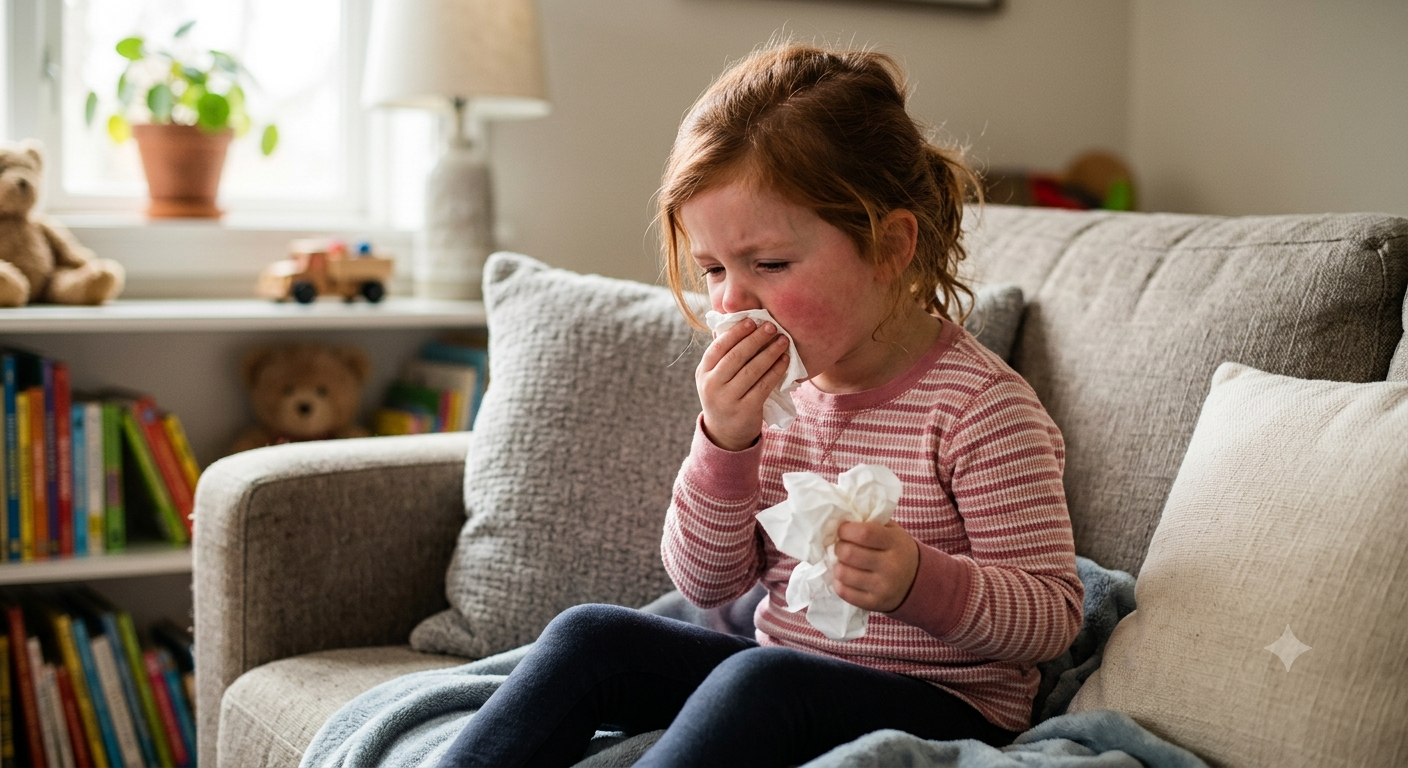
 Quick Answer: A cough without a fever in children is often caused by a mild viral infection, allergies, postnasal drip, asthma, or environmental irritants and usually improves with supportive care. However, if the cough lasts more than two weeks, disrupts sleep, causes breathing difficulties, wheezing, chest pain, or persistent sore throat, your child should be evaluated by a pediatrician. Seek emergency care for severe breathing problems, blue lips, confusion, or choking. Early diagnosis helps ensure appropriate treatment and a safe recovery.
As a pediatrician, one of the questions I hear most often from worried parents is: “My child has been coughing for a few days, but they don’t have a fever. Should I be concerned?”
A cough without a fever is very common in children. In many cases, it is caused by a mild viral infection, allergies, or irritation in the airways. While some coughs improve on their own, others may last longer or point to an underlying condition that needs medical attention.
The good news is that the absence of a fever often means your child’s body is not fighting a serious infection. However, a cough should never be ignored if it is persistent, interferes with sleep, causes breathing difficulties, or is accompanied by other concerning symptoms.
As a board-certified pediatrician with more than 20 years of experience caring for children and adolescents, I believe parents should understand what different types of coughs may mean and when it is time to schedule a visit.
Why Can a Child Have a Cough Without a Fever?
A cough is actually a protective reflex. It helps clear mucus, dust, allergens, and germs from the airways.
Many conditions can trigger coughing without raising body temperature.
Some of the most common causes include:
- Common viral infections
- Seasonal allergies
- Postnasal drip
- Asthma
- Environmental irritants
- Acid reflux
- Mild bronchitis
- Habit cough
- Recovery after a cold
The treatment depends entirely on what is causing the cough, which is why a careful evaluation is important if symptoms continue.
Common Causes of a Cough Without Fever
1. A Common Cold
Many viral colds begin with a runny nose and sore throat before a fever develops. In other cases, children never develop a fever at all.
Symptoms often include:
- Runny nose
- Sneezing
- Mild sore throat
- Dry or wet cough
- Mild congestion
Most colds improve within 7 to 10 days, although the cough may last for two to three weeks.
2. Seasonal Allergies
Allergies are one of the most frequent reasons children develop an ongoing cough without becoming sick.
When pollen, dust mites, mold, or pet dander irritate the nose, mucus drips down the back of the throat. This is called postnasal drip and often triggers coughing.
Other allergy symptoms include:
- Itchy eyes
- Sneezing
- Clear runny nose
- Nasal congestion
- Frequent throat clearing
Unlike infections, allergies do not cause fever.
3. Postnasal Drip
Postnasal drip can occur after a cold or because of allergies.
Extra mucus collects in the throat and stimulates the cough reflex.
Parents often notice:
- Cough that worsens at night
- Frequent swallowing
- Feeling like something is stuck in the throat
- Mild sore throat
In many children, treating the underlying nasal congestion helps improve the cough.
4. Asthma
Asthma does not always cause wheezing.
Some children have what is known as cough-variant asthma, where a chronic cough is the main symptom.
Watch for:
- Nighttime coughing
- Cough after exercise
- Cough triggered by cold air
- Shortness of breath
- Chest tightness
If asthma is suspected, your pediatrician may recommend additional evaluation and treatment.
5. Environmental Irritants
Children have sensitive airways.
Exposure to irritants can easily trigger coughing, including:
- Cigarette smoke
- Air pollution
- Strong perfumes
- Cleaning products
- Dust
- Smoke from fireplaces
Reducing exposure often leads to significant improvement.
6. Acid Reflux
Some children experience gastroesophageal reflux (GERD), where stomach acid travels back into the esophagus.
Symptoms may include:
- Dry cough
- Hoarse voice
- Frequent throat clearing
- Heartburn
- Cough after meals or when lying down
Reflux-related coughs require different treatment than infections.
What Does the Type of Cough Tell Us?
Listening to the character of a cough often provides valuable clues.
1. Dry Cough
A dry cough may be caused by:
- Viral infections
- Allergies
- Asthma
- Irritated airways
2. Wet or Productive Cough
A wet cough often suggests mucus in the airways.
Possible causes include:
- Viral bronchitis
- Sinus drainage
- Pneumonia
- Bacterial infections
3. Persistent Nighttime Cough
If your child’s cough mainly occurs at night, common causes include:
- Asthma
- Allergies
- Postnasal drip
- Acid reflux
When Should Parents Be Concerned?
Although many coughs improve with time, some symptoms require prompt medical evaluation.
I recommend scheduling an appointment if your child has:
- A cough lasting longer than two weeks
- Difficulty breathing
- Wheezing
- Chest pain
- Persistent sore throat
- Poor appetite
- Fatigue
- Repeated vomiting after coughing
- A cough that disrupts sleep every night
Parents know their children best. If something feels unusual, trust your instincts and seek medical advice.
Could It Be a Sore Throat?
Many children cough because their throat has become irritated.
Postnasal drip, viral infections, allergies, and even acid reflux can all cause throat irritation that triggers coughing.
As a child sore throat doctor in Sugar Land, I often evaluate children whose main complaint is coughing when the actual problem begins in the throat.
During the examination, I carefully look for:
- Redness
- Swollen tonsils
- Drainage
- Signs of strep throat
- Mouth breathing
- Enlarged lymph nodes
Finding the true cause allows us to recommend the most appropriate treatment.
Does Every Cough Need Antibiotics?
No.
This is one of the biggest misconceptions I discuss with parents.
Most coughs are caused by viral infections.
Antibiotics only work against bacterial infections.
Using antibiotics when they are not needed can:
- Cause side effects
- Increase antibiotic resistance
- Disrupt healthy bacteria
If a bacterial infection is present, I will explain why antibiotics are appropriate and which medication is best for your child.
How Can Parents Help at Home?
Most mild coughs improve with supportive care.
Helpful home measures include:
1. Encourage Fluids
Water helps thin mucus and keeps the throat moist.
Warm soups and clear broths can also be soothing.
2. Use a Cool Mist Humidifier
Adding moisture to the air can ease throat irritation and reduce nighttime coughing.
Be sure to clean the humidifier regularly to prevent mold growth.
3. Saline Nose Drops
For younger children, saline sprays or drops help loosen mucus and reduce postnasal drip.
4. Honey for Children Over One Year
A small amount of honey before bedtime may help reduce nighttime coughing.
Honey should never be given to babies under one year because of the risk of infant botulism.
5. Encourage Rest
Sleep allows the immune system to recover more efficiently.
Keeping your child home while they are not feeling well also helps prevent spreading infections.
When Should You Seek Emergency Care?
Although uncommon, certain symptoms require immediate medical attention.
Go to the nearest emergency department if your child develops:
- Severe difficulty breathing
- Blue lips or face
- Chest pulling in with each breath
- Inability to speak because of breathing difficulty
- Confusion
- Extreme sleepiness
- Choking episode
- Persistent high-pitched breathing sounds
These symptoms should never be managed at home.
What Happens During a Pediatric Evaluation?
At Gentle Pediatrics, every visit begins with listening carefully to your concerns.
I ask questions such as:
- When did the cough begin?
- Is it dry or wet?
- Does it occur during the day or night?
- Has your child recently been around someone who was sick?
- Does exercise make it worse?
- Are allergies common in your family?
Next, I perform a thorough physical examination, including:
- Listening to the lungs
- Examining the ears
- Looking at the throat
- Checking the nose
- Feeling for swollen lymph nodes
- Measuring oxygen levels if needed
Depending on the findings, additional testing may include:
- Strep testing
- Viral testing
- Chest X-rays
- Allergy evaluation
- Asthma assessment
Most children can be diagnosed and treated during their office visit without extensive testing.
Why Families Trust Dr. Shahid Hasnain
For more than two decades, I have had the privilege of caring for children throughout Sugar Land and the surrounding communities.
My background includes:
- A Master’s in Public Health with a concentration in Maternal and Child Health
- Pediatric internship at Lincoln Hospital in New York
- Pediatric residency at the University of Tennessee Medical Center
- Chief Resident during my final year of training
- Board Certification by the American Board of Pediatrics since 1998
I believe that every parent deserves clear answers, evidence-based recommendations, and compassionate care. Whether your child has a simple viral cough or a more complex respiratory condition, my team and I are committed to helping your family feel informed and supported every step of the way.
Final Thoughts
Seeing your child cough day after day can be stressful, especially when there is no fever to explain what is happening. While many coughs without a fever are caused by mild viral infections, allergies, or throat irritation, some may require a closer medical evaluation to identify the underlying cause.
As a parent, trust your instincts. If your child’s cough lasts longer than expected, interferes with sleep, causes breathing difficulties, or is accompanied by a sore throat or other concerning symptoms, don’t wait to seek medical advice. Early evaluation can often prevent minor problems from becoming more serious.
At Gentle Pediatrics, we are here to support your family every step of the way.
Frequently Asked Questions
1. Can a child have pneumonia without a fever?
Yes. While many children with pneumonia develop a fever, some, especially those with mild or atypical pneumonia, may primarily have a persistent cough, fatigue, or fast breathing.
2. How long should a cough last after a cold?
A cough often lasts two to three weeks after a viral cold. If it continues beyond that or becomes worse, your child should be examined.
3. Should I give my child over-the-counter cough medicine?
No. Over-the-counter medicines should never be given to infants and young children under 4 years old. These medications can cause dangerous, life-threatening side effects, including severe respiratory depression, seizures, and rapid heart rates. For older children, always consult your pediatrician before administration.
4. Can allergies cause coughing all year?
Yes. Indoor allergens such as dust mites, mold, and pet dander can trigger year-round coughing in sensitive children.
5. When should I bring my child to the pediatrician?
Schedule an appointment if the cough lasts more than two weeks, interferes with sleep, causes breathing problems, is accompanied by a persistent sore throat, or if you simply feel something isn’t right.
Book an Appointment at Gentle Pediatrics in Sugar Land
At Gentle Pediatrics, we proudly serve families throughout:
- Sugar Land
- Richmond
- Rosenberg
- Katy
- Stafford
- Houston
Gentle Pediatrics — Sugar Land, Texas
Contact our office today to book an evaluation and help your child breathe easier.
This article is for educational and informational purposes only and is not a substitute for professional medical advice, diagnosis, or treatment. Always consult your child’s pediatrician or another qualified healthcare provider if your child has a persistent cough, worsening symptoms, or any concerns about their health.