

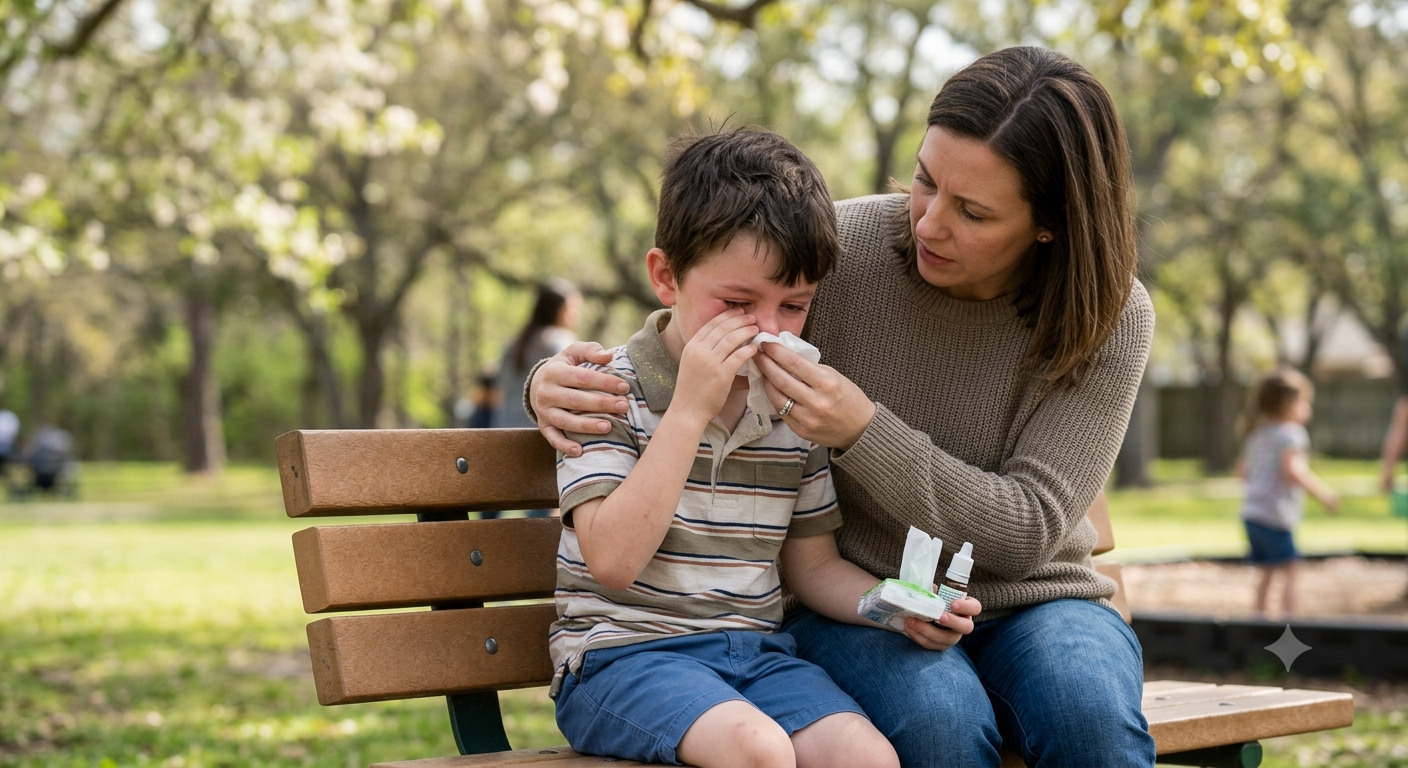
Quick Answer: Parents can reduce allergy exposure by monitoring local pollen counts, keeping windows closed, and encouraging children to change clothes and shower after outdoor activities. If symptoms persist or interfere with your child’s quality of life, consulting a pediatrician for an individualized care plan is recommended.
As a pediatrician, one of the most common concerns I hear from parents during spring and fall is:
“My child keeps sneezing, rubbing their eyes, and complaining about a stuffy nose. Could it be allergies?”
For many families, peak allergy season can be a challenging time of year. Children who suffer from seasonal allergies often experience symptoms that affect their sleep, school performance, outdoor activities, and overall quality of life.
The good news is that parents can take several practical steps to reduce allergy exposure and help children stay comfortable throughout allergy season.
As a board-certified pediatrician with more than two decades of experience caring for children and adolescents, I have helped many families successfully manage seasonal allergies through prevention strategies, early intervention, and personalized care plans.
This guide explains what causes seasonal allergies, how to recognize symptoms, and the best ways to protect your child during peak allergy season.
Understanding Seasonal Allergies in Children
Seasonal allergies occur when the immune system overreacts to substances in the environment that are normally harmless.
These substances are called allergens.
Common seasonal allergy triggers include:
- Tree pollen
- Grass pollen
- Weed pollen
- Mold spores
When a child with allergies is exposed to these allergens, the immune system releases chemicals such as histamine, which can lead to a variety of symptoms.
Why Allergy Season Can Be Difficult for Children
Children spend a significant amount of time outdoors.
Activities such as:
- Recess
- Sports
- Playground time
- Outdoor family activities
can increase exposure to pollen and other allergens.
Additionally, children may not always recognize or communicate their symptoms clearly.
Some children simply appear tired, irritable, or distracted when allergy symptoms are affecting them.
As a result, parents may not immediately realize allergies are the cause.
Common Signs of Seasonal Allergies
Many allergy symptoms resemble those of a common cold.
However, seasonal allergies often last longer and tend to follow predictable patterns throughout the year.
Common symptoms include:
- Frequent sneezing
- Runny nose
- Nasal congestion
- Itchy nose
- Itchy eyes
- Watery eyes
- Postnasal drip
- Throat irritation
- Mild cough
- Fatigue, poor sleep, and increased irritability
Recognizing these symptoms early can help families seek appropriate care.
When Does Peak Allergy Season Occur?
The timing varies depending on location and environmental conditions.
In Texas, common allergy seasons include:
1. Spring
Tree pollen is often highest during spring months.
Common triggers include:
- Oak trees
- Cedar trees
- Elm trees
2. Summer
Grass pollen levels may rise significantly.
3. Fall
Weed pollens, including ragweed, become major triggers.
4. Year-Round Allergens
Some children are affected by allergens throughout the year, including:
- Dust mites
- Pet dander
- Indoor mold
Understanding your child’s triggers is an important step in allergy management.
How Parents Can Reduce Pollen Exposure
One of the most effective strategies is reducing exposure whenever possible.
While it is impossible to eliminate pollen completely, small changes can make a meaningful difference.
1. Monitor Local Pollen Counts
Many weather apps and allergy websites provide daily pollen forecasts.
When pollen counts are especially high:
- Limit prolonged outdoor activities
- Schedule outdoor play later in the day if possible
2. Keep Windows Closed
During peak allergy periods:
- Keep home windows closed
- Use air conditioning when available
Open windows can allow pollen to enter the home.
3. Change Clothes After Outdoor Activities
Pollen often sticks to:
- Clothing
- Hair
- Shoes
Encourage children to change clothes after spending time outdoors.
4. Shower Before Bed
Bathing helps remove allergens from:
- Hair
- Skin
This may reduce nighttime allergy symptoms.
Creating an Allergy-Friendly Home Environment
Parents can also reduce allergen exposure indoors.
Helpful strategies include:
1. Vacuum Regularly
Use a vacuum equipped with a high-efficiency filter when possible.
2. Wash Bedding Frequently
Pollen and dust can accumulate on bedding.
Weekly washing may help reduce exposure.
3. Use Air Filters
High-quality air filtration systems may help reduce airborne allergens.
4. Keep Pets Clean
Pets can carry pollen indoors after spending time outside.
Regular grooming may help minimize this problem.
How Seasonal Allergies Affect Sleep
One of the most overlooked effects of allergies is poor sleep.
Nasal congestion and postnasal drip can make it difficult for children to rest comfortably.
Poor sleep may lead to:
- Daytime fatigue
- Mood changes
- Difficulty concentrating
- Reduced school performance
When I evaluate children during allergy season, sleep quality is often an important part of the discussion.
Improving allergy control frequently leads to better sleep and improved daytime functioning.
The Connection Between Allergies and School Performance
Many parents are surprised to learn that allergies can affect academic performance.
Persistent symptoms may contribute to:
- Difficulty focusing
- Increased fatigue
- Frequent absences
- Reduced classroom participation
Children who are constantly sneezing or dealing with congestion may have a harder time concentrating on schoolwork.
Addressing allergy symptoms early can help support both health and learning.
Hydration During Allergy Season
Proper hydration supports overall health and may help keep nasal passages comfortable.
Encourage children to drink water throughout the day.
Hydration is especially important for children who:
- Participate in sports
- Spend time outdoors
- Experience increased mucus production
While hydration does not cure allergies, it can help children feel more comfortable.
Understanding Allergy Medications
Many families ask whether medications are necessary.
The answer depends on:
- Symptom severity
- Frequency of symptoms
- Impact on daily life
Some children benefit from medication during allergy season.
However, parents should always follow guidance from their healthcare provider regarding medication use.
As a seasonal allergies pediatrician in Sugar Land, I emphasize individualized treatment plans because every child’s needs are different.
When Allergy Testing May Be Helpful
In some situations, allergy testing may provide valuable information.
Testing may be considered when:
- Symptoms are persistent
- Triggers are unclear
- Standard treatments are not effective
- Symptoms significantly affect quality of life
Identifying specific triggers can help families create more targeted prevention strategies.
A child allergy specialist in Sugar Land may recommend testing when appropriate.
When Parents Should Schedule a Medical Evaluation
Parents should consider scheduling an appointment if their child experiences:
- Persistent sneezing
- Ongoing nasal congestion
- Frequent itchy eyes
- Chronic cough
- Symptoms lasting several weeks
- Sleep disruption
- Difficulty participating in normal activities
Early evaluation can help identify the cause and prevent symptoms from becoming more disruptive.
As a seasonal allergies pediatrician in Sugar Land, I often find that early intervention leads to better long-term symptom control.
Warning Signs That Need Prompt Medical Attention
Although most seasonal allergies are not dangerous, certain symptoms require immediate medical evaluation.
Seek prompt medical care if your child experiences:
- Difficulty breathing
- Wheezing
- Severe swelling
- Signs of an allergic reaction affecting multiple body systems
- Significant respiratory distress
These symptoms may indicate a more serious condition requiring urgent attention.
Allergy Care at Gentle Pediatrics
Our practice provides comprehensive allergy-related care, including:
- Seasonal allergy evaluations
- Symptom management plans
- Allergy education
- Asthma monitoring
- Preventive care guidance
- Ongoing pediatric wellness care
Why Families Trust Gentle Pediatrics
Families choose Gentle Pediatrics because we provide:
Evidence-based medical care
Compassionate support
Individualized treatment plans
Preventive healthcare guidance
Family-centered communication
Our mission is to help children stay healthy, active, and comfortable throughout every season.
About Dr. Shahid Hasnain
I am Dr. Shahid Hasnain, a board-certified pediatrician with more than two decades of experience caring for infants, children, and adolescents.
My professional training includes:
- Master of Public Health, specializing in Maternal and Child Health
- Pediatric Internship at Lincoln Hospital in New York
- Pediatric Residency at the University of Tennessee Medical Center
- Chief Resident during residency training
- Board Certification through the American Board of Pediatrics since 1998
Throughout my career, I have remained committed to providing evidence-based, compassionate pediatric care while helping families make informed healthcare decisions.
Final Thoughts
Seasonal allergies are common, but they do not have to disrupt your child’s daily life.
When you understand triggers, reduce allergen exposure, maintain healthy habits, and seek medical guidance when needed, parents can help children navigate allergy season more comfortably.
The earlier symptoms are recognized, the easier it often becomes to manage them effectively.
At Gentle Pediatrics, we are committed to helping families protect their children during allergy season and throughout the year.
Schedule an Allergy Evaluation
If your child is struggling with seasonal allergy symptoms, our team is here to help.
Gentle Pediatrics proudly serves families throughout:
- Sugar Land
- Richmond
- Rosenberg
- Stafford
- Katy
- Houston
Gentle Pediatrics — Sugar Land, Texas
Contact our office today to book an appointment with a seasonal allergies pediatrician in Sugar Land and learn more about personalized allergy care options for your child.
Frequently Asked Questions
1. How do I know if my child has allergies or a cold?
Colds usually resolve within one to two weeks. Seasonal allergies often persist for longer periods and may occur during the same season each year.
2. What are the most common allergy symptoms in children?
Common symptoms include sneezing, congestion, itchy eyes, runny nose, and postnasal drip.
3. Can seasonal allergies affect sleep?
Yes. Nasal congestion and other symptoms may interfere with sleep quality.
4. When should my child see a doctor for allergies?
If symptoms are persistent, interfere with daily activities, or affect sleep and school performance, an evaluation is recommended.
5. Is allergy testing necessary for every child?
No. Testing is typically recommended when symptoms are severe, persistent, or difficult to manage.
This article is for educational and informational purposes only and is not intended to replace professional medical advice, diagnosis, or treatment. Always consult your child’s healthcare provider regarding any medical concerns or symptoms. If your child is experiencing a medical emergency, seek immediate medical attention.