Summary:
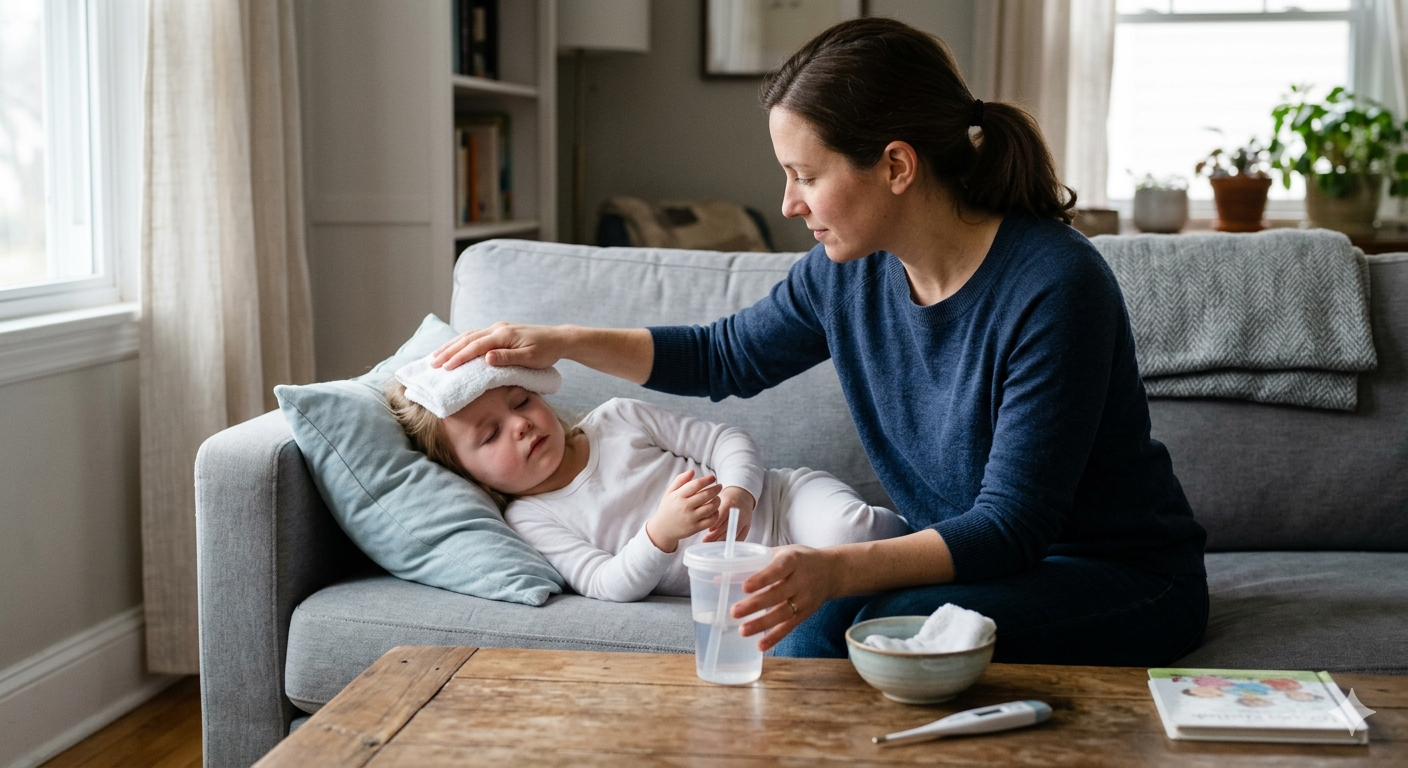
To safely reduce a child’s fever without medicine, focus on physical temperature regulation and continuous hydration. Keep the child in a single layer of lightweight cotton clothing, maintain an ambient room temperature between 68°F and 70°F, apply a lukewarm washcloth to the skin, and offer small, frequent sips of hydrating fluids. Never use cold water, ice baths, or rubbing alcohol, as these interventions trigger metabolic responses that dangerously increase core body temperatures.
Not many things trigger parental anxiety quite like a late-night spike in your child’s body temperature. In my years of clinical practice, I have stood alongside countless worried parents tracking fluctuating numbers on a digital thermometer.
As a pediatrician, one of the most common concerns I hear from parents is: “My child has a fever. Do I need to give medicine right away?”
The answer may surprise many families.
In many cases, fever itself is not dangerous. In fact, fever is often a sign that the body’s immune system is fighting an infection.
Over my more than 25 years of caring for children, I have reassured countless parents that not every fever requires medication. Sometimes, the goal is not to eliminate the fever immediately but to keep the child comfortable while the body recovers.
As a board-certified pediatrician at Gentle Pediatrics, I believe that understanding fever can help parents feel less anxious and more confident when caring for a sick child.
In this guide, I will explain how to safely reduce discomfort from fever without medicine, when supportive care is appropriate, and when parents should seek medical attention.
Understanding Fever in Children
A fever is generally defined as a body temperature of 100.4°F (38°C) or higher.
Many parents view fever as the illness itself, but fever is actually a symptom.
It commonly occurs when the body is responding to:
- Viral infections
- Bacterial infections
- Immunizations
- Inflammatory conditions
According to guidance from organizations such as the American Academy of Pediatrics (AAP) and the Centers for Disease Control and Prevention (CDC), fever is often a normal part of the body’s defense system.
The number on the thermometer is only one piece of the picture.
What matters most is how your child looks, feels, and behaves.
My Philosophy on Treating Fever
Throughout my years of practice, I have found that many parents become understandably worried when they see a temperature rise.
However, I often remind families of something important:
Treat the child, not just the number.
A child with a mild fever who is:
- Drinking fluids
- Playing occasionally
- Responding normally
- Resting comfortably
may not require immediate medication.
On the other hand, a child who appears very uncomfortable may benefit from additional support and medical evaluation.
The primary goal should always be comfort and hydration rather than simply lowering the temperature.
Non-Medication Approaches To Support Your Child
For children who are otherwise stable and comfortable, several simple measures can help reduce discomfort naturally.
These supportive strategies are often very effective.
1. Encourage Plenty of Fluids
One of the most important things parents can do is prevent dehydration.
Children lose fluids more quickly during a fever because they may:
- Sweat more
- Breathe faster
- Eat and drink less
Offer fluids frequently, including:
- Water
- Breast milk
- Formula
- Oral rehydration solutions
- Clear soups
For older children, ice pops may also encourage hydration.
In my experience, maintaining hydration often helps children feel significantly better.
2. Dress Your Child Comfortably
A common misconception is that children with a fever should be bundled in heavy blankets.
In reality, overdressing can trap heat and make a child feel more uncomfortable.
Instead, I recommend:
- Lightweight clothing
- Breathable fabrics
- Comfortable pajamas
The goal is to help your child remain comfortable without becoming overheated.
3. Keep the Room at a Comfortable Temperature
The environment can affect how a child feels during illness.
A room that is excessively warm may increase discomfort.
I generally recommend:
- Moderate room temperatures (ideally between 68°F and 70°F)
- Good airflow
- Avoiding extreme heat
Parents do not need to make the room cold. Comfort should remain the priority.
4. Encourage Rest
When children are sick, their bodies need energy to recover.
Rest supports the immune system and allows healing to occur.
This does not necessarily mean strict bed rest.
Some children may:
- Read books
- Watch a favorite movie
- Engage in quiet activities
Allow your child to rest according to their energy level.
5. Offer Light, Easy-to-Digest Foods
Many children experience a reduced appetite during fever.
This is often temporary and usually not a cause for concern.
Instead of forcing meals, offer gentle options such as:
- Soup
- Yogurt
- Toast
- Crackers
- Bananas
Hydration is generally more important than food intake during the early stages of illness.
6. Use a Lukewarm Bath Carefully
Parents often ask me whether baths can help.
A lukewarm bath may sometimes provide temporary comfort.
However, it is important to avoid:
- Cold baths
- Ice water
- Alcohol rubs
These methods can cause shivering, which may actually increase body temperature and discomfort.
If a child dislikes the bath or becomes upset, it is perfectly acceptable to stop.
Comfort should always guide the decision.
What Parents Should Avoid
Some traditional fever remedies are no longer recommended by pediatric experts.
I advise families to avoid:
1. Ice Baths
Cold water causes shivering, which physically stresses the body and drives the core temperature higher.
2. Alcohol Rubs
Rubbing alcohol must never be applied to a child’s skin. It is highly volatile and can be rapidly absorbed through the skin or inhaled as toxic vapor, leading to dangerous clinical complications like chemical coma, severe hypoglycemia (low blood sugar), or alcohol poisoning.
3. Excessive Bundling
Heavy blankets or multiple clothing layers trap body heat and dangerously elevate temperatures.
4. Forcing Food
Children naturally eat less while fighting an infection. Forcing meals can lead to nausea and vomiting. Focus entirely on hydration.
Monitoring Your Child During a Fever
When children have a fever, parents should observe their overall behavior more than just chasing thermometer readings. Pay close attention to their energy level, breathing patterns, hydration status, and responsiveness. A playful child with a mild fever is generally less concerning than a child without a fever who appears unusually listless.
To ensure your child is staying adequately hydrated, watch for these positive signs:
- Regular urination (at least one wet diaper or bathroom trip every 6 hours)
- Moist lips, tongue, and inner mouth
- Visible tears when crying
- Alertness and normal interaction when awake
- Normal skin elasticity and color
- Signs Your Child Is Staying Hydrated
- Parents often ask how they can tell if their child is drinking enough.
Positive signs include:
- Regular urination
- Moist lips
- Tears when crying
- Alertness
- Normal skin appearance
If a child becomes dehydrated, medical evaluation may be needed.
When Fever Requires Medical Attention
Although many fevers can be managed at home, certain situations require prompt medical care.
Contact your healthcare provider if your child has:
1. Fever in an Infant Younger Than 3 Months
Any fever of 100.4°F (38°C) or higher in a newborn or infant under 3 months of age requires immediate evaluation in an emergency room. Young infants have highly immature immune systems and may not show typical signs of severe illness. Do not administer any over-the-counter fever-reducing medications at home before an infant in this age group is evaluated by a physician, as masking the fever can delay the critical diagnosis of a serious bacterial infection.
2. Fever in an Infant Between 3 and 6 Months
Any fever reaching 101°F (38.3°C) or higher in an infant between 3 and 6 months old requires prompt notification and evaluation by your pediatrician to rule out escalating infections.
3. Difficulty Breathing
Seek medical attention if your child develops:
- Rapid breathing
- Wheezing
- Chest retractions
- Bluish lips
4. Signs of Dehydration
Warning signs include:
- Very few wet diapers
- Dry mouth
- No tears when crying
- Extreme fatigue
5. Persistent Fever
If the fever continues for several days or repeatedly returns, your child should be evaluated.
6. Unusual Sleepiness or Confusion
Children who are difficult to wake or appear confused need a prompt medical assessment.
Fever Evaluation Services at Gentle Pediatrics
Our pediatric clinic in Sugar Land provides comprehensive evaluations for children experiencing fever and illness.
We focus on:
- Fever assessments
- Same-day sick visits
- Infection evaluations
- Hydration assessments
- Respiratory illness care
- Newborn and infant evaluations
- Preventive pediatric care
We help families understand when home care is appropriate and when additional treatment may be needed.
Why Parents Trust Gentle Pediatrics
At Gentle Pediatrics, we focus on helping families make informed decisions about their child’s health.
Parents often tell us they appreciate:
- Clear explanations
- Evidence-based guidance
- Compassionate care
- Child-friendly visits
- Honest recommendations
As a child specialist in Sugar Land, I believe families deserve medical advice that is practical, understandable, and tailored to their child’s unique needs.
Final Thoughts
Fever can be concerning for parents, but it is often a normal part of the body’s response to illness.
In many situations, simple supportive measures such as hydration, rest, comfortable clothing, and monitoring can help children feel better without immediately relying on medication.
Most importantly, focus on how your child looks and behaves rather than solely on the thermometer reading.
If you ever feel uncertain, trust your instincts and contact a healthcare professional.
As a child specialist in Sugar Land, I am always happy to help families understand what is normal, what requires attention, and how to care for their children safely and confidently.
Schedule a Visit at Gentle Pediatrics
If your child has a fever, signs of illness, or symptoms that concern you, our team is here to help.
Gentle Pediatrics proudly serves families from:
- Sugar Land
- Richmond
- Rosenberg
- Stafford
- Katy
- Houston
Gentle Pediatrics — Sugar Land, Texas
Contact our pediatric clinic in Sugar Land today to book an appointment with Dr. Shahid Hasnain, a trusted child specialist in Sugar Land dedicated to helping children stay healthy and thrive.
Frequently Asked Questions
1. Is fever dangerous for most children?
No. Fever is usually a normal response to infection and often helps the body fight illness.
2. Should I wake my child to check their temperature?
Not necessarily. If your child is resting comfortably, sleep can support recovery.
3. Are cold baths recommended for fever?
No. Cold baths may cause shivering and increase discomfort.
4. How can I help prevent dehydration during fever?
Encourage frequent fluids and monitor urination and overall hydration.
5. When should I contact a pediatrician about a fever?
Seek medical advice for infants under three months, breathing difficulties, dehydration, prolonged fever, or unusual behavior changes.
This article provides general educational information and does not replace direct medical advice, diagnosis, or treatment. Always consult a pediatrician for specific guidance regarding your child’s health.