

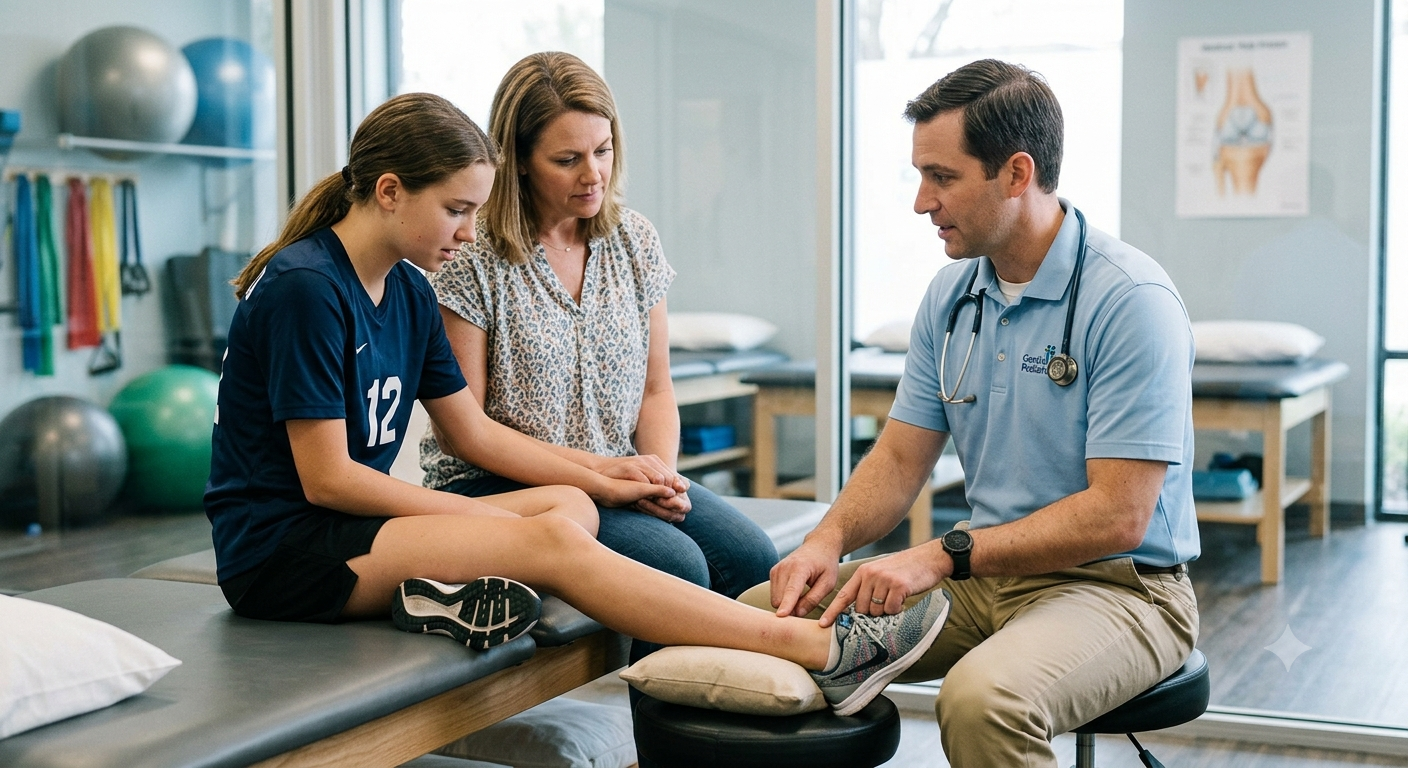
Quick Answer: Most childhood sports injuries are minor, but severe or worsening pain, significant swelling, inability to walk or use an injured body part, bone tenderness, deformity, or persistent symptoms should be medically evaluated. Children can also experience fractures, growth-plate injuries, and concussions that may not be immediately obvious. After a suspected concussion, remove your child from play and seek medical evaluation. When in doubt, stop activity and consult a pediatric healthcare professional rather than encouraging your child to play through the injury.
Seeing your child get hurt during a game or practice can be frightening.
Parents often ask me the same question: “How do I know if this is something minor or something that needs medical attention?”
Not every sports injury is serious. Children commonly experience sprains, strains, bruises, and other minor injuries. However, some injuries require prompt evaluation, particularly when there is severe pain, inability to use the injured body part, significant swelling, deformity, or symptoms after a head injury.
As a board-certified pediatrician with more than two decades of experience caring for children and adolescents, I encourage parents to pay attention to how the injury happened, how severe the symptoms are, and how the child is functioning afterward.
This guide explains what parents should look for and when a sports injury should be evaluated by a healthcare professional.
What Are the Most Common Sports Injuries in Children?
Children and teenagers can experience many different sports injuries.
Some of the most common include:
-
Sprains
-
Muscle strains
-
Bruises
-
Joint injuries
-
Growth-plate injuries
-
Stress injuries
-
Fractures
-
Concussions
Sprains affect ligaments, while strains involve muscles or tendons. Growth-plate irritation and stress fractures can also occur in young athletes, particularly when the body is exposed to repetitive stress.
The type of injury matters, but so does the child’s age.
Children are still growing, and their bones and growth plates are different from those of adults. Some injuries that look like simple sprains can actually involve a growth plate and require medical evaluation.
When Is a Sports Injury Probably Minor?
Some injuries can initially be managed with rest and observation when the child is otherwise comfortable and able to use the affected body part normally.
A minor injury may involve:
-
Mild soreness
-
A small bruise
-
Mild swelling
-
Temporary discomfort
-
Pain that improves with rest
-
Normal movement despite mild discomfort
For a minor injury, parents can generally allow the child to rest and monitor symptoms.
However, improvement matters.
If pain or swelling continues, gets worse, or prevents the child from participating in normal activities, the injury should be evaluated.
Does Severe Pain Mean the Injury Is Serious?
Severe pain is an important warning sign.
If your child immediately experiences intense pain after a fall, collision, twist, or impact, do not encourage them to continue playing.
The same applies if pain remains severe after the child stops playing.
Children sometimes try to hide pain because they do not want to leave a game or disappoint their teammates. Teenagers may also worry about losing their position on a team.
As a parent, it is important to take their symptoms seriously.
Pain that is severe, worsening, or associated with difficulty moving the injured area deserves medical evaluation.
What If My Child Cannot Put Weight on the Injury?
This is one of the most useful signs parents can watch for.
If your child injures their leg, ankle, knee, or foot and cannot comfortably stand or walk afterward, they should be evaluated.
Similarly, an arm or hand injury that prevents normal use may require medical attention.
A child does not necessarily need to have dramatic swelling or a visible deformity to have a significant injury.
In growing children, tenderness directly over a bone can be important even when swelling is minimal. The American Academy of Pediatrics recommends further evaluation when a growing child has point tenderness over a bone.
When Could a Sports Injury Be a Fracture?
A fracture means that a bone has broken.
Signs that may suggest a fracture include:
-
Significant pain
-
Swelling
-
Bruising
-
Tenderness directly over a bone
-
Difficulty using the affected limb
-
Inability to walk normally
-
An abnormal shape or position
-
Pain that worsens with movement
Some fractures are obvious.
Others are much harder to recognize.
Children and teenagers can also experience growth-plate injuries because their bones are still developing. These injuries can sometimes resemble sprains.
That is why I do not recommend assuming that every painful ankle or wrist injury is “just a sprain.”
What Are Growth-Plate Injuries?
Growth plates are areas of developing tissue near the ends of children’s bones.
They help bones grow as children develop.
Because growth plates are still developing, they can be vulnerable to certain injuries. In teenagers, the muscle-tendon structures can sometimes exert enough force to injure the growth center where they attach.
This is one reason sports injuries in children should not always be evaluated using the same assumptions we might use for adults.
If your child’s pain is concentrated directly over a bone or near a joint after an injury, medical evaluation may be appropriate.
What If My Child Has a Lot of Swelling?
Swelling can occur with many sports injuries, including bruises, sprains, and fractures.
Mild swelling is not necessarily an emergency.
However, significant swelling, especially when combined with severe pain or inability to move the affected area normally, should be evaluated.
Parents should also pay attention to how quickly the swelling appeared and whether it continues to increase.
If the injured area looks significantly different from the other side of the body, do not encourage your child to continue playing.
What About a Head Injury or Concussion?
Head injuries deserve special attention.
A concussion is a type of traumatic brain injury that can occur after a bump, blow, or jolt to the head or body. Symptoms can sometimes appear immediately, but they may also develop later.
Possible concussion symptoms include:
-
Headache
-
Dizziness
-
Nausea
-
Balance problems
-
Blurred or double vision
-
Sensitivity to light or noise
-
Confusion
-
Difficulty concentrating
-
Memory problems
-
Feeling sluggish or foggy
-
Changes in mood or behavior
A child does not have to lose consciousness to have a concussion.
The CDC recommends removing your child from play if you suspect a concussion. They should not return to sports the same day and should be evaluated by a healthcare provider experienced in assessing concussions.
When Is a Head Injury an Emergency?
Certain symptoms after a head injury require emergency medical care.
Call 911 or seek emergency care immediately if your child develops:
-
Increasing or severe headache
-
Repeated vomiting
-
Seizures
-
Increasing confusion
-
Slurred speech
-
Weakness or numbness
-
Decreased coordination
-
Unusual behavior
-
One pupil larger than the other
-
Extreme drowsiness
-
Difficulty waking up
-
Loss of consciousness
These can be warning signs of a more serious brain injury.
Do not wait for symptoms to become worse before seeking help.
Should My Child Keep Playing After an Injury?
No child should be encouraged to “play through” a potentially significant injury.
If your child develops substantial pain, dizziness, weakness, difficulty breathing, confusion, or another concerning symptom, stop the activity.
This is particularly important with possible concussions.
The CDC recommends removing a child from sports after a suspected concussion and allowing return to sports only after evaluation and clearance from an appropriate healthcare professional.
Protecting your child’s long-term health is more important than finishing one game.
When Should I Take My Child to a Doctor?
Schedule an evaluation if your child has:
-
Persistent or worsening pain
-
Significant swelling
-
Pain directly over a bone
-
Difficulty walking
-
Difficulty using an arm or hand
-
Reduced range of motion
-
Repeated sports injuries
-
Pain that does not improve with rest
-
Symptoms that interfere with school or sleep
-
Possible concussion symptoms
-
Pain that keeps returning during activity
A child specialist in Sugar Land can evaluate the injury, determine whether further testing is needed, and help your child safely return to normal activities.
What Should Parents Do Immediately After an Injury?
The first step is to stop the activity and assess your child’s symptoms.
Depending on the injury, parents may:
-
Allow the child to rest
-
Protect the injured area from further impact
-
Use a cold pack wrapped in cloth for short periods to help with swelling
-
Keep the injured area comfortable
-
Monitor symptoms
-
Follow medical guidance regarding pain medicine
Avoid aggressively manipulating or “testing” a painful joint.
If you suspect a fracture, significant injury, or dislocation, keep the area as still and comfortable as possible until your child can be evaluated.
For head injuries, focus on monitoring symptoms and following appropriate medical guidance rather than trying to determine the severity yourself.
How Can Parents Help Prevent Sports Injuries?
Sports cannot be made completely risk-free, but parents can take practical steps to reduce injury risk.
Encourage children to:
-
Use sport-appropriate protective equipment
-
Wear properly fitted helmets when required
-
Follow their coach’s safety instructions
-
Warm up appropriately
-
Stay hydrated
-
Take rest days
-
Avoid playing through significant pain
-
Tell an adult when they are injured
-
Follow return-to-play instructions after an injury
The CDC emphasizes that helmets can reduce the risk of severe head or brain injury for activities where helmets are recommended, although no helmet can prevent every concussion.
Pediatric Sports Injury Care at Gentle Pediatrics
At Gentle Pediatrics, we provide comprehensive pediatric care for children and adolescents, including evaluation of many common sports-related concerns.
Our approach includes:
-
Careful injury assessment
-
Evaluation of pain and swelling
-
Assessment of movement and function
-
Concussion evaluation and guidance
-
Growth and development considerations
-
Return-to-activity guidance
-
Preventive pediatric care
As a trusted child specialist in Sugar Land, I understand how important sports can be to children.
My goal is to help young athletes stay active while making sure injuries receive the attention they deserve.
About Dr. Shahid Hasnain
I am Dr. Shahid Hasnain, a board-certified pediatrician with more than two decades of experience caring for infants, children, and adolescents.
I earned a full scholarship to complete my Master of Public Health, specializing in Maternal and Child Health, in Birmingham.
I completed my pediatric internship at Lincoln Hospital in New York and my residency at the University of Tennessee Medical Center in Knoxville, where I served as Chief Resident during my final year.
I have been Board Certified by the American Board of Pediatrics since 1998.
Throughout my career, I have remained committed to evidence-based pediatric care delivered with patience, clarity, and a gentle approach.
Final Thoughts
Sports are an important part of childhood.
They help children build strength, confidence, coordination, teamwork, and healthy habits.
Injuries, however, are sometimes part of being active.
A small bruise or mild soreness may improve with rest and observation. But persistent pain, significant swelling, inability to use an injured body part, tenderness over a bone, or symptoms after a head injury should not be ignored.
Parents should also remember that children may not always recognize or report the seriousness of an injury.
If something does not seem right, it is better to ask a healthcare professional than to encourage your child to keep playing.
After a suspected concussion, remove your child from play and seek appropriate medical evaluation before returning to sports.
At Gentle Pediatrics, we are honored to support children and families through injuries, recovery, and every stage of healthy development.
Schedule a Pediatric Appointment
If your child has a sports injury that is causing persistent pain, swelling, difficulty moving, or other concerning symptoms, our team is here to help.
Gentle Pediatrics proudly serves families throughout:
-
Sugar Land
-
Richmond
-
Rosenberg
-
Stafford
-
Katy
-
Houston
Contact our office today or fill out the online patient registration form to schedule an appointment with a trusted child specialist in Sugar Land and discuss your child’s sports injury.
Frequently Asked Questions
1. How can I tell if my child’s sports injury is serious?
Persistent or severe pain, significant swelling, inability to walk or use the injured area, tenderness over a bone, deformity, or worsening symptoms may indicate a more significant injury requiring medical evaluation.
2. Should my child keep playing if they are hurt?
No. If your child has significant pain, reduced function, dizziness, confusion, or another concerning symptom, stop the activity and seek appropriate medical advice. A suspected concussion requires removal from play.
3. Can a child have a fracture without much swelling?
Yes. Some fractures and growth-plate injuries may not cause dramatic swelling. Persistent, localized tenderness over a bone should be evaluated, even when swelling or movement limitations are minimal.
4. What are signs of a concussion after a sports injury?
Headache, dizziness, nausea, balance problems, confusion, memory difficulties, sensitivity to light or noise, and feeling foggy or unusual can occur after a concussion. Symptoms may not always appear immediately.
5. When should I take my child to the emergency room after a head injury?
Seek emergency care for worsening headache, repeated vomiting, seizures, increasing confusion, weakness or numbness, slurred speech, unusual behavior, unequal pupils, difficulty waking, or loss of consciousness.
This article is intended for educational and informational purposes only and should not be considered medical advice, diagnosis, or treatment. Every child’s injury and medical needs are different. Always consult your pediatrician or another qualified healthcare professional for individualized guidance. If your child has severe symptoms or a potentially life-threatening injury, seek emergency medical care immediately.