
Quick Answer: Newborn checkups and well-child visits both support your child’s health, but their focus changes with age. Newborn checkups, typically during the first days and weeks, focus on feeding, weight, hydration, jaundice, newborn screenings, safe sleep, and adjustment after birth. Well-child visits continue throughout childhood and adolescence, focusing on growth, development, nutrition, behavior, immunizations, safety, and age-specific screenings. Regular preventive visits help identify concerns early and support healthy development at every stage.
Bringing a new baby home is an exciting experience, but it can also come with many questions.
Parents often wonder how often their baby needs to see a pediatrician, what happens during a newborn checkup, and how these visits are different from regular well-child visits.
The short answer is that newborn checkups focus heavily on the baby’s adjustment to life outside the womb, feeding, weight, jaundice, screening results, and the health of both the baby and family. Well-child visits continue this care as the child grows, with increasing attention to development, behavior, prevention, immunizations, and age-specific health concerns.
As a board-certified pediatrician with more than two decades of experience caring for infants, children, and adolescents, I understand how many questions parents have during the first months of a baby’s life.
The early weeks are an important time for establishing healthy routines and identifying concerns before they become more serious.
This guide explains the difference between newborn checkups and well-child visits and what parents can expect from each.
What Is a Newborn Checkup?
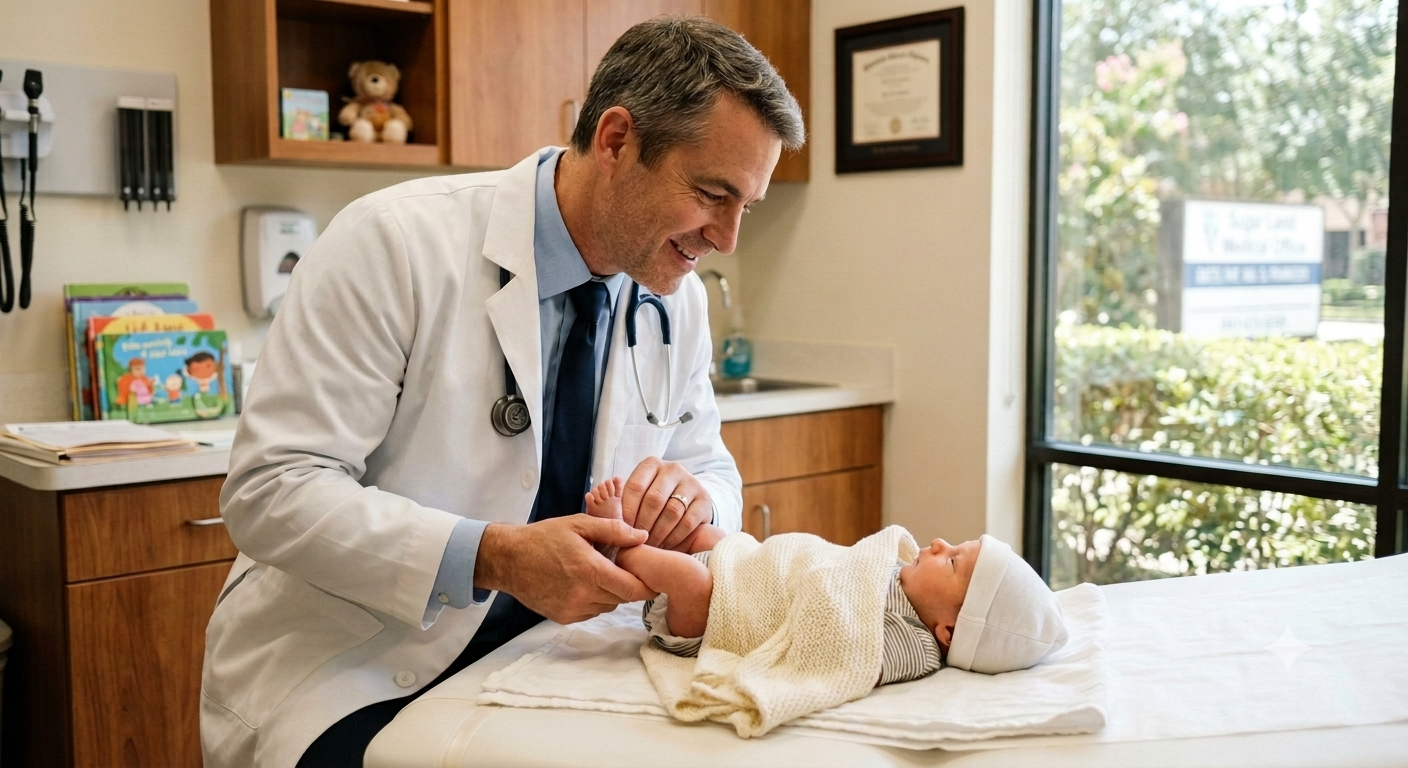
A newborn checkup is an early medical visit designed specifically for babies during the first days and weeks of life.
The American Academy of Pediatrics (AAP) recommends that healthy newborns have an initial follow-up visit within 48 to 72 hours after leaving the hospital, or around 3 to 5 days after birth. The exact timing may vary depending on the baby’s health, feeding, birth history, and individual needs.
This early visit is important because several newborn health concerns can become apparent after leaving the hospital.
These may include:
- Feeding difficulties
- Excessive weight loss
- Dehydration
- Jaundice
- Signs of infection
- Problems that were not obvious during the initial newborn examination
A newborn checkup gives parents an opportunity to ask questions while allowing the pediatrician to assess how the baby is adjusting at home.
What Happens During a Newborn Checkup?
During a newborn visit, I look at both the baby’s physical health and the family’s adjustment to caring for a newborn.
The visit may include:
1. Checking Weight and Growth
Newborns normally lose some weight after birth.
However, the amount of weight loss and the baby’s feeding pattern need to be considered carefully.
I evaluate the baby’s weight and compare it with previous measurements to determine whether feeding and hydration appear appropriate.
2. Evaluating Feeding
Feeding is one of the biggest concerns for new parents.
I may ask:
- How often is the baby feeding?
- Is the baby breastfeeding or taking formula?
- How long are feeding sessions?
- Does the baby seem satisfied after feeding?
- Are there difficulties with latching or feeding?
- How many wet and dirty diapers does the baby have?
These details can provide useful information about whether the baby is receiving enough nutrition.
3. Checking for Jaundice
Jaundice causes a baby’s skin or eyes to appear yellow.
Some jaundice is common in newborns, but bilirubin levels and the baby’s age and overall health help determine whether additional monitoring or treatment is needed.
The early follow-up visit provides an important opportunity to assess jaundice and review any relevant hospital test results.
4. Reviewing Newborn Screening
Newborn screening helps identify certain conditions that may not be obvious from a physical examination.
Depending on the screening program and location, newborn screening can include blood testing, hearing screening, and pulse oximetry screening for certain critical congenital heart conditions.
I review available results with parents and explain whether any additional testing or follow-up is needed.
What Are Well-Child Visits?
Well-child visits are routine preventive appointments that continue throughout childhood and adolescence.
These visits are not only for sick children.
The American Academy of Pediatrics’ Bright Futures recommendations provide a schedule of preventive visits and age-specific screenings from infancy through adolescence.
The purpose is to monitor your child’s health over time and identify potential concerns early.
As children grow, their needs change.
A visit for a 2-month-old baby is very different from a visit for a 5-year-old child or a teenager.
That is why well-child care changes as your child develops.
When Do Well-Child Visits Begin?
Newborn visits are actually part of the broader preventive care process.
After the initial newborn and first-week visits, the AAP schedule includes visits at approximately:
- 1 month
- 2 months
- 4 months
- 6 months
- 9 months
- 12 months
- 15 months
- 18 months
- 24 months
- 30 months
After age 3, preventive visits generally continue annually through childhood and adolescence.
The exact schedule may be adjusted based on your child’s individual health needs.
What Happens During a Well-Child Checkup?
Well-child visits become broader as children grow.
During these appointments, I may evaluate:
- Height and weight
- Growth patterns
- Physical development
- Developmental milestones
- Nutrition
- Sleep
- Behavior
- School performance
- Emotional well-being
- Vision and hearing when appropriate
- Oral health
- Immunizations
- Safety concerns
- Family and social factors
The goal is not simply to determine whether your child is sick. It is to support healthy growth and development.
Newborn Checkup vs Well-Child Checkup: Key Differences
The easiest way to understand the difference is to think about the child’s stage of development.
Newborn Checkup
The main focus is:
- Adjustment after birth
- Feeding
- Weight
- Hydration
- Jaundice
- Newborn screening
- Physical examination
- Safe sleep
- Infant care
- Parent questions and concerns
- Well-Child Checkup
Well-Child Checkup
The focus expands to:
- Growth
- Development
- Immunizations
- Nutrition
- Sleep
- Behavior
- Learning
- Emotional health
- Safety
- Age-specific screenings
- Preventive health
Both types of visits are important.
One does not replace the other.
Why Are Early Newborn Visits So Important?
The first few days can bring rapid changes.
A baby may appear healthy in the hospital but develop feeding problems, increasing jaundice, or dehydration after going home.
That is one reason the AAP recommends an early post-discharge evaluation.
The visit also gives parents a chance to ask questions about everyday newborn care.
Common questions include:
- How often should my baby feed?
- How many wet diapers should I expect?
- How should I safely put my baby to sleep?
- Is this amount of spit-up normal?
- How should I care for the umbilical cord?
- When should I call the pediatrician?
- How should I take my baby’s temperature?
There is no such thing as a silly question when you are learning to care for a newborn.
Why Should Healthy Children Continue Well-Child Visits?
Parents sometimes wonder why their child needs an appointment when the child seems completely healthy.
Preventive care is the reason.
Some developmental, behavioral, vision, hearing, growth, or other health concerns may not be obvious at home.
Routine visits allow healthcare providers to follow your child’s progress over time.
The AAP describes the preventive schedule as a series of screenings and assessments designed for different stages of childhood and adolescence. Additional visits may be needed when concerns arise.
Regular appointments also help maintain continuity of care.
When I know a child’s medical history and previous growth and development, it becomes easier to understand new concerns when they arise.
What Can Parents Do Before a Well-Child Visit?
Parents can make these appointments more useful by preparing questions in advance.
Consider writing down:
- Changes in appetite
- Sleep concerns
- New behaviors
- School concerns
- Developmental questions
- Bathroom changes
- Medication questions
- Vaccination questions
- Family health concerns
Bring your child’s vaccination and medical records when appropriate.
Most importantly, tell your pediatrician what you have noticed at home.
Parents often provide information that cannot be captured during a short office examination.
When Should Parents Call the Pediatrician Between Visits?
Routine appointments are important, but parents should not wait for the next scheduled visit if their baby or child becomes sick.
Contact your healthcare provider if you notice concerning symptoms such as:
- Difficulty breathing
- Poor feeding
- Signs of dehydration
- Persistent vomiting
- Unusual sleepiness or difficulty waking
- A significant change in behavior
- Fever, particularly in a young infant
- Worsening jaundice
- A concerning rash
- Other symptoms that seem unusual for your child
Very young infants can become seriously ill quickly, so parents should seek medical advice promptly when they are concerned.
If your child appears seriously ill or has an emergency, seek emergency medical care immediately.
Newborn and Well-Child Care at Gentle Pediatrics
At Gentle Pediatrics, we believe preventive pediatric care begins from the earliest days of life.
During a newborn checkup in Sugar Land, our goal is to make sure your baby is adjusting well while giving parents practical guidance and support.
As your child grows, a well-child checkup in Sugar Land provides an opportunity to monitor growth, development, immunizations, behavior, nutrition, and overall health.
Our approach is centered around:
- Preventive care
- Developmental monitoring
- Evidence-based medicine
- Family education
- Personalized care
- Open communication
I want parents to feel comfortable bringing up questions, even when they are unsure whether something is important.
Why Families Trust Gentle Pediatrics
Caring for a child is a partnership between parents and healthcare professionals.
Families choose Gentle Pediatrics because we focus on:
- Comprehensive pediatric care
- Long-term health monitoring
- Individualized guidance
- Clear communication
- Preventive health
- Compassionate support
My goal is to provide medical care with both expertise and a gentle approach.
About Dr. Shahid Hasnain
I am Dr. Shahid Hasnain, a board-certified pediatrician with more than two decades of experience caring for infants, children, and adolescents.
I earned a full scholarship to complete my Master of Public Health, specializing in Maternal and Child Health, in Birmingham.
I then completed my pediatric internship at Lincoln Hospital in New York and my residency at the University of Tennessee Medical Center in Knoxville, where I served as Chief Resident during my final year.
I have been Board Certified by the American Board of Pediatrics since 1998.
Throughout my career, I have remained committed to providing evidence-based pediatric care while communicating with families in a clear and compassionate way.
Final Thoughts
Newborn checkups and well-child visits are both important parts of your child’s healthcare journey.
The newborn visit focuses on the unique needs of a baby during the first days and weeks of life, including feeding, weight, jaundice, screening results, hydration, and adjustment after birth.
Well-child visits continue that relationship as your child grows.
They allow us to monitor growth and development, provide preventive care, keep vaccinations up to date, address behavioral and emotional concerns, and answer questions at every stage of childhood.
The important thing to remember is that preventive care does not stop when your baby begins to grow.
It continues throughout childhood and adolescence.
At Gentle Pediatrics in Sugar Land, we are honored to partner with families from the earliest newborn visits through every stage of their child’s development.
Schedule a Pediatric Appointment
If you are preparing for your baby’s first visit or your child is due for a routine checkup, our team is here to help.
Gentle Pediatrics proudly serves families throughout:
- Sugar Land
- Richmond
- Rosenberg
- Stafford
- Katy
- Houston
Contact our office today or fill out the online patient registration form to schedule a newborn checkup in Sugar Land or a well-child checkup in Sugar Land, and give your child the benefit of ongoing, preventive pediatric care.
Frequently Asked Questions
1. When should a newborn have their first pediatrician visit?
The AAP recommends an initial post-discharge visit within 48 to 72 hours after leaving the hospital, or around 3 to 5 days after birth for healthy newborns. Individual timing may vary based on the baby’s needs.
2. What is checked during a newborn appointment?
A newborn visit may include checking weight, feeding, hydration, jaundice, physical health, newborn screening results, safe sleep practices, and other concerns related to caring for a new baby.
3. How often does my child need well-child checkups?
The AAP Bright Futures schedule includes regular preventive visits throughout infancy, early childhood, school age, and adolescence. The schedule may be adjusted when a child has specific health concerns.
4. Are well-child visits necessary if my child is healthy?
Yes. Well-child visits are designed to monitor growth and development and provide preventive care even when children appear healthy. They can also identify concerns that may not be obvious to parents.
5. Can I contact my pediatrician between scheduled visits?
Yes. Parents should contact their pediatrician when they have concerns about their child’s health rather than waiting for the next routine appointment. Your pediatrician can help determine whether your child needs to be evaluated sooner.
This article is intended for educational and informational purposes only and should not be considered medical advice, diagnosis, or treatment. Every child’s health needs are unique. Recommendations may vary based on a child’s age, medical history, development, and individual circumstances. Always consult your pediatrician or another qualified healthcare professional regarding your child’s healthcare needs. If your child has severe or life-threatening symptoms, seek emergency medical care immediately.