

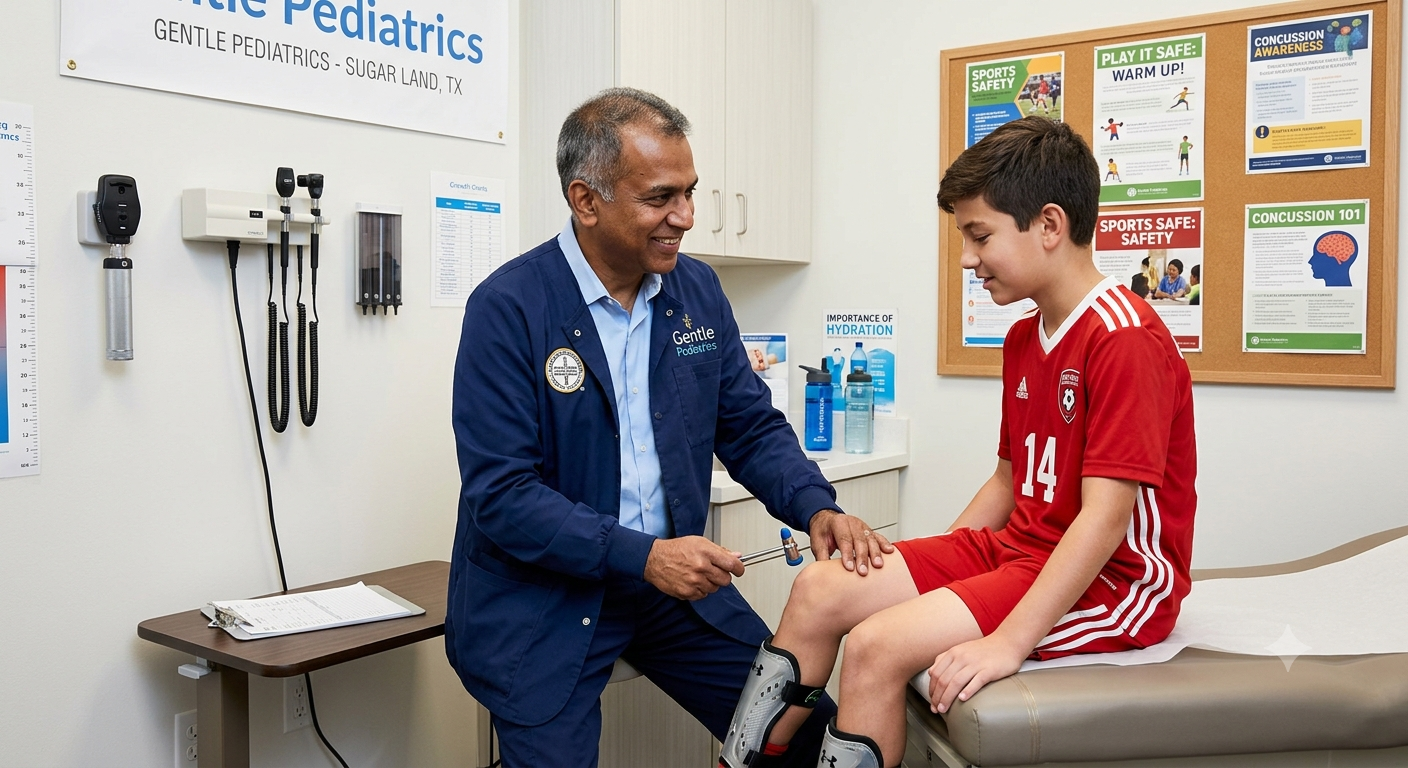
Quick Answer: Parents can help prevent many sports injuries by making sure children get a sports physical, warm up properly, use well-fitted protective equipment, learn safe techniques, stay hydrated, eat balanced meals, and get enough rest. Children should not be encouraged to play through pain, and head injuries should always be taken seriously. Gradually increasing training also helps protect growing bodies. Most importantly, children should feel comfortable speaking up when something does not feel right.
Sports can be one of the best parts of childhood. Kids get exercise, build confidence, learn teamwork, and make friendships. But parents also know that sports come with some risk of injury.
I often speak with parents who want their children to stay active while avoiding preventable injuries. The good news is that many sports injuries can be reduced with simple habits such as proper warm-ups, good equipment, enough rest, hydration, and learning safe techniques.
As a board-certified pediatrician with more than two decades of experience caring for infants, children, and adolescents. I believe children should be encouraged to enjoy sports while also learning how to listen to their bodies.
This guide breaks down how parents can prevent their children from getting injured when playing sports.
Why Are Children More Vulnerable to Sports Injuries?
Children and teenagers are still growing. Their bones, muscles, joints, tendons, and growth plates are developing, so repetitive stress or sudden trauma can sometimes cause injury.
The American Academy of Pediatrics (AAP) notes that common youth sports injuries include sprains, strains, growth-plate irritation, and stress fractures.
Sports injuries can happen in several ways. A child may fall, collide with another player, twist an ankle, or land incorrectly. Other injuries develop gradually when a child trains too much without enough recovery.
For example, repeatedly throwing a baseball, serving a volleyball, running long distances, or jumping during basketball can place repeated stress on certain parts of the body.
This is why injury prevention should not focus only on protective equipment. A child’s training schedule, technique, nutrition, hydration, sleep, and overall health all matter.
Helpful Ways to Prevent Sports Injuries in Children
1. Get a Sports Physical Before the Season
One of the most important steps parents can take is arranging a preparticipation physical evaluation, commonly called a sports physical.
The AAP recommends that young athletes receive a sports physical as part of routine health supervision. Ideally, the evaluation should happen in the child’s medical home, and the AAP recommends having it about six weeks before the first preseason practice when possible. This gives families time to address any health concerns that come up.
During a sports physical, the pediatrician can review your child’s medical history, medications, previous injuries, family history, and current health. The examination also considers areas such as the heart and musculoskeletal system.
If you are looking for a sports physical in Sugar Land scheduling this visit before the season begins can give your child and family an opportunity to discuss safe participation.
2. Always Warm Up Before Playing
A child should not go from sitting in the car to immediately running at full speed on the field.
A proper warm-up gives the body time to prepare for physical activity. Depending on the sport, this may include light jogging, movement exercises, dynamic stretches, and sport-specific activities.
Children should also cool down after exercise.
The AAP recommends proper warm-up and cool-down exercises as part of preseason and in-season conditioning.
I also encourage parents to make warm-ups a normal part of practice rather than something children skip when they are running late.
3. Use the Right Protective Equipment
Protective equipment cannot prevent every injury, but properly fitted equipment can reduce the risk of certain injuries.
Depending on the sport, children may need:
- Properly fitted helmets
- Mouth guards
- Shin guards
- Knee or elbow pads
- Protective eyewear
- Appropriate athletic shoes
- Sport-specific protective equipment
The equipment needs to fit the child correctly. A helmet that is too loose, shoes that are worn out, or protective gear that is the wrong size may not provide the protection it is designed to offer.
The AAP recommends appropriate, properly fitted protective equipment and reminds parents that safety gear does not eliminate every risk associated with sports.
4. Teach Proper Sports Technique
Good technique is another important part of injury prevention.
Children should learn how to perform movements correctly and should be given age-appropriate instruction. This may include learning how to land after jumping, change direction safely, tackle according to the rules, throw properly, or use the correct form during strength exercises.
Coaches and athletic trainers can play an important role here.
Parents should also feel comfortable asking whether a coach teaches injury-prevention techniques as part of regular training.
Proper technique is particularly important when children are learning a new sport or returning after an injury. The AAP recommends reinforcing proper technique throughout the season.
5. Do Not Ignore Pain
One of the most important messages I give young athletes is simple: pain should not always be pushed through.
Children sometimes worry that telling an adult about pain means they will have to stop playing. They may try to hide an injury because they do not want to disappoint their teammates.
But continuing to play through pain can sometimes make an injury worse.
The AAP specifically advises young athletes to stop an activity if it hurts rather than continuing to exercise through pain.
Parents should pay particular attention to pain that keeps returning, gets worse during activity, causes limping, or continues after the child stops playing.
In a growing child, pain that is very localized over a bone deserves medical evaluation even when there is little swelling or movement limitation.
6. Give the Body Enough Rest
Young athletes need recovery time.
Training every day without adequate rest can increase the risk of overuse injuries. The AAP recommends at least one day off each week and at least one month away from training in a particular sport each year. It also encourages children to participate in a variety of age-appropriate sports rather than specializing too early in one activity.
Rest does not mean a child has to stop being active altogether.
A child who plays soccer, for example, might spend part of the year participating in another age-appropriate activity that uses different movements.
The goal is to give heavily used muscles, tendons, joints, and bones time to recover.
7. Keep Children Hydrated
Hydration is especially important during long practices, games, and outdoor activities.
Children may become dehydrated during exercise, particularly in hot and humid conditions. The CDC recommends drinking more water than usual on hot days and not waiting until thirst develops. It also recommends stopping activity and moving to a cool place if a child feels faint or weak.
Parents can help by sending water with their child and making sure the child has opportunities to drink during practice.
Coaches should also provide regular breaks, especially during hot weather.
Heat-related symptoms can include muscle cramps, dizziness, headache, nausea, excessive sweating, confusion, or loss of coordination. Heat stroke is a medical emergency.
8. Increase Training Gradually
A child who has been inactive for several months should not immediately begin intense training.
Training should increase gradually so the body has time to adjust.
This is particularly important at the beginning of a sports season. A child may be excited to get back to practice, but muscles and joints still need time to adapt to the increased workload.
The same principle applies after an injury. Returning to full activity too quickly can interfere with recovery.
Your child’s pediatrician, athletic trainer, physical therapist, or sports medicine professional can help determine when and how activity should increase.
9. Make Nutrition Part of Injury Prevention
Food provides the energy children need for training, growth, and recovery.
Young athletes need balanced meals that include carbohydrates, protein, healthy fats, fruits, vegetables, and appropriate sources of vitamins and minerals.
Skipping meals or following restrictive diets can make it harder for an athlete to meet the body’s needs.
The AAP recommends balanced meals with appropriate protein and carbohydrates to support muscle recovery, particularly when athletes are training frequently or recovering from an injury.
Parents should also be cautious about sports supplements or performance-enhancing products. Teen athletes generally do not need supplements simply because they participate in sports. Nutrition should start with regular, balanced meals.
10. Take Concussions Seriously
Head injuries deserve special attention.
A child who receives a significant hit to the head or body and develops symptoms such as confusion, dizziness, headache, balance problems, vomiting, or unusual behavior should be removed from play and evaluated appropriately.
Children should not return to sports simply because they say they feel better immediately after a hit.
A healthcare professional should guide the return-to-play process when a concussion is suspected or diagnosed.
Parents should also encourage children to tell a coach, parent, athletic trainer, or healthcare provider if they experience symptoms after a hit.
What Should Parents Do If Their Child Gets Hurt?
Minor injuries may sometimes be managed with rest and other basic care, depending on the injury. But parents should know when professional evaluation is needed.
Seek prompt medical attention if your child has:
- Severe or worsening pain
- Significant swelling
- Difficulty walking or putting weight on a limb
- Numbness or weakness
- A suspected fracture
- A major head injury
- Confusion or loss of consciousness
- Trouble breathing
- An injury that does not improve with appropriate rest
The AAP recommends emergency evaluation for symptoms such as difficulty breathing, loss of consciousness, confusion or weakness after a hard hit, heavy bleeding, suspected broken bones, inability to walk because of pain, or numbness or weakness.
Sports Injury Prevention at Gentle Pediatrics
At Gentle Pediatrics, I believe sports should be a positive part of childhood.
My goal is not to discourage children from playing. It is to help families understand how to make participation safer.
A sports physical provides an opportunity to discuss your child’s health before the season begins. If your child develops pain or another concern during the season, I can evaluate the problem and help determine the appropriate next step.
As a pediatrician, I also want young athletes to understand that taking care of their bodies is part of being a good athlete. Rest, hydration, nutrition, proper technique, and listening to pain are not signs of weakness. They are important parts of staying active.
About Dr. Shahid Hasnain
I have been Board Certified by the American Board of Pediatrics since 1998. My medical training includes a pediatric internship at Lincoln Hospital in New York and residency at the University of Tennessee Medical Center in Knoxville, where I served as Chief Resident during my final year.
I also earned a Master’s in Public Health specializing in Maternal & Child Health after receiving a full scholarship.
My approach combines medical knowledge with patience and clear communication. When parents bring concerns about their child’s sports participation, I want them to understand what we are looking for, what their child can safely do, and when further evaluation may be needed.
Final Thoughts
Sports can give children so many benefits, from stronger bodies to better confidence and teamwork skills. Preventing every injury is not possible, but parents can take practical steps to reduce many common risks.
Make sure your child has a sports physical, uses properly fitted equipment, warms up, learns safe techniques, drinks enough fluids, gets adequate rest, and does not ignore pain.
Most importantly, encourage your child to speak up when something does not feel right.
A young athlete should be able to enjoy the game while also learning how to care for their growing body.
Schedule a Pediatric Visit
If your child needs a sports physical or you have concerns about a sports injury, our team at Gentle Pediatrics is here to help.
Gentle Pediatrics proudly serves families throughout:
- Sugar Land
- Richmond
- Rosenberg
- Stafford
- Katy
- Houston
Gentle Pediatrics — Sugar Land, Texas
Contact our office today or fill out the online patient registration form to book an appointment and to discuss your child’s sports participation, injury prevention, physical activity, and overall health.
Frequently Asked Questions
1. Does my child need a sports physical before playing?
A preparticipation physical evaluation is recommended by the American Academy of Pediatrics as part of routine health supervision for young athletes. When possible, the AAP recommends completing it about six weeks before the first preseason practice.
2. Can stretching prevent sports injuries?
Warm-up, conditioning, flexibility work, and proper technique are all parts of a broader injury-prevention approach. The AAP recommends incorporating warm-up and flexibility exercises into youth sports training.
3. How many rest days should young athletes have?
The AAP recommends at least one day off each week and at least one month away from training in a particular sport each year.
4. Should my child play through sports pain?
No. Children should not be encouraged to continue exercising through pain. Recurring or localized pain should be discussed with a healthcare professional, particularly when it affects activity or occurs over a bone.
5. How can I protect my child from heat illness during sports?
Encourage regular hydration, breaks, appropriate clothing, and gradual adjustment to exercising in hot conditions. The CDC recommends stopping activity and moving to a cool place if an athlete feels faint or weak.
This article is intended for general educational purposes and does not replace an examination, diagnosis, or personalized medical advice. Sports participation and injury risks vary by child, sport, medical history, and level of activity. If your child has an injury, persistent pain, breathing difficulty, a head injury, or another concerning symptom, contact your pediatrician or seek appropriate urgent or emergency medical care.