

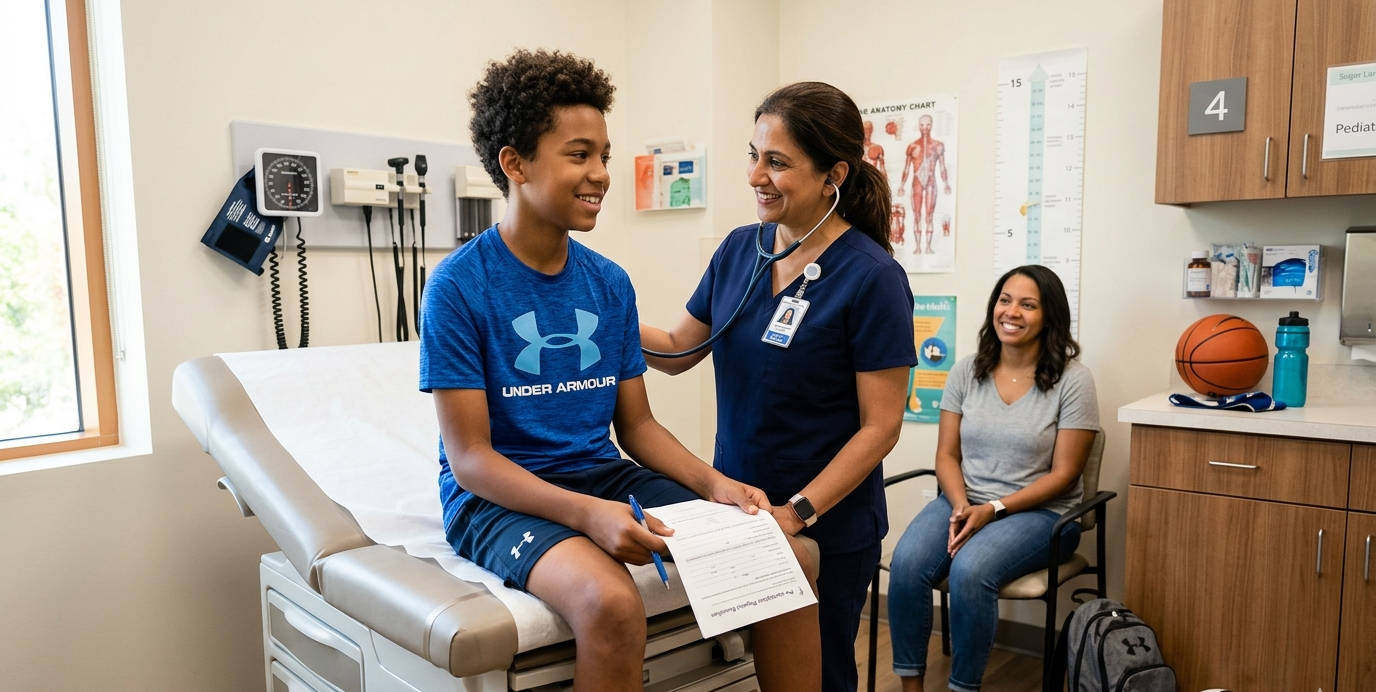
Sports and physical activities are an important part of childhood. Activities like soccer, basketball, swimming, gymnastics, football, and school athletics help support physical health, confidence, teamwork, and emotional well-being.
Before children begin a new sports season, many schools and athletic programs require a sports physical exam. While some parents may see it as just another form to complete, these exams play an important role in protecting your child’s health and safety.
A proper pediatric sports physical in Sugar Land helps identify potential health concerns, reduce injury risks, and ensure your child is physically ready to participate safely in sports and activities.
At Gentle Pediatrics, we help Sugar Land families understand why sports physicals matter and how they support long-term health for growing athletes. In this guide, we will thoroughly break down the importance of a sports physical exam for your child.
What Is a Sports Physical Exam?
A sports physical exam, also called a pre-participation physical examination (PPE), is a medical evaluation performed before a child begins sports or physical activities.
The purpose is to:
- Assess overall health
- Identify medical concerns
- Evaluate physical readiness for sports
- Help prevent injuries and complications
A child’s physical exam in Sugar Land focuses on ensuring your child can safely participate in athletic activities.
Why Sports Physicals Are Important
Children’s bodies are still developing, and sports place physical demands on muscles, joints, bones, and the cardiovascular system.
A sports physical helps:
- Detect underlying health conditions
- Identify injury risks
- Monitor growth and development
- Provide guidance for safe participation
These exams are about prevention, not just meeting school requirements.
When Should Your Child Have a Sports Physical?
Most schools and sports organizations require a sports physical before the season begins.
Ideally, parents should schedule the exam:
- About 6–8 weeks before sports start
- Before tryouts or training begin
Scheduling early gives families enough time to address any concerns before participation.
What Happens During a Sports Physical?
A pediatric sports physical in Sugar Land includes several important parts of your child’s health evaluation.
1. Medical History Review
The pediatrician will ask questions about:
- Past injuries
- Previous surgeries
- Chronic medical conditions
- Medications
- Allergies
- Family medical history
This information helps identify any risks related to sports participation.
2. Physical Examination
The physical exam may include checking:
- Height and weight
- Blood pressure
- Heart and lung function
- Vision
- Flexibility and posture
- Joint and muscle strength
The goal is to assess your child’s overall physical health and readiness for activity.
3. Evaluation of Previous Injuries
If your child has had prior injuries such as:
- Sprains
- Fractures
- Concussions
The pediatrician will determine whether additional precautions or treatment may be needed.
4. Screening for Heart-Related Concerns
Although uncommon, some heart conditions can increase risks during intense physical activity.
The pediatrician may ask about:
- Chest pain during exercise
- Dizziness or fainting
- Family history of heart disease
This screening helps identify children who may need further evaluation.
Common Health Issues Identified During Sports Physicals
Sports physicals sometimes reveal health concerns parents may not have noticed.
1. Asthma
Exercise-related breathing problems may become more noticeable during sports.
2. Joint or Muscle Weakness
Weakness or imbalance may increase injury risk.
3. Vision Problems
Clear vision is important for coordination and safety during sports.
4. Previous Concussions
Children with a history of concussions may need careful monitoring before returning to sports.
Benefits of Pediatric Sports Physicals
A child’s physical exam in Sugar Land offers many benefits beyond sports clearance paperwork.
1. Injury Prevention
Pediatricians can identify physical limitations or weaknesses that may increase the risk of injury.
2. Early Detection of Health Concerns
Some medical conditions may not show obvious symptoms during daily life but can become more noticeable during exercise.
3. Education for Families
Parents and children receive guidance about:
- Hydration
- Nutrition
- Safe training habits
- Injury prevention
4. Confidence for Parents and Athletes
Knowing your child has been medically evaluated provides reassurance before the season begins.
How Sports Physicals Differ from Annual Checkups
Although both are important, sports physicals and annual wellness visits are not exactly the same.
Sports physicals focus on:
- Athletic participation
- Injury risk assessment
- Physical readiness for sports
Meanwhile, annual wellness visits include:
- Vaccinations
- Growth monitoring
- Developmental milestones
- General health concerns
Many families combine both visits whenever possible.
Preparing Your Child for a Sports Physical
To make the appointment easier, parents should:
- Bring the required school forms
- Know your child’s medical history
- Bring a list of medications
- Share details about past injuries or surgeries
Being prepared helps ensure a smooth and complete evaluation.
Helping Young Athletes Stay Healthy
A sports physical is just one part of keeping young athletes healthy and safe.
1. Encourage Proper Hydration
Children should drink water regularly before, during, and after activity.
2. Promote Healthy Nutrition
Balanced meals support:
- Energy levels
- Muscle recovery
- Overall performance
3. Prioritize Rest and Recovery
Rest days are important for preventing overuse injuries and fatigue.
4. Use Proper Equipment
Children should wear:
- Properly fitted shoes
- Protective gear
- Sport-specific safety equipment
5. Teach Safe Training Habits
Children should avoid:
- Overtraining
- Ignoring pain
- Returning to sports too soon after injury
Common Concerns Parents Often Have
Many parents have a few concerns related to a sports physical, including:
1. Does My Child Need a Sports Physical Every Year?
Most schools and athletic organizations require yearly evaluations.
2. Can My Child Still Play Sports with Asthma?
In many cases, yes. Proper management and monitoring help children participate safely.
3. What If My Child Had a Previous Injury?
The pediatrician will assess whether additional care or restrictions are needed.
4. Are Sports Physicals Only for School Sports?
No. Any child participating in organized physical activity can benefit from a sports physical.
When Should Parents Seek Additional Medical Care?
You should contact your pediatrician if your child experiences:
- Chest pain during exercise
- Frequent injuries
- Dizziness or fainting
- Ongoing joint pain
- Trouble breathing during activity
Early evaluation helps keep children safe during sports participation.
Sports Physical Exams at Gentle Pediatrics in Sugar Land
At Gentle Pediatrics, we provide comprehensive pediatric sports physical in Sugar Land for children and teens involved in athletics.
Our process includes:
- Complete sports physical exams
- Injury evaluations
- Asthma and breathing assessments
- Guidance for safe sports participation
- Monitoring of growth and development
We focus on helping children stay healthy, active, and prepared for sports seasons.
Why Families Choose Gentle Pediatrics
Families across Sugar Land and nearby communities trust Gentle Pediatrics for compassionate pediatric care.
We focus on:
- Personalized care for every child
- Thorough and detailed evaluations
- Child-friendly and supportive visits
- Preventive care and injury prevention
- Long-term support for healthy development
Our goal is to help young athletes participate safely and confidently.
Final Thoughts
Sports provide children with valuable opportunities to stay active, build confidence, and develop lifelong healthy habits. But before stepping onto the field or court, it’s important to ensure your child is physically prepared for participation.
A child physical exam in Sugar Land is an important step in protecting your child’s health and helping prevent injuries.
Regular sports physicals allow pediatricians to identify concerns early, provide guidance for safe participation, and support your child’s overall well-being.
At Gentle Pediatrics in Sugar Land, we are proud to support young athletes and their families with compassionate care and expert guidance every step of the way.
Schedule a Sports Physical in Sugar Land
If your child is preparing for sports or physical activities, early evaluation can help ensure a safe and successful season.
Gentle Pediatrics proudly serves families in:
- Sugar Land
- Richmond
- Rosenberg
- Stafford
- Katy
- Houston
Gentle Pediatrics — Sugar Land, Texas
Call our office today to schedule your child’s pediatric sports physical in Sugar Land and receive trusted pediatric care for your young athlete.
Frequently Asked Questions
1. What is included in a sports physical exam?
Sports physicals include a medical history review and physical examination to assess readiness for sports.
2. How often does my child need a sports physical?
Most children need one every year before sports participation.
3. Can a sports physical detect health problems?
Yes, sports physicals may identify conditions that could affect athletic participation.
4. Is a sports physical different from an annual checkup?
Yes. Sports physicals focus specifically on athletic readiness and injury prevention.
5. When should I schedule a sports physical?
It’s best to schedule the exam several weeks before the sports season begins.