

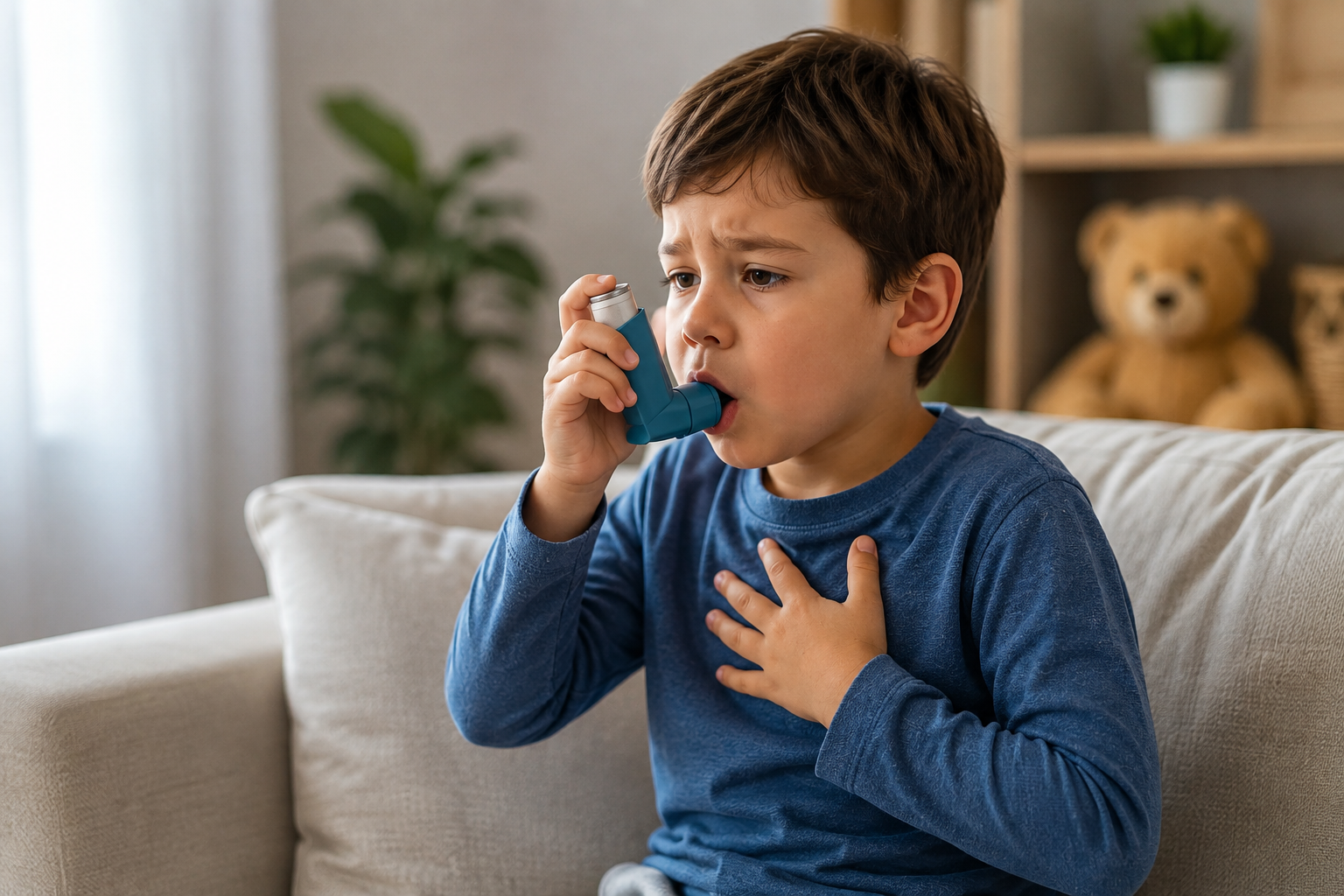
Quick Answer: Breathing problems in children can result from respiratory infections, asthma, bronchiolitis, croup, pneumonia, allergies, or airway blockages. Parents should watch for fast or difficult breathing, wheezing, retractions, nasal flaring, noisy breathing, or color changes. Call 911 for severe breathing difficulty, blue or gray lips, inability to speak or cry normally, unconsciousness, severe allergic reactions, or choking. Recurring or persistent symptoms should be evaluated by a pediatrician to identify the cause and provide appropriate treatment.
Breathing problems in children can be frightening for parents, especially when symptoms appear suddenly.
A child may start coughing, wheezing, breathing faster than usual, or saying that it feels hard to breathe. Sometimes these symptoms happen with a simple respiratory infection. In other cases, they may signal asthma, an allergic reaction, pneumonia, or another condition that needs medical attention.
As a board-certified pediatrician with more than two decades of experience caring for infants, children, and adolescents, I know how quickly breathing concerns can make families anxious.
One of the most important things I tell parents is this: do not ignore significant changes in your child’s breathing.
Signs such as struggling to breathe, pulling in around the ribs, blue or gray lips, or difficulty speaking or crying require prompt medical attention.
This guide explains common causes of breathing problems in children, what parents can watch for, and when it is appropriate to contact a healthcare provider or seek emergency care.
What Does a Breathing Problem Look Like?
Children may describe breathing problems differently depending on their age.
A younger child may simply become unusually quiet, restless, or clingy. An older child may say, “I can’t catch my breath,” or complain about chest tightness.
Parents may notice:
- Tachypnea (Rapid Breathing): Normal resting breathing rates vary by age (infants: 30–60 breaths/min; toddlers: 24–40 breaths/min; older kids: 18–30 breaths/min). A resting rate exceeding 60 breaths per minute in an infant requires prompt attention.
- Retractions (Visible Muscle Strain): Sinking in of the skin around the ribs (intercostal), under the ribcage (subcostal), or at the base of the neck (suprasternal).
- Nasal Flaring & Head Bobbing: Nostrils widening with each breath, or an infant’s head bobbing up and down in sync with breathing effort.
- Cyanosis (Color Changes): A blue, gray, or pale tint around the lips, tongue, or nail beds signaling hypoxia (low blood oxygen).
- Audible Noises: Stridor (high-pitched squeak when breathing IN) or wheezing (whistling sound when breathing OUT).
What Are Common Causes of Breathing Problems in Children?
Breathing difficulties can have many causes.
Some are temporary and improve with treatment or time. Others require ongoing medical care.
Common causes include:
1. Respiratory Infections
Colds and other respiratory infections are among the most common reasons children develop cough and breathing symptoms.
A child with a viral infection may have:
- Runny nose
- Nasal congestion
- Cough
- Fever
- Sore throat
- Decreased appetite
Young children may have more difficulty breathing when congestion and inflammation affect their smaller airways.
Most respiratory infections are not emergencies. However, parents should watch for worsening breathing, unusual sleepiness, dehydration, or other concerning changes.
2. Asthma
Asthma is one of the most common chronic conditions affecting children.
It can cause:
- Wheezing
- Coughing
- Shortness of breath
- Chest tightness
Symptoms may come and go and can be triggered by respiratory infections, exercise, allergies, cold air, smoke, or other irritants.
Some children mainly cough when their asthma is active, while others have obvious wheezing or chest tightness.
If your child repeatedly develops coughing or breathing problems during colds, exercise, or at night, discuss these patterns with a pediatrician.
Asthma can usually be managed with an individualized treatment plan. Children with asthma should also have an asthma action plan explaining what to do when symptoms become worse.
3. Bronchiolitis in Infants
Bronchiolitis is a viral infection that affects the smaller airways of the lungs.
It is particularly common in babies and young children.
Symptoms may include:
- Runny nose
- Cough
- Fast breathing
- Wheezing
- Difficulty feeding
Because babies have smaller airways, swelling and mucus can sometimes make breathing more difficult.
Parents should pay close attention to feeding, hydration, alertness, and breathing effort.
Infants struggle to feed and breathe simultaneously, leading to dehydration. If an infant produces fewer than 4 wet diapers in 24 hours, seek medical attention.
4. Croup
Croup is another respiratory illness that commonly affects young children.
A child with croup may develop:
- A barking cough
- Hoarse voice
- Noisy breathing
The noisy sound caused by narrowing of the upper airway may become more noticeable when the child breathes in.
Mild croup can respond to cool mist or cold night air. Moderate to severe croup requires a single dose of oral corticosteroids (dexamethasone) or nebulized epinephrine administered at a pediatric clinic or emergency department.
5. Pneumonia
Pneumonia is an infection that affects the lungs.
Children with pneumonia may have:
- Fever
- Cough
- Fast breathing
- Chest discomfort
- Reduced energy
- Poor appetite
- Difficulty breathing
Not every child with pneumonia has every symptom.
A pediatrician may need to examine your child and listen carefully to their lungs to determine whether additional testing or treatment is needed.
6. Allergic Reactions
A severe allergic reaction can cause sudden breathing difficulty.
This can happen after exposure to:
- Certain foods
- Insect stings
- Medications
- Other allergens
Breathing problems accompanied by widespread hives, swelling, or sudden symptoms after a known allergen can be a medical emergency.
If your child suddenly develops severe breathing difficulty after eating food, taking medication, or being stung by an insect, call 911 immediately.
Children with known severe allergies should have an emergency action plan from their healthcare provider.
7. A Foreign Object in the Airway
Young children naturally explore their surroundings and may put small objects in their mouths.
A child can accidentally inhale or choke on:
- Food
- Small toys
- Coins
- Pieces of household objects
Sudden, unprovoked coughing, choking, stridor, or localized wheezing after play or meals indicates a potential airway blockage requiring emergency 911 response.
How Can Parents Tell if Breathing Is Becoming Serious?
One of the most useful things parents can learn is how to recognize increased work of breathing.
Watch your child’s chest and stomach while they breathe.
Warning signs include:
- The ribs pulling inward with each breath
- Skin between the ribs sinking in
- The area above the collarbone pulling inward
- Nostrils widening with each breath
- Grunting
- Breathing much faster than normal
- Difficulty speaking or crying normally
- Severe wheezing
- Unusual sleepiness
These signs can indicate that your child is working hard to breathe.
When in doubt, contact your child’s healthcare provider rather than assuming the symptoms will resolve on their own.
When Should I Call 911?
Some breathing problems require emergency medical care.
Call 911 if your child:
- Is struggling to breathe
- Cannot speak or cry normally because of breathing difficulty
- Has blue, gray, or very pale lips or face
- Becomes unconscious
- Is extremely difficult to wake
- Has severe breathing difficulty after an allergic exposure
- Stops breathing
- Has severe symptoms after choking
Blue or gray coloring around the lips or face can indicate inadequate oxygen and should never be ignored.
Do not drive a severely struggling child to a routine appointment. Emergency medical services can provide immediate support.
When Should I Contact a Pediatrician?
Not every breathing concern requires an emergency department visit.
However, contact your pediatrician promptly if your child has:
- Repeated wheezing
- A cough that keeps returning
- Breathing problems during exercise
- Nighttime coughing
- Frequent respiratory symptoms
- Mild but persistent shortness of breath
- Symptoms that interfere with school, sleep, or play
- Asthma symptoms that are becoming more frequent
- Symptoms that are not improving as expected
Recurring symptoms may require evaluation for asthma, allergies, or another underlying condition.
Pediatric Respiratory Care at Gentle Pediatrics
At Gentle Pediatrics, we provide comprehensive care for infants, children, and adolescents experiencing a wide range of respiratory concerns.
Our pediatric care includes:
- Evaluation of cough
- Wheezing assessment
- Asthma management
- Respiratory infection evaluation
- Allergy-related concerns
- Breathing assessments
- Preventive pediatric care
- Chronic condition monitoring
As a trusted pediatric clinic in Sugar Land, we focus on careful evaluation, evidence-based care, and clear communication with families.
About Dr. Shahid Hasnain
I am Dr. Shahid Hasnain, a board-certified pediatrician with more than two decades of experience caring for infants, children, and adolescents.
I earned a full scholarship to complete my Master of Public Health, specializing in Maternal and Child Health in Birmingham.
I then completed my pediatric internship at Lincoln Hospital in New York and my residency at the University of Tennessee Medical Center in Knoxville, where I served as Chief Resident during my final year.
I have been Board Certified by the American Board of Pediatrics since 1998.
Throughout my career, I have remained committed to evidence-based pediatric care delivered with patience, clarity, and a gentle approach.
Final Thoughts
Breathing problems in children can have many causes, from common respiratory infections and asthma to allergies and other conditions.
A mild cough does not always mean something serious is happening.
However, parents should never ignore signs of significant breathing difficulty.
If your child is struggling to breathe, cannot speak or cry normally, develops blue or gray lips or face, becomes unusually sleepy, or has another severe breathing symptom, seek emergency medical care immediately.
For recurring or less severe symptoms, a pediatric evaluation can help identify the cause and determine whether further testing or treatment is needed.
At Gentle Pediatrics, we are honored to support families with careful evaluations, clear guidance, and compassionate pediatric care.
Schedule a Pediatric Appointment
If your child has recurring coughing, wheezing, shortness of breath, or other breathing concerns, our team is here to help.
Gentle Pediatrics proudly serves families throughout:
- Sugar Land
- Richmond
- Rosenberg
- Stafford
- Katy
- Houston
Contact our office today or fill out the online patient registration form to schedule an appointment at our pediatric clinic in Sugar Land and learn more about comprehensive care for your child’s respiratory health.
Frequently Asked Questions
1. What are common signs of breathing problems in children?
Common signs include fast breathing, wheezing, persistent coughing, shortness of breath, chest tightness, noisy breathing, and visible pulling in around the ribs.
2. When is breathing difficulty an emergency?
Severe difficulty breathing, blue or gray lips or face, inability to speak or cry normally, loss of consciousness, or sudden breathing problems after an allergic exposure or choking require emergency medical attention.
3. Can asthma cause breathing problems in children?
Yes. Asthma can cause wheezing, coughing, shortness of breath, and chest tightness. Symptoms may be triggered by exercise, infections, allergies, cold air, or irritants.
4. Should recurring wheezing be evaluated by a pediatrician?
Yes. Repeated wheezing or breathing symptoms should be discussed with a pediatrician. Evaluation can help determine whether asthma, allergies, infections, or another condition may be responsible.
5. What should I do if my child has asthma?
Follow the asthma action plan provided by your child’s healthcare provider. Give prescribed medicines according to the plan and seek emergency care if your child’s breathing becomes severe or symptoms do not respond as instructed.
This article is intended for educational and informational purposes only and should not be considered medical advice, diagnosis, or treatment. Every child’s health needs are unique. Always consult your pediatrician or another qualified healthcare professional regarding concerns about your child’s breathing, symptoms, or treatment. If your child is experiencing severe or life-threatening breathing difficulty, call 911 or seek emergency medical care immediately.