
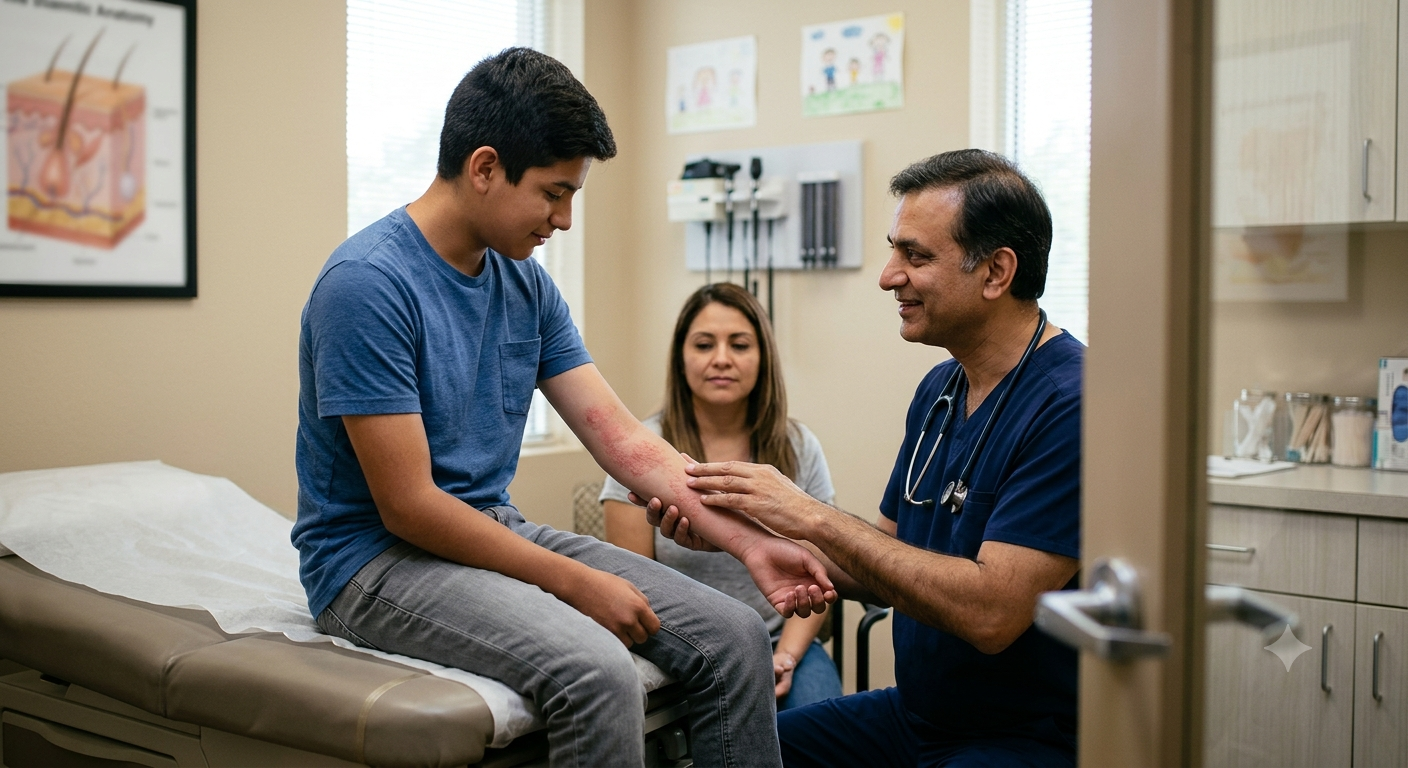
 Quick Answer: Most teen skin rashes are mild and improve with home care, but some need prompt medical evaluation. Schedule a pediatric visit if your teen’s rash spreads quickly, is painful, lasts more than a week, develops blisters or pus, or is accompanied by fever. Seek emergency care for trouble breathing, swelling of the lips or tongue, confusion, or a non-blanching purple or dark-red rash with fever. Early diagnosis helps ensure effective treatment, prevents complications, and supports your teen’s overall health and well-being.
As a pediatrician, one of the most common questions I hear from parents is: “Should I worry about my teenager’s skin rash, or will it go away on its own?”
Skin rashes are very common during the teenage years. Some are harmless and improve with simple home care, while others may signal an infection, allergic reaction, or an underlying medical condition that needs prompt treatment.
Knowing the difference isn’t always easy. Every rash looks a little different, and symptoms can change quickly.
As someone who has cared for children and adolescents for more than two decades, I encourage parents to trust their instincts. If a rash seems unusual, spreads quickly, causes significant discomfort, or is accompanied by other symptoms, it is always worth having it evaluated.
At Gentle Pediatrics, I provide comprehensive adolescent care for families throughout Sugar Land and surrounding communities.
Let’s look at when a skin rash can be managed at home and when it’s time to schedule a pediatric visit.
Why Do Teenagers Get Skin Rashes?
Teenagers experience many physical changes as they grow. Hormonal changes, increased sweating, sports activities, new skincare products, and greater exposure to allergens all increase the chances of developing skin problems.
Some of the most common causes include:
- Acne
- Eczema
- Contact dermatitis
- Heat rash
- Allergic reactions
- Viral infections
- Bacterial skin infections
- Fungal infections
- Insect bites
- Autoimmune skin conditions
While many of these conditions are mild, others require medical evaluation to prevent complications.
Common Skin Rashes Seen During Adolescent Care
During routine adolescent care, I frequently diagnose several types of skin conditions.
1. Acne
Acne is the most common skin condition in teenagers.
Hormonal changes increase oil production, which can clog pores and lead to:
- Blackheads
- Whiteheads
- Pimples
- Painful cysts
Most mild acne improves with proper skin care, but severe acne may require prescription medications to reduce scarring.
2. Eczema
Eczema causes:
- Dry skin
- Red patches
- Itching
- Cracked skin
Teenagers who had eczema as young children may continue to experience flare-ups.
Symptoms often worsen during:
- Winter
- Stress
- Allergy season
- Exposure to harsh soaps
3. Contact Dermatitis
This rash develops after the skin comes into contact with an irritating substance or allergen.
Common triggers include:
- New soaps
- Lotions
- Laundry detergents
- Jewelry
- Cosmetics
- Plants such as poison ivy
Removing the trigger usually helps the rash improve.
4. Heat Rash
Teenagers who participate in sports or spend long hours outdoors may develop heat rash.
Symptoms include:
- Small red bumps
- Mild itching
- Tiny blisters
Heat rash usually improves once the skin cools down.
5. Fungal Skin Infections
Athletes are especially prone to fungal infections because warm, moist environments encourage fungal growth.
Common infections include:
- Ringworm
- Athlete’s foot
These infections often require antifungal treatment.
Signs That Your Teen’s Rash Needs Medical Attention
Many parents ask me whether they should wait a few days before bringing their teenager to the office.
In some situations, waiting is reasonable.
However, I recommend scheduling an appointment if you notice any of the following.
1. The Rash Is Spreading Quickly
A rash that spreads rapidly across the body may indicate:
- An infection
- An allergic reaction
- Certain viral illnesses
Prompt evaluation helps identify the cause before symptoms worsen.
2. The Rash Is Painful
Most simple rashes itch more than they hurt.
Pain, tenderness, or burning can suggest:
- Bacterial infection
- Shingles
- Cellulitis
- Inflamed cysts
Painful rashes should always be examined by a pediatrician.
3. Fever Develops Along with the Rash
If your teenager has both:
- Fever
- Rash
they should be evaluated promptly.
This combination can sometimes indicate infections that require medical treatment.
4. The Rash Produces Blisters
Blistering rashes should never be ignored.
They may be caused by:
- Viral infections
- Severe allergic reactions
- Skin disorders that require prescription treatment
5. There Is Pus or Drainage
Yellow drainage, crusting, or pus often suggests a bacterial skin infection.
Antibiotics may be needed to prevent the infection from spreading.
6. The Rash Lasts More Than One Week
If home treatment has not improved the rash after several days, it is time for a professional evaluation.
Persistent rashes deserve careful examination because they may be related to eczema, fungal infections, allergies, or chronic skin conditions.
Skin Rash Symptoms That Require Immediate Medical Care
You must seek immediate medical attention if your teenager develops a fever paired with a non-blanching rash, meaning a purple, crimson, or dark-red spotted rash (petechiae or purpura) that does not fade or turn white when you firmly press a clear glass against it. This combination is a critical warning sign of systemic bacterial infections like meningococcemia or severe sepsis.
Other immediate emergency red flags include:
- Difficulty breathing
- Swelling of the lips or tongue
- Trouble swallowing
- Severe blistering
- High fever
- Confusion
- Extreme weakness
- Rapidly spreading redness with severe pain
These symptoms may indicate serious allergic reactions or infections that require immediate treatment.
What Happens During Your Teen’s Pediatric Visit?
Parents are often surprised that diagnosing a rash usually starts with a careful conversation.
During the visit, I will ask questions such as:
- When did the rash begin?
- Has it changed in appearance?
- Does it itch or hurt?
- Has your teen started any new medications?
- Have they used new soaps or skin products?
- Have they recently been outdoors or traveled?
- Has anyone else at home developed a similar rash?
Next, I perform a thorough skin examination.
Depending on the appearance of the rash, additional testing may occasionally be recommended, such as:
- Skin swabs
- Allergy evaluation
- Blood tests
- Referral to a dermatologist if necessary
Most skin conditions can be diagnosed during the office visit without extensive testing.
How Skin Rashes Are Treated
Treatment depends entirely on the underlying cause.
For example:
1. Allergic Rashes
Treatment may include:
- Avoiding the trigger
- Oral antihistamines
- Prescription creams
2. Eczema
Management focuses on:
- Moisturizing regularly
- Gentle skin care
- Prescription anti-inflammatory creams when needed
3. Bacterial Infections
These often require antibiotics.
4. Fungal Infections
Antifungal creams or oral medications may be recommended.
5. Acne
Treatment plans may include:
- Gentle cleansers
- Benzoyl peroxide
- Retinoid creams
- Prescription medications for moderate or severe acne
Because every rash is different, self-diagnosis can delay proper treatment.
Tips to Help Prevent Common Teen Skin Rashes
While not every rash can be prevented, healthy habits reduce the risk of many skin conditions.
Encourage your teenager to:
- Shower after sports activities
- Wear clean clothing daily
- Avoid sharing towels or personal hygiene items
- Wash sweaty workout clothes promptly
- Use fragrance-free skin products if they have sensitive skin
- Apply sunscreen when outdoors
- Moisturize dry skin regularly
- Stay hydrated
- Avoid scratching itchy skin
- Wear flip-flops in public locker rooms and pools
These simple habits support healthy skin throughout adolescence.
Supporting Healthy Skin During Adolescence
As a pediatrician, I also encourage families to remember that skin health affects more than physical comfort.
Teenagers often become self-conscious about visible skin conditions.
Acne, eczema, or chronic rashes can affect:
- Self-confidence
- Social activities
- School participation
- Emotional well-being
Parents can help by listening without judgment and reassuring their teenager that many skin conditions are temporary and treatable.
If your teen seems anxious, embarrassed, or withdrawn because of their skin, mention it during your appointment. Addressing emotional health is an important part of comprehensive adolescent care, and I believe every child deserves support for both their physical and emotional well-being.
Skin Conditions Commonly Treated at Gentle Pediatrics
At Gentle Pediatrics, we evaluate and treat many common skin concerns, including:
- Acne
- Eczema
- Contact dermatitis
- Heat rash
- Hives
- Ringworm
- Athlete’s foot
- Viral rashes
- Bacterial skin infections
- Insect bites
- Mild allergic reactions
- Dry skin conditions
We also coordinate care with specialists whenever additional evaluation is needed.
Why Families Trust Dr. Shahid Hasnain
 For more than twenty years, I have had the privilege of caring for children and teenagers throughout Texas.
My medical training includes:
- Master’s in Public Health with a focus on Maternal and Child Health
- Pediatric internship at Lincoln Hospital in New York
- Pediatric residency at the University of Tennessee Medical Center
- Chief Resident during my final year of residency
- Board Certified by the American Board of Pediatrics since 1998
My approach has always been simple. I believe every family deserves clear explanations, evidence-based care, and enough time to ask questions. Whether your teenager has a mild skin irritation or a more complex condition, we work together to create a treatment plan that fits your child’s needs.
Final Thoughts
Most skin rashes in teenagers are not dangerous, but some do require professional evaluation.
As a general rule, I encourage parents to seek medical advice if a rash is spreading, painful, persistent, associated with fever, or causing significant discomfort.
Trust your instincts. If something about the rash seems unusual or your teen’s symptoms are worsening, it is better to have the rash evaluated than to wait and worry.
At Gentle Pediatrics, we are honored to support families throughout every stage of adolescence and provide expert guidance for both routine and unexpected health concerns.
Schedule an Adolescent Wellness Visit
If your teen has a persistent, spreading, or concerning skin rash, our team is here to help.
Gentle Pediatrics proudly provides comprehensive adolescent care for families throughout:
- Sugar Land
- Richmond
- Rosenberg
- Stafford
- Katy
- Houston
Gentle Pediatrics — Sugar Land, Texas
Contact our office today to schedule an appointment and receive expert evaluation and treatment for your teenager’s skin concerns.
Frequently Asked Questions
1. Can I treat my teen’s skin rash at home?
Some mild rashes improve with gentle skin care and avoiding irritants. However, if the rash spreads, becomes painful, lasts more than a few days, or is accompanied by fever, it should be evaluated by a pediatrician.
2. Are skin rashes contagious?
Some are, while others are not. Viral infections, bacterial infections, and fungal infections can spread to others, but eczema and acne are not contagious.
3. Can stress cause skin rashes?
Yes. Stress can worsen conditions such as eczema, hives, and acne. Managing stress is an important part of maintaining healthy skin.
4. Should my teenager stop playing sports if they have a rash?
It depends on the cause. Contagious conditions such as ringworm may require treatment before returning to sports, while other rashes may not limit activity.
5. When should I schedule a pediatric appointment?
If you are unsure about your teen’s rash, it is always safest to have it evaluated. Early diagnosis often leads to faster treatment and prevents complications.
This article is intended for educational and informational purposes only and should not be considered medical advice, diagnosis, or treatment. Always consult a qualified healthcare provider for concerns about your teenager’s skin rash or any other medical condition.