

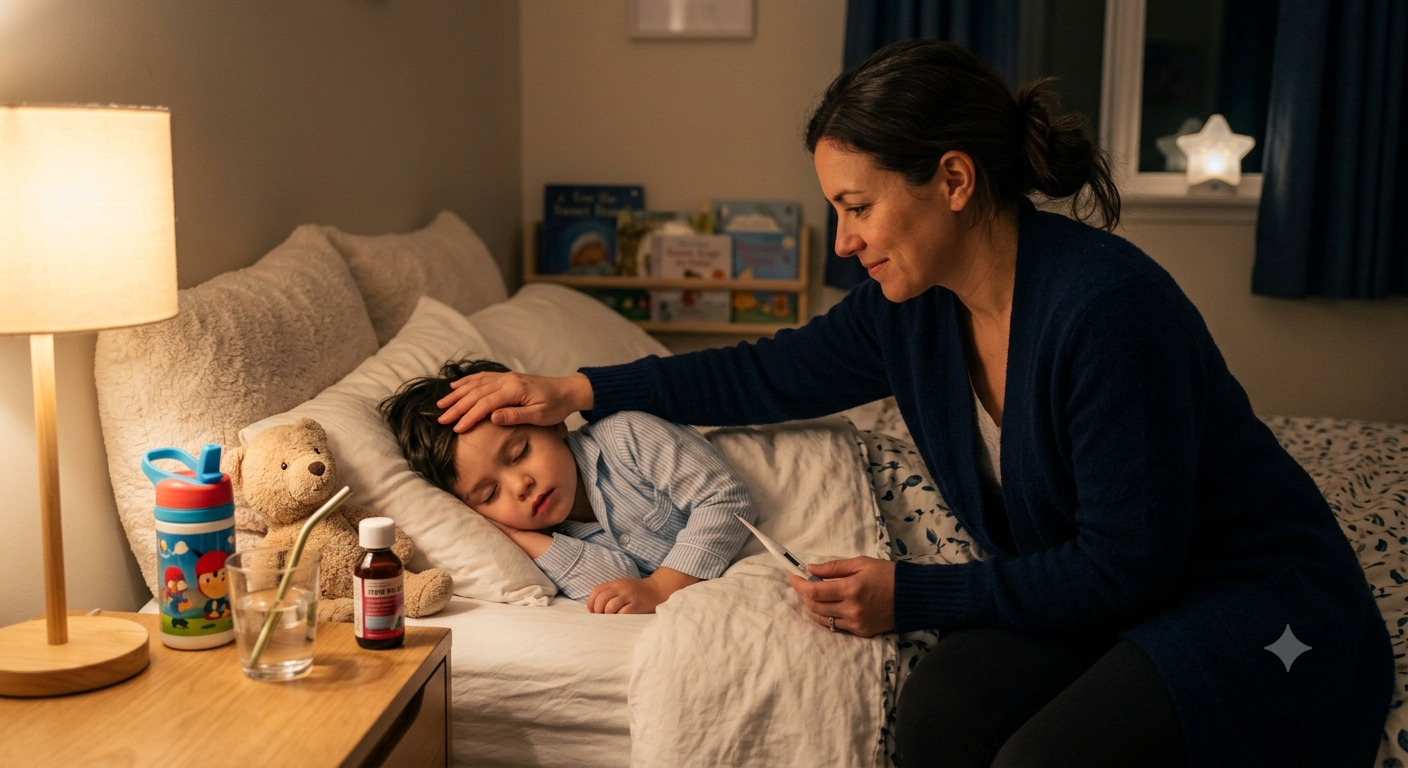
Quick Answer: To control nighttime fever, focus on your child’s behavior, hydration, and comfort. Keep them in lightweight clothing, maintain a moderate room temperature, and encourage rest. Avoid ice baths, heavy blankets, and aspirin. Seek medical attention for infants under three months, breathing difficulties, dehydration, or unusual confusion. Ultimately, prioritize your child’s overall responsiveness and comfort over precise digital temperature readings.
As a pediatrician, one of the most common late-night concerns I hear from parents is:
“My child’s fever is higher at night. What should I do?”
If you have ever checked your child’s temperature before bedtime and felt worried seeing the thermometer reading rise, you are not alone. Many parents become especially anxious when the fever appears to worsen overnight.
Over my more than 25 years of caring for children, I have reassured countless families that fever is often a normal response to infection. In many cases, the body’s immune system raises its temperature to help fight viruses or bacteria.
As a board-certified pediatrician, I believe parents feel more confident when they understand what fever means and how to manage it safely at home.
In this guide, I will explain effective ways to reduce discomfort from fever naturally at night, when home care may be appropriate, and when you should contact a healthcare professional.
Why Does Fever Often Seem Worse at Night?
Many parents notice that their child’s temperature appears higher in the evening. This observation is rooted in normal human physiology. Body temperature naturally fluctuates throughout a 24-hour cycle due to circadian biological rhythms. Temperatures naturally peak slightly during the late afternoon and evening, even in perfectly healthy individuals.
When a child is actively fighting an infection, this natural circadian rhythm stacks on top of the immune response, making fevers seem much more dramatic at night. A higher nighttime temperature does not automatically mean the underlying illness is becoming more serious.
Instead of focusing exclusively on the numbers on the digital display, pay close attention to your child’s physical cues:
- Behavior and Responsiveness: Are they tracking you with their eyes and responding normally?
- Energy and Comfort: Are they able to settle down, or are they inconsolably irritable?
- Hydration Status: Are they still producing wet diapers and tears?
- Breathing Patterns: Is their breathing smooth, or does it look labored?
Effective Methods to Reduce Nighttime Child Fever
Below are some of the best ways you can control your child’s fever at night:
1. Keep Your Child Well Hydrated
Hydration is one of the most important aspects of fever management.
When children have a fever, they may lose fluids through:
- Sweating
- Faster breathing
- Reduced appetite
- Illness-related fluid loss
Dehydration can make children feel worse and may contribute to additional complications.
Before bedtime, encourage fluids such as:
- Water
- Breast milk
- Formula
- Oral rehydration solutions
- Clear broths
For older children, ice pops can sometimes make hydration more appealing.
Even small, frequent sips can be helpful.
2. Dress Your Child in Lightweight Clothing
Many parents instinctively bundle a child with a fever in extra blankets.
While the intention is understandable, excessive layering can trap body heat and increase discomfort.
I generally recommend:
- Lightweight pajamas
- Breathable cotton fabrics
- Comfortable sleepwear
The goal is to maintain comfort rather than forcing the body to become warmer.
3. Keep the Bedroom Comfortable
A comfortable sleeping environment can make a significant difference.
Helpful measures include:
- Maintaining a moderate room temperature
- Allowing gentle air circulation
- Using breathable bedding
The room does not need to be cold.
Extremely cold environments may actually make children more uncomfortable.
Focus on comfort rather than trying to rapidly cool the body.
4. Use Lukewarn Bath
A lukewarm bath is a safe and effective way to help lower a child’s temperature, primarily through evaporation. However, it should only be used to make the child feel more comfortable.
To safely cool your child, follow these guidelines:
- Water Temperature: Keep it lukewarm, around 90°F to 95°F (32°C to 35°C).
- Duration: 20 to 30 minutes.
- Stop if Shivering Starts: If your child gets the chills or starts shivering, take them out of the bath immediately.
5. Encourage Rest and Sleep
Sleep is one of the body’s most effective healing tools.
During illness, children often need additional rest.
At night, encourage:
- Quiet activities before bedtime
- A consistent sleep routine
- Reduced screen exposure before sleep
Many parents wonder whether they should wake a sleeping child simply to recheck a temperature.
In many situations, a child who is sleeping comfortably may be allowed to continue resting unless otherwise directed by a healthcare professional.
6. Offer Easy-to-Digest Foods Before Bed
Children with fever frequently experience reduced appetite.
This is often normal and temporary.
If your child is interested in eating, consider light options such as:
- Applesauce
- Yogurt
- Bananas
- Toast
- Crackers
- Soup
Hydration is generally more important than food intake during the early stages of illness. Avoid forcing meals if your child is not hungry.
What Parents Should Avoid
Over the years, I have encountered several common misconceptions about fever management.
The following approaches are generally not recommended:
1. Ice Baths
Modern AAP guidelines explicitly discourage ice baths and sponge bathing for routine fever management. Rapidly cooling the skin causes peripheral vasoconstriction and triggers violent shivering. Shivering is a metabolic mechanism that actively forces the brain to drive the internal core body temperature higher, increasing your child’s discomfort and metabolic stress.
2. Alcohol Rubs
Alcohol may be absorbed through the skin and can be harmful.
3. Heavy Blankets
If your child feels chilled, a light blanket may be appropriate.
However, heavy blankets and multiple layers can sometimes worsen overheating.
Allow your child to sleep comfortably without excessive covering.
If they become too warm, they may have difficulty resting.
4. Constant Temperature Checking
Repeatedly checking temperatures every few minutes often increases parental anxiety without improving care.
Focus on how your child is feeling overall.
5. Aspirin
You must never, under any circumstances, give aspirin to a child or adolescent. Aspirin use during a viral illness is directly linked to Reye’s syndrome, a rare but frequently fatal condition that causes acute, life-threatening swelling in the brain and liver.
When Fever May Require Medical Attention
While many fevers can be managed safely at home, some situations require prompt evaluation.
Contact a healthcare professional if your child develops:
1. Fever in an Infant Younger Than 3 Months
A fever of 100.4°F (38°C) or higher in an infant under 28 days old (and up to 90 days) represents a strict medical emergency. Parents must be instructed to take the infant immediately to the nearest Emergency Department for a full septic workup.
2. Difficulty Breathing
Seek immediate medical care if your child experiences:
- Rapid breathing
- Wheezing
- Chest retractions
- Bluish lips or skin
3. Signs of Dehydration
Warning signs include:
- Very few wet diapers
- Dry mouth
- No tears when crying
- Unusual lethargy
4. Persistent Fever
A fever that lasts several days or repeatedly returns should be evaluated.
5. Unusual Sleepiness or Confusion
Children who are difficult to wake or appear confused need prompt medical attention.
A Real Experience From My Practice
Throughout my career, many parents have called after hours worried about nighttime fevers.
I remember one family whose four-year-old developed a fever shortly before bedtime.
The parents were understandably concerned because the temperature seemed higher than it had been earlier in the day.
After discussing the child’s symptoms, we focused on several reassuring signs:
- Drinking fluids well
- Comfortable breathing
- Normal interaction with parents
- Good urine output
We reviewed hydration, comfort measures, and warning signs to monitor.
The child recovered fully over the next few days without complications.
Experiences like this highlight why evaluating the whole child is often more important than focusing solely on a thermometer reading.
Fever Evaluation at Gentle Pediatrics
Our pediatric clinic in Sugar Land provides comprehensive evaluations for children experiencing fever and illness.
We offer:
- Same-day sick visits
- Fever assessments
- Respiratory illness evaluations
- Hydration assessments
- Infection management
- Preventive pediatric care
- Newborn and infant evaluations
We help families understand when home care is appropriate and when additional medical treatment may be needed.
Why Families Trust Gentle Pediatrics
At Gentle Pediatrics, we understand how stressful childhood illness can be for families.
Parents often choose our practice because we provide:
- Evidence-based medical guidance
- Compassionate pediatric care
- Clear communication
- Family-centered support
- Thorough evaluations
As a trusted kids’ doctor in Sugar Land, my goal is to help families feel informed, supported, and confident when caring for their children.
Final Thoughts
Nighttime fevers can be stressful for parents, but they are often a normal part of the body’s response to illness.
Simple measures such as maintaining hydration, dressing your child comfortably, encouraging rest, and creating a comfortable sleeping environment can help reduce discomfort naturally.
Most importantly, focus on your child’s overall condition rather than the temperature reading alone.
If your child is drinking fluids, breathing comfortably, and responding normally, those are reassuring signs.
Whenever concerns arise, trust your instincts and reach out to a healthcare professional.
As a doctor in Sugar Land, I am committed to helping families navigate childhood illnesses safely and confidently.
Schedule a Pediatric Visit in Sugar Land
If your child has a fever, signs of illness, or symptoms that concern you, our team is here to help.
Gentle Pediatrics proudly serves families throughout:
- Sugar Land
- Richmond
- Rosenberg
- Stafford
- Katy
- Houston
Gentle Pediatrics — Sugar Land, Texas
Contact our pediatric clinic in Sugar Land today to schedule an appointment with Dr. Shahid Hasnain, a trusted doctor in Sugar Land dedicated to helping children stay healthy and thrive.
Frequently Asked Questions
1. Why does my child’s fever seem higher at night?
Body temperature naturally peaks in the late afternoon and evening due to normal circadian rhythms, which stack on top of the body’s immune response during an infection.
2. Should I wake my child to check their temperature?
No. If your child is resting comfortably and breathing normally, uninterrupted sleep is far more beneficial for their immune system than a thermometer reading.
3. Can ice baths help reduce fever discomfort?
No. Modern pediatric guidelines discourage ice baths or sponge bathing. Rapidly cooling the skin causes shivering, which biochemically triggers the brain to raise the internal core body temperature even higher, increasing physical distress.
4. How can I prevent dehydration during a fever?
Offer frequent fluids and monitor for signs of adequate hydration, such as regular urination and moist lips.
5. When should I seek medical attention for a fever?
Seek medical evaluation for infants younger than three months, breathing difficulties, dehydration, persistent fever, or unusual behavior changes.
This content is for informational purposes only and does not constitute professional medical advice, diagnosis, or treatment. Always seek the advice of a pediatrician or other qualified health provider with any questions you may have regarding a medical condition.