

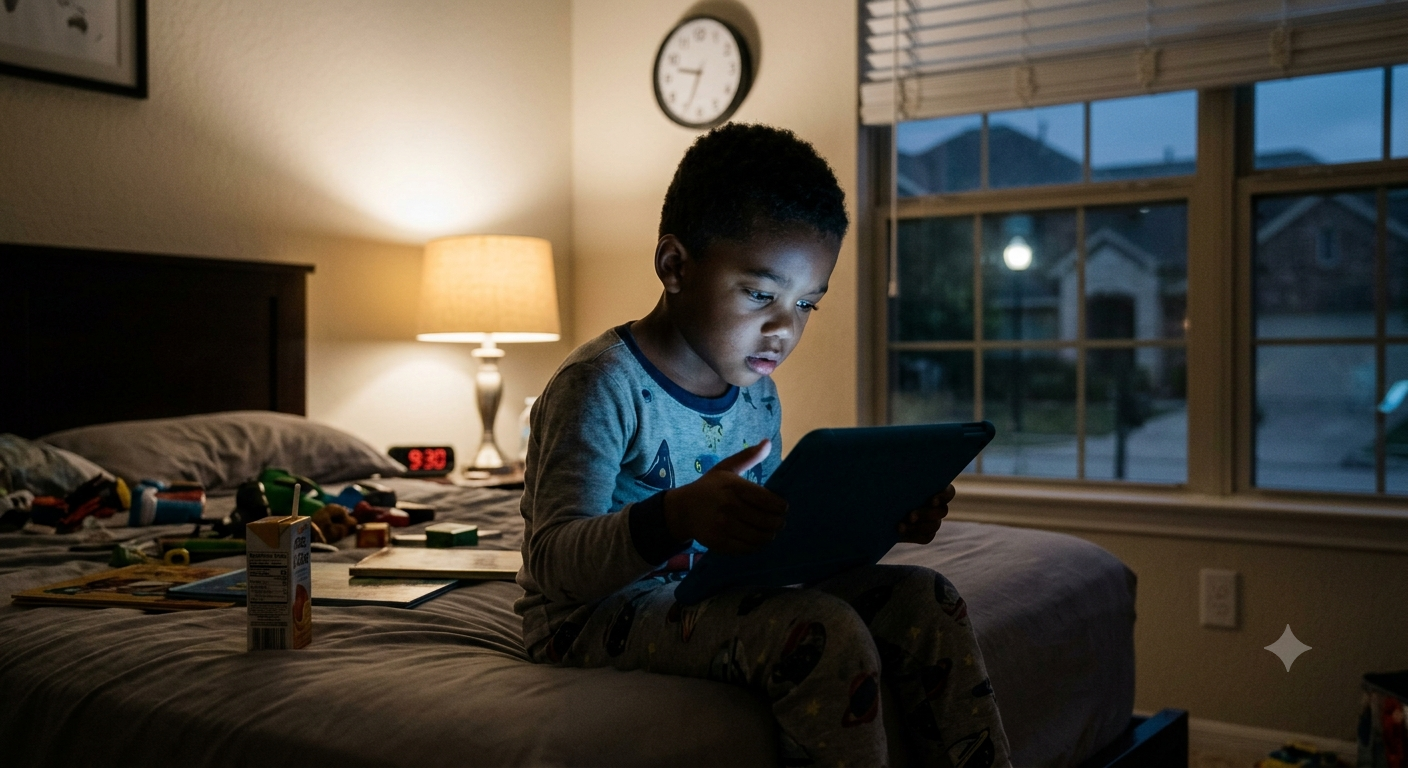
Quick Answer: Excessive screen time, especially before bedtime, can disrupt children’s sleep, affect attention and learning, and contribute to irritability or emotional outbursts. Parents can encourage healthier habits by setting consistent screen limits, avoiding devices at least one hour before bed, choosing age-appropriate content, and promoting outdoor play, reading, and family interaction. For children aged 2–5, the AAP recommends about one hour of high-quality screen time daily. Consult your pediatrician if screen use affects your child’s daily well-being.
Screens have become a regular part of childhood. Children use tablets for learning, watch videos for entertainment, play games, and connect with friends through phones. While technology can offer educational and social benefits, too much screen use or using devices at the wrong time can affect a child’s sleep, attention, and behavior.
As a board-certified pediatrician, I encourage parents to look beyond the number of hours their children spend on screens. It is also important to consider what they watch, when they use devices, and whether screen time is replacing sleep, outdoor play, reading, or family interaction.
This guide explains how excessive screen time can impact your child’s sleep, attention, and behavior.
How Screen Time Can Affect Children’s Sleep
Sleep is essential for children’s physical growth, learning, memory, and emotional health. However, screens can make it harder for children to get enough restful sleep, especially when they use phones, tablets, or gaming devices close to bedtime.
There are several reasons for this.
- Bright light: Light from screens can interfere with the body’s natural sleep signals.
- Exciting content: Fast-paced videos, games, and social media can keep a child’s mind active when it is time to relax.
- Delayed bedtime: Children may continue watching videos or playing games instead of going to bed.
- Nighttime notifications: Messages and alerts can interrupt sleep or tempt children to check their devices.
The American Academy of Pediatrics (AAP) notes that digital media can disrupt when children fall asleep, how long they sleep, and their overall sleep quality.
What Can Parents Do?
Try creating a predictable bedtime routine that does not involve screens. Encourage your child to stop using devices at least one hour before bed, keep phones and tablets out of the bedroom overnight, and choose relaxing activities such as reading or listening to calm music.
Children also need consistent sleep schedules, including on weekends. If your child regularly struggles to fall asleep, wakes frequently, or feels tired during the day, discuss these concerns with your pediatrician.
Can Screen Time Affect Attention and Learning?
Have you noticed that your child struggles to finish homework, becomes distracted easily, or finds it difficult to focus on a quiet activity?
Screen habits may be one factor worth reviewing. Some digital content keeps users engaged through frequent rewards, rapid changes, autoplay, and constant notifications. These features can make it harder to stop using a device and switch to a less stimulating task.
2026 research by AAP links heavier digital media use in school-aged children with weaker attention control and less favorable learning outcomes. However, these findings do not mean that screens automatically cause attention problems in every child. The type of content, the child’s age, family routines, and other factors also matter.
Ways to Support Better Attention
Parents can help children develop stronger focus by:
- Turning off notifications during homework.
- Keeping phones away during meals and study time.
- Encouraging reading, puzzles, crafts, and imaginative play.
- Breaking homework into smaller, manageable tasks.
- Providing time for outdoor play and physical activity.
- Choosing educational content that matches the child’s age and interests.
If your child continues to struggle with attention at home and school, do not assume screen time is the only explanation. Sleep difficulties, stress, learning differences, anxiety, and attention-deficit/hyperactivity disorder (ADHD) may also affect concentration. A pediatric evaluation can help identify what support your child needs.
How Screen Time Can Influence Children’s Behavior
Do you notice your child becoming upset when you ask them to turn off a tablet? Does your toddler have frequent meltdowns after watching videos, or does your school-age child become irritable when a game ends?
These reactions can happen for several reasons. Digital activities can be highly engaging, and stopping suddenly may frustrate children who are still learning to manage strong emotions. Young children especially need practice handling boredom, disappointment, and transitions without always relying on a screen to calm down.
Screen use may also expose children to frightening, violent, or age-inappropriate content that influences their feelings and behavior. The effect depends on the child’s age, the content, and how they respond to it.
Signs Parents Should Watch For
Pay attention if your child:
- Has intense meltdowns almost every time screen time ends.
- Becomes increasingly irritable or restless without a device.
- Loses interest in hobbies, outdoor play, or time with friends.
- Has trouble managing frustration without watching videos or playing games.
- Uses screens so often that family time, meals, or sleep suffer.
These signs do not automatically mean your child has a behavioral disorder or is addicted to technology. However, persistent problems are worth discussing with your pediatrician.
Does Screen Time Affect Babies and Young Children Differently?
Yes. Age and development matter when deciding how children should use screens.
Babies learn through real-world experiences, including looking at faces, hearing conversations, exploring objects, and interacting with caregivers. For children younger than 18 months, the AAP generally recommends avoiding screen media except for interactive video chatting. For children aged 18 to 24 months, parents who introduce media should choose high-quality content and watch it with their child.
For children aged 2 to 5 years, the AAP recommends limiting screen use to about one hour a day of high-quality programming, with parents watching and discussing content when possible. For older children, families should consider whether media use is interfering with sleep, schoolwork, physical activity, relationships, or other important parts of life.
For young children, prioritize activities such as:
- Reading picture books together.
- Playing with blocks, puzzles, and toys.
- Singing songs and talking throughout the day.
- Spending time outdoors.
- Practicing imaginative play.
- Interacting with family members and other children.
These experiences help children build language, social skills, movement, and emotional regulation.
How Parents Can Build Healthier Screen Habits
The goal is not necessarily to remove all technology. Screens can support learning, creativity, and social connection when used thoughtfully. Instead, aim for a healthy balance that fits your child’s age and needs.
Here are practical steps to get started.
- Create a family media plan: Agree on when devices can be used, which content is appropriate, and which activities should remain screen-free. The AAP offers a Family Media Plan tool to help families set realistic rules.
- Protect bedtime: Stop screen use at least one hour before bed and keep devices out of bedrooms overnight when possible. Replace late-night scrolling with a consistent wind-down routine.
- Set clear and consistent limits: Give children a warning before screen time ends. For example, say, “You have ten minutes left,” and then remind them when it is time to stop. A timer can help make the transition more predictable.
- Choose content carefully: Look for age-appropriate videos, games, and apps. Watch together when possible, ask your child what they learned, and discuss anything that seems confusing or upsetting.
- Make room for offline activities: Encourage sports, music, art, reading, family games, and outdoor play. The goal is to make sure screens do not crowd out activities that support healthy development.
- Set a good example: Children notice adult habits. Putting your own phone away during meals, conversations, and bedtime can help reinforce the rules you set for them.
Kids’ Healthcare in Sugar Land at Gentle Pediatrics
At Gentle Pediatrics, I believe supporting a child’s health includes looking at everyday habits, not just treating illness. Sleep, attention, behavior, nutrition, physical activity, and family relationships all play a role in a child’s well-being.
Through kids’ healthcare in Sugar Land, our team helps parents discuss concerns about development, behavior, sleep, and healthy routines in a supportive setting. If screen use seems to be affecting your child’s daily life, a pediatric visit can be a useful first step toward understanding the problem.
About Dr. Shahid Hasnain

I am a board-certified pediatrician with more than two decades of experience caring for infants, children, and adolescents. I have been board-certified by the American Board of Pediatrics since 1998.
My training includes a Master’s in Public Health specializing in Maternal & Child Health, a pediatric internship at Lincoln Hospital in New York, and residency at the University of Tennessee Medical Center in Knoxville, where I served as Chief Resident in my final year.
At Gentle Pediatrics, I combine clinical experience with a gentle approach and clear communication to help families make informed decisions about their children’s health.
Final Thoughts
Screen time is part of modern family life, but finding the right balance can help protect your child’s sleep, attention, and emotional well-being. Simple steps, such as setting consistent limits, keeping devices away at bedtime, choosing age-appropriate content, and making time for outdoor play and family conversations, can make a meaningful difference.
At Gentle Pediatrics, I encourage parents to focus on progress rather than perfection. Every child responds differently to technology, and lasting habits develop through patience and consistency. If you notice ongoing sleep difficulties, attention problems, or behavioral changes linked to screen use, discuss your concerns with your pediatrician. Through kids’ healthcare in Sugar Land, our team is here to help you support your child’s healthy development and overall well-being.
Schedule a Pediatric Visit
If you are concerned about your child’s sleep, attention, behavior, or screen habits, our team at Gentle Pediatrics is here to help.
Gentle Pediatrics proudly serves families throughout:
- Sugar Land
- Richmond
- Rosenberg
- Stafford
- Katy
- Houston
📍 Gentle Pediatrics, Sugar Land, Texas
Contact our office today or fill out the online patient registration form to schedule an appointment and discuss your child’s development, daily habits, and overall health.
Frequently Asked Questions
1. How much screen time is appropriate for children?
Recommendations depend on age. For children aged 2 to 5, the AAP recommends about one hour per day of high-quality programming. For older children, consider whether media use interferes with sleep, physical activity, learning, or relationships.
2. Can screen time cause ADHD?
Screen use alone does not establish that a child has ADHD. Attention difficulties can have several causes. If your child struggles to focus across home and school settings, talk with your pediatrician about an appropriate evaluation.
3. Should children use phones before bed?
It is best to avoid screens for at least an hour before bedtime. Late-night use can delay sleep and interfere with a consistent bedtime routine.
4. What should I do if my child has a tantrum when screen time ends?
Give advance warnings, set consistent limits, and stay calm. Offer another activity and help your child learn ways to manage frustration. If meltdowns are frequent or severe, discuss them with your pediatrician.
5. When should I seek professional help for screen-time concerns?
Speak with your pediatrician if screen use regularly affects your child’s sleep, mood, schoolwork, physical activity, or relationships, or if your child struggles to enjoy activities without a device.
This article is for general educational purposes and does not replace professional medical advice, diagnosis, or treatment. Every child has different developmental and health needs. If you have concerns about your child’s sleep, attention, behavior, or development, consult a qualified healthcare professional.