

When Should I Take My Child to the ER for a Fever? A Parent’s Guide
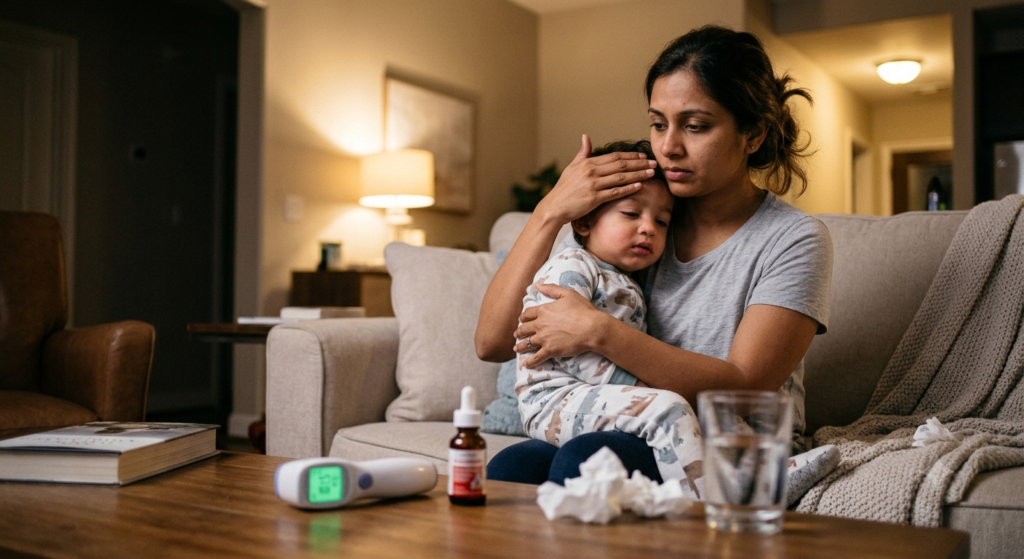
Quick Answer: Most childhood fevers can be managed at home with fluids, rest, and appropriate fever medicine. However, seek immediate medical evaluation if a baby younger than 3 months has a temperature of 100.4°F or higher. Take your child to the ER for difficulty breathing, seizures, unusual drowsiness, stiff neck, severe dehydration, or a non-fading rash. Contact your pediatrician if fever persists, symptoms worsen, or you are concerned about your child’s health. A fever can be frightening when it happens to your child, especially at night or when your child is too young to explain how they feel. Many parents wonder whether they should wait, call their pediatrician, or head straight to the emergency room. The most important thing to know is that a fever is a sign that the body is responding to an illness, not an illness itself. Many childhood fevers are caused by common infections and improve with time. However, a child’s age, behavior, breathing, hydration, and other symptoms matter more than the temperature alone. As a board-certified pediatrician with more than two decades of experience caring for infants, children, and adolescents, I encourage parents to trust their instincts while also knowing which warning signs need immediate medical attention. This guide explains when a fever needs emergency care, when to contact your pediatrician, and how to help your child feel more comfortable at home. What Temperature Counts as a Fever? A temperature of 100.4°F (38°C) or higher is generally considered a fever. The reading can vary depending on how you take your child’s temperature, so follow the thermometer instructions and tell your healthcare professional how you measured it. The number on the thermometer is only one part of the picture. A child with a moderate fever who is alert, drinking fluids, and responding normally may be less concerning than a child with a lower temperature who is difficult to wake or struggling to breathe. Look at your child’s overall condition. Are they making eye contact? Are they drinking? Are they breathing comfortably? These details help guide the next step. When Should a Child With a Fever Go to the ER? Some symptoms need emergency attention, regardless of the exact temperature. Go to the emergency room or call 911 if your child: Has difficulty breathing, is gasping, or has blue or gray lips. Is difficult to wake, confused, unresponsive, or unusually weak. Has a seizure, especially a first seizure or one that lasts more than five minutes. Has a stiff neck with a severe headache or appears very ill. Develops a purple or red rash that does not fade when pressed. Shows signs of severe dehydration, such as very little urine, extreme sleepiness, or inability to drink. Has a fever after being left in a very hot environment or may have heatstroke. These symptoms can point to a serious illness or emergency. Do not delay care to see whether fever medicine brings the temperature down. If your child is having trouble breathing, is unresponsive, or is experiencing a prolonged seizure, call emergency services rather than trying to drive them yourself. Fever in Babies: When Age Matters Most A fever in a very young baby needs special attention. If your baby is younger than 3 months and has a temperature of 100.4°F (38°C) or higher, seek immediate medical evaluation. Even if the baby looks comfortable or the fever is the only symptom, a healthcare professional needs to assess them. Do not give fever medicine before the baby is evaluated unless a clinician specifically instructs you to. For babies between 3 and 6 months, contact your pediatrician promptly if the temperature reaches 102.2°F (39°C), or sooner if your baby looks unwell, is feeding poorly, or has other symptoms. Age-based guidance can vary, so when in doubt, call your child’s healthcare professional. When Can You Call the Pediatrician Instead of Going to the ER? Not every fever requires emergency care. If your child is alert, breathing comfortably, drinking fluids, and responding normally, you may be able to contact your pediatrician for guidance. Call your child’s doctor if: Your child is getting worse or still seems very ill after the fever comes down. The fever lasts more than 24 hours in a child younger than 2 years. The fever lasts more than 3 days in a child 2 years or older. Your child has ear pain, a sore throat, a persistent cough, pain with urination, or repeated vomiting. Your child has a weakened immune system or a serious ongoing medical condition. You are worried and are unsure whether your child needs to be seen. A pediatrician can help determine whether your child needs an examination, testing, or treatment. If emergency warning signs develop while you are waiting, seek emergency care. How to Help Your Child Feel Better at Home For children without emergency symptoms, the focus is comfort and hydration. Offer fluids often: Give water to older children and continue breast milk or formula for infants. If your child is vomiting or has diarrhea, ask your pediatrician whether an oral rehydration solution is appropriate. Let your child rest: Sleep and quiet activities can help your child recover. Check on them regularly, including overnight. Dress them comfortably: Use light clothing and avoid bundling them in heavy blankets. Do not use ice baths, cold baths, or rubbing alcohol to lower a fever. Use fever medicine carefully: Acetaminophen or ibuprofen may help if your child is uncomfortable, but the dose must be appropriate for the child’s age and weight. Ask your pediatrician or pharmacist if you are unsure. Do not give aspirin to children, and do not alternate or combine fever medicines unless a healthcare professional tells you to. What Should Parents Do if a Fever Rises at Night? If your child is breathing comfortably, responding normally, and able to drink fluids, you can often monitor them at home while watching for changes. During nighttime fever: Check your child’s temperature with a digital thermometer. Offer water or breast milk and formula for infants,
Why Is My Child a Picky Eater? Causes and Solutions for Parents
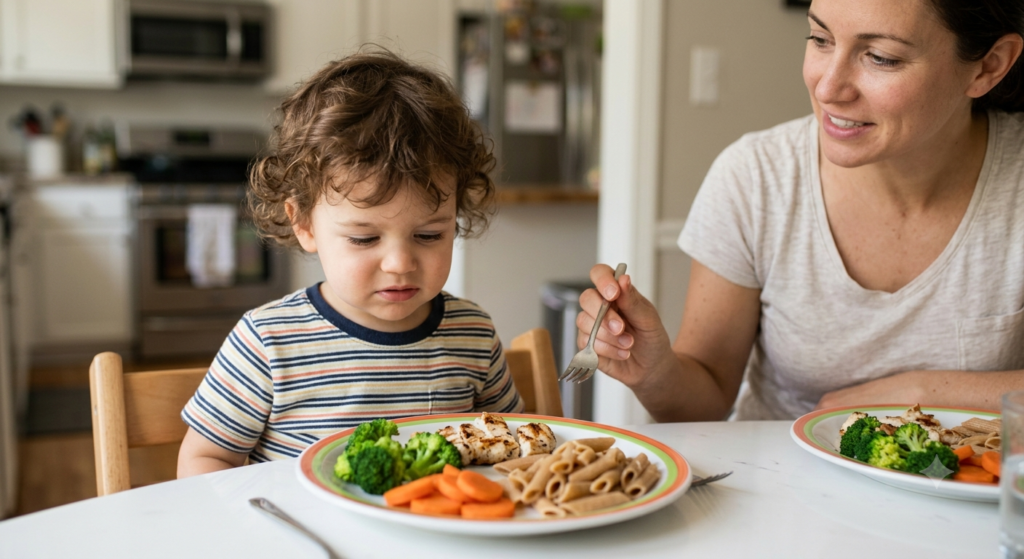
Quick Answer: Picky eating is common in toddlers and young children as they develop independence, explore new tastes, and respond to different food textures. Parents can encourage healthy eating by offering small portions, repeatedly introducing new foods, providing a balanced children’s meal plan, and keeping mealtimes relaxed. Avoid forcing children to eat or creating food battles. If your child has poor weight gain, refuses entire food groups, or eats very few foods, consult a pediatrician for nutritional assessment and support. Does your child refuse vegetables, eat only a few favorite foods, or suddenly reject something they enjoyed last week? If mealtimes have become a daily struggle, you are not alone. If so, it is normal to worry that your child is not eating enough or getting the nutrients they need. Picky eating is common during childhood, particularly in the toddler and preschool years. Children may become more selective as they develop independence, explore new tastes, and react to different food textures. In many cases, this is a normal part of growing up. However, very limited food choices or ongoing feeding difficulties deserve attention. As a board-certified pediatrician with more than two decades of experience caring for infants, children, and adolescents, I encourage parents to approach food struggles with patience rather than pressure. The goal is to help children develop healthy eating habits while making sure they receive the nutrition they need. Why Is My Child a Picky Eater? There is no single reason children become picky eaters. Their food preferences can change with age, development, appetite, and everyday experiences. Some common reasons include: Growing independence: Toddlers often want to make their own choices. Refusing food can become one way to express independence. Sensitivity to textures and smells: Some children dislike foods that feel slimy, crunchy, lumpy, or smell unfamiliar. Fear of unfamiliar foods: A child may hesitate to taste something simply because it looks different from what they usually eat. Changing appetite: Growth does not happen at the same rate every day. A child may eat well at one meal and very little at the next. Past unpleasant experiences: A choking incident, vomiting, or discomfort while eating may make a child afraid of certain foods. Picky eating is especially common in young children, but persistent food restriction can sometimes be linked to sensory difficulties, developmental conditions, or feeding disorders. Is Picky Eating Normal or a Sign of a Nutritional Problem? Many picky eaters continue to grow normally. A child may refuse vegetables but happily eat fruits, dairy products, grains, and protein foods. In such cases, the overall diet may still provide many important nutrients. However, a very restricted diet can increase the risk of nutritional gaps. Children who avoid entire food groups may not get enough iron, calcium, vitamin D, protein, fiber, or other nutrients. Parents should watch for: Poor weight gain or unexpected weight loss. Slow growth compared with previous measurements. Persistent tiredness or low energy. Constipation. Frequent complaints of stomach discomfort. Refusal of most foods or entire food groups. If you notice these signs, discuss them with your pediatrician. A growth review and dietary assessment can help determine whether your child needs additional support. How Can Parents Encourage Children to Try New Foods? The first step is to remove pressure from mealtimes. Forcing a child to finish a plate or threatening to withhold dessert can make eating more stressful. Instead, give your child regular opportunities to explore different foods. Offer small portions: A large serving of an unfamiliar food can feel overwhelming. Start with a tiny portion beside something your child already enjoys. Keep offering rejected foods: A child may need to see, smell, touch, or taste a food several times before accepting it. The 2025 Dietary Guidelines Advisory Committee highlights repeated, positive exposure as an effective way to improve food acceptance in young children. Eat together as a family: Children often learn by watching adults. Let them see you enjoying vegetables, fruits, and other nutritious foods. Give simple choices: Instead of asking, “What do you want to eat?” offer two options, such as carrots or cucumber. This gives children some control without making meal planning difficult. Avoid food battles: Praise your child for exploring a new food, even if they only touch or smell it. Do not insist that they take a bite. Remember, the goal is gradual progress, not an empty plate. Create a Balanced Children’s Meal Plan A balanced children’s meal plan does not need complicated recipes or expensive ingredients. It should include different food groups and provide regular opportunities to eat. Try including: Fruits: Bananas, apples, oranges, berries, and melon. Vegetables: Carrots, peas, spinach, broccoli, and sweet potatoes. Protein: Eggs, chicken, fish, beans, lentils, and tofu. Whole grains: Oatmeal, whole-wheat bread, brown rice, and whole-grain pasta. Dairy or alternatives: Milk, yogurt, cheese, or suitable fortified alternatives. Adjust portions and food choices to your child’s age, appetite, allergies, and nutritional needs. Make Mealtimes Less Stressful Children are more likely to develop healthy eating habits when meals feel comfortable and predictable. A few simple changes can help: Serve meals and snacks at regular times. Avoid giving too many snacks or sweet drinks between meals. Let your child help wash vegetables or arrange food on a plate. Turn off televisions and phones during meals. Give children enough time to eat without rushing them. Allow them to stop when they show signs of fullness. Pay attention to hunger and fullness cues. Turning away, closing the mouth, or pushing food away may indicate that a young child has had enough. Try not to use sweets as a reward for eating vegetables. This can make children view some foods as more desirable than others and create unnecessary pressure. When Should Parents Seek Medical Advice? Occasional food refusal is usually not a reason to worry. However, some children need professional support. Speak with your pediatrician if your child: Eats only a very small number of foods. Refuses entire food groups. Has difficulty chewing or swallowing. Frequently gags, coughs, or
Baby Fever After Vaccination: What Is Normal and When to Call a Doctor?
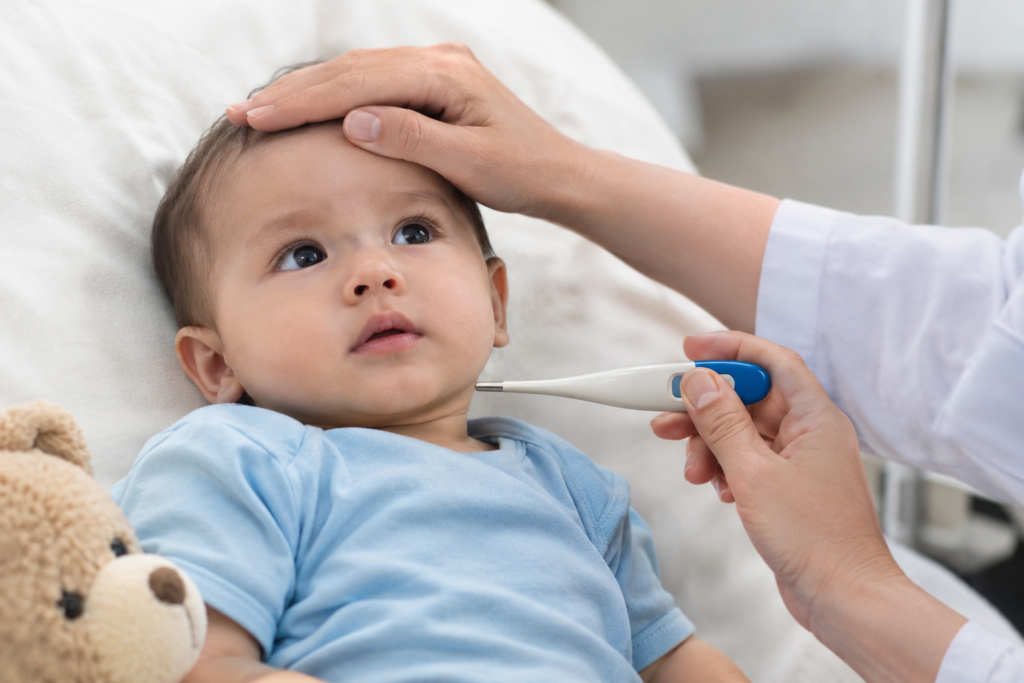
Quick Answer: A mild fever after baby vaccination is common and usually resolves within one to two days, although timing varies by vaccine. Comfort your baby with cuddling, frequent breast milk or formula feeds, comfortable clothing, and a cool cloth on the injection site. A temperature of 100.4°F (38°C) or higher in babies younger than three months requires immediate medical evaluation. Seek emergency care for breathing difficulties, facial or throat swelling, or unresponsiveness. Contact your pediatrician if symptoms worsen or persist. Seeing your baby develop a fever after vaccination can be worrying, especially when your little one is too young to explain how they feel. You may wonder whether the fever is a normal reaction, how long it should last, and what you can safely do to help your baby feel better. The good news is that a mild fever after vaccination is a common, usually short-lived reaction. Babies may also feel sleepy, become fussy, eat a little less, or have soreness where the injection was given. Most of these reactions improve within a day or two. However, some fevers need prompt medical attention, particularly in very young infants. As a board-certified pediatrician with more than two decades of experience caring for infants, children, and adolescents, I encourage parents to understand what to expect after vaccines and to contact a healthcare professional whenever they are unsure about their baby’s symptoms. Is Fever After Baby Vaccination Normal? Yes, fever can occur after some vaccines. Vaccines help the immune system learn to recognize and respond to specific infections. A temporary fever can be part of the body’s response to vaccination. Along with fever, your baby may experience: Mild fussiness or increased crying. Tenderness, redness, or swelling at the injection site. More sleepiness than usual. A temporary decrease in appetite. Restlessness or changes in sleep. These reactions are generally mild and improve within a short time. With many vaccines, fever begins during the first 24 hours and lasts around one to two days. The American Academy of Pediatrics (AAP) notes that some vaccines, including the measles, mumps, and rubella (MMR) vaccine, can cause a fever later. The timing depends on the vaccine given. A fever does not automatically mean something has gone wrong. However, do not assume every fever following vaccination is caused by the vaccine. Babies can develop unrelated infections around the same time. What Temperature Counts as a Fever in a Baby? A temperature of 100.4°F (38°C) or higher is considered a fever in an infant. How you measure the temperature matters, so follow the thermometer’s instructions and tell your healthcare professional how the reading was taken. Pay attention to more than the number. Notice whether your baby is feeding, making eye contact, waking normally, and responding as usual. Most importantly, if your baby is younger than three months and has a temperature of 100.4°F (38°C) or higher, seek immediate medical evaluation, even if the fever started after vaccination. Do not give fever medicine before the baby is assessed unless a healthcare professional specifically instructs you to do so. How Can Parents Comfort a Baby After Vaccination? If your baby is otherwise alert, feeding reasonably well, and has no warning signs, gentle care can help them feel more comfortable. 1. Offer breast milk or formula frequently Babies may drink less than usual for a short time after vaccination. Offer breast milk or formula more often, and monitor wet diapers for signs of dehydration. Do not give plain water to young infants unless your healthcare professional recommends it. 2. Hold and soothe your baby Cuddling, gentle rocking, breastfeeding, and speaking softly can help calm a fussy infant. Some babies may want more comfort than usual for a day or two. 3. Dress your baby comfortably Use light, comfortable clothing and avoid wrapping your baby in too many layers. Keep the room at a comfortable temperature. 4. Use a cool cloth on the injection site The CDC notes that if the injection area is sore or swollen, a clean, cool, damp cloth may help. Avoid pressing hard on the area or applying ice directly to the skin. 5. Ask before giving fever medicine Do not give medicine automatically or use an adult dose. Ask your pediatrician whether a medicine such as acetaminophen is appropriate and what dose is safe for your baby’s age and weight. Do not give aspirin to children. When Should You Call a Doctor About Fever After Vaccination? Contact your baby’s doctor promptly if: Your baby is younger than three months and has a temperature of 100.4°F (38°C) or higher. Your baby’s fever is very high, or the fever lasts longer than expected. Your baby is feeding poorly or has noticeably fewer wet diapers. Your baby is unusually sleepy, irritable, or difficult to comfort. Your baby develops persistent vomiting or other symptoms that concern you. The injection-site redness or swelling continues to worsen. A fever above 104°F (40°C), a fever lasting more than three days, or a fever that returns after going away warrants medical advice. In very young infants, do not wait for the fever to last several days before seeking care. Seek Emergency Care for Serious Symptoms Call 911 or your local emergency number if your baby has difficulty breathing, swelling of the face or throat, becomes unresponsive, or is too weak to respond normally. These may be signs of a severe allergic reaction or another emergency. Trust your instincts. If your baby looks seriously unwell, seek urgent medical help even if the temperature does not seem very high. How Long Does a Post-Vaccination Fever Last? For many vaccines, a fever begins within the first day and settles within one to two days. Other reactions, such as soreness at the injection site, may last a little longer. Some vaccines can cause a delayed fever, so the expected timing depends on which vaccine your baby received. If your baby’s fever is getting worse, lasts longer than expected, or appears with new symptoms, contact your pediatrician. An examination