

When Should I Take My Teen to A Pediatrician in Sugar Land for A Skin Rash?

Quick Answer: Most teen skin rashes are mild and improve with home care, but some need prompt medical evaluation. Schedule a pediatric visit if your teen’s rash spreads quickly, is painful, lasts more than a week, develops blisters or pus, or is accompanied by fever. Seek emergency care for trouble breathing, swelling of the lips or tongue, confusion, or a non-blanching purple or dark-red rash with fever. Early diagnosis helps ensure effective treatment, prevents complications, and supports your teen’s overall health and well-being. As a pediatrician, one of the most common questions I hear from parents is: “Should I worry about my teenager’s skin rash, or will it go away on its own?” Skin rashes are very common during the teenage years. Some are harmless and improve with simple home care, while others may signal an infection, allergic reaction, or an underlying medical condition that needs prompt treatment. Knowing the difference isn’t always easy. Every rash looks a little different, and symptoms can change quickly. As someone who has cared for children and adolescents for more than two decades, I encourage parents to trust their instincts. If a rash seems unusual, spreads quickly, causes significant discomfort, or is accompanied by other symptoms, it is always worth having it evaluated. At Gentle Pediatrics, I provide comprehensive adolescent care for families throughout Sugar Land and surrounding communities. Let’s look at when a skin rash can be managed at home and when it’s time to schedule a pediatric visit. Why Do Teenagers Get Skin Rashes? Teenagers experience many physical changes as they grow. Hormonal changes, increased sweating, sports activities, new skincare products, and greater exposure to allergens all increase the chances of developing skin problems. Some of the most common causes include: Acne Eczema Contact dermatitis Heat rash Allergic reactions Viral infections Bacterial skin infections Fungal infections Insect bites Autoimmune skin conditions While many of these conditions are mild, others require medical evaluation to prevent complications. Common Skin Rashes Seen During Adolescent Care During routine adolescent care, I frequently diagnose several types of skin conditions. 1. Acne Acne is the most common skin condition in teenagers. Hormonal changes increase oil production, which can clog pores and lead to: Blackheads Whiteheads Pimples Painful cysts Most mild acne improves with proper skin care, but severe acne may require prescription medications to reduce scarring. 2. Eczema Eczema causes: Dry skin Red patches Itching Cracked skin Teenagers who had eczema as young children may continue to experience flare-ups. Symptoms often worsen during: Winter Stress Allergy season Exposure to harsh soaps 3. Contact Dermatitis This rash develops after the skin comes into contact with an irritating substance or allergen. Common triggers include: New soaps Lotions Laundry detergents Jewelry Cosmetics Plants such as poison ivy Removing the trigger usually helps the rash improve. 4. Heat Rash Teenagers who participate in sports or spend long hours outdoors may develop heat rash. Symptoms include: Small red bumps Mild itching Tiny blisters Heat rash usually improves once the skin cools down. 5. Fungal Skin Infections Athletes are especially prone to fungal infections because warm, moist environments encourage fungal growth. Common infections include: Ringworm Athlete’s foot These infections often require antifungal treatment. Signs That Your Teen’s Rash Needs Medical Attention Many parents ask me whether they should wait a few days before bringing their teenager to the office. In some situations, waiting is reasonable. However, I recommend scheduling an appointment if you notice any of the following. 1. The Rash Is Spreading Quickly A rash that spreads rapidly across the body may indicate: An infection An allergic reaction Certain viral illnesses Prompt evaluation helps identify the cause before symptoms worsen. 2. The Rash Is Painful Most simple rashes itch more than they hurt. Pain, tenderness, or burning can suggest: Bacterial infection Shingles Cellulitis Inflamed cysts Painful rashes should always be examined by a pediatrician. 3. Fever Develops Along with the Rash If your teenager has both: Fever Rash they should be evaluated promptly. This combination can sometimes indicate infections that require medical treatment. 4. The Rash Produces Blisters Blistering rashes should never be ignored. They may be caused by: Viral infections Severe allergic reactions Skin disorders that require prescription treatment 5. There Is Pus or Drainage Yellow drainage, crusting, or pus often suggests a bacterial skin infection. Antibiotics may be needed to prevent the infection from spreading. 6. The Rash Lasts More Than One Week If home treatment has not improved the rash after several days, it is time for a professional evaluation. Persistent rashes deserve careful examination because they may be related to eczema, fungal infections, allergies, or chronic skin conditions. Skin Rash Symptoms That Require Immediate Medical Care You must seek immediate medical attention if your teenager develops a fever paired with a non-blanching rash, meaning a purple, crimson, or dark-red spotted rash (petechiae or purpura) that does not fade or turn white when you firmly press a clear glass against it. This combination is a critical warning sign of systemic bacterial infections like meningococcemia or severe sepsis. Other immediate emergency red flags include: Difficulty breathing Swelling of the lips or tongue Trouble swallowing Severe blistering High fever Confusion Extreme weakness Rapidly spreading redness with severe pain These symptoms may indicate serious allergic reactions or infections that require immediate treatment. What Happens During Your Teen’s Pediatric Visit? Parents are often surprised that diagnosing a rash usually starts with a careful conversation. During the visit, I will ask questions such as: When did the rash begin? Has it changed in appearance? Does it itch or hurt? Has your teen started any new medications? Have they used new soaps or skin products? Have they recently been outdoors or traveled? Has anyone else at home developed a similar rash? Next, I perform a thorough skin examination. Depending on the appearance of the rash, additional testing may occasionally be recommended, such as: Skin swabs Allergy evaluation Blood tests Referral to a dermatologist if necessary Most skin conditions can be diagnosed during the office
How Parents Can Help a Child with a Writing Disorder at Home
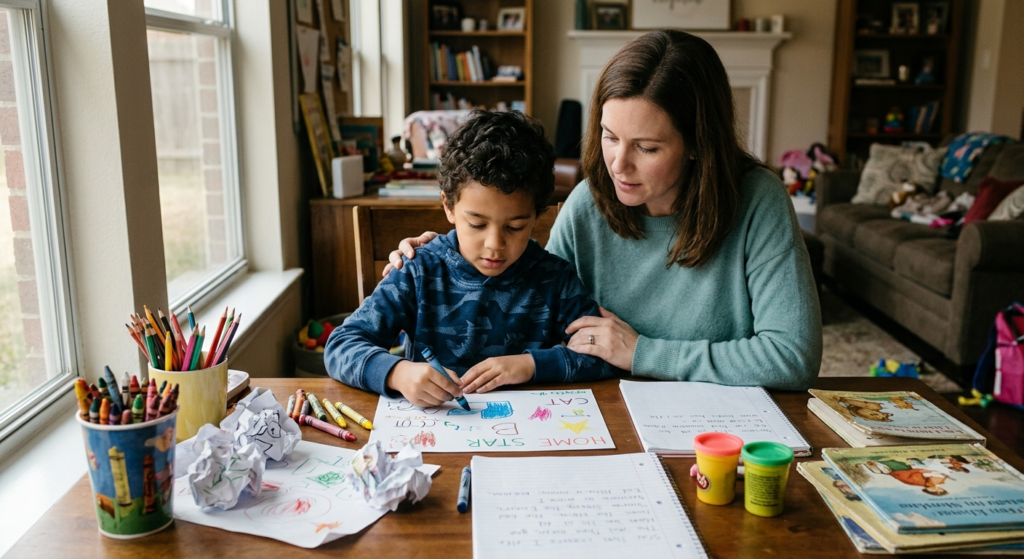
Quick Answer: Writing disorders, like dysgraphia, impact a child’s ability to express ideas and are not signs of laziness. Early intervention is crucial for success. Parents can support their children at home by creating a quiet, comfortable writing space, breaking assignments into small, manageable steps, and encouraging daily practice that focuses on ideas over perfection. If difficulties persist or hinder school performance, consulting a pediatrician is vital to coordinate evaluations and access necessary academic accommodations to boost your child’s confidence. As a pediatrician, I often meet parents who are concerned because their child struggles with writing. They may notice messy handwriting, incomplete school assignments, frequent spelling mistakes, or frustration whenever writing is required. Writing is a complex skill. It requires children to combine language, memory, attention, fine motor coordination, organization, and planning all at the same time. When one or more of these areas are affected, writing can become much more difficult. A writing disorder is not a sign of laziness or lack of intelligence. With early recognition, proper evaluation, and consistent support at home and school, many children learn strategies that help them become confident writers. As a board-certified pediatrician with more than two decades of experience caring for children and adolescents, I have helped many families understand developmental and learning challenges. My goal is always to identify concerns early, guide families toward appropriate evaluations, and help children reach their full potential. In this guide, I will explain what writing disorders are, common warning signs, and practical ways parents can support their children at home. What Is a Writing Disorder? A writing disorder, sometimes called dysgraphia, is a learning disorder that affects a child’s ability to express ideas through writing. Children with a writing disorder may have difficulty with: Forming letters correctly Organizing thoughts on paper Spelling words accurately Writing complete sentences Maintaining neat handwriting Using proper grammar and punctuation Some children struggle mainly with handwriting, while others have difficulty organizing ideas or completing written assignments. Every child is different, which is why a thorough evaluation is important. Why Early Recognition Matters Writing skills affect nearly every school subject. Children use writing to: Complete homework Answer test questions Write stories Take notes Explain ideas When writing becomes difficult, children may begin avoiding schoolwork or lose confidence in their academic abilities. Early recognition allows families to access support before frustration grows and school performance declines. Signs Your Child May Have a Writing Disorder Every child develops writing skills at a different pace. However, certain patterns may suggest that additional evaluation is needed. Parents may notice: Extremely messy handwriting Slow writing speed Frequent letter reversals beyond early elementary years Difficulty spacing words Poor spelling despite practice Trouble copying from the board Incomplete written assignments Complaints that writing makes their hand hurt Difficulty organizing ideas into paragraphs Some children can explain ideas clearly when speaking but struggle to write those same ideas on paper. If these challenges continue over time, discussing them with your pediatrician is recommended. What Causes Writing Disorders? Writing disorders are not caused by poor parenting or lack of effort. Instead, they often involve differences in how the brain processes language, planning, and motor coordination. Several factors may contribute, including: Learning disorders Fine motor coordination difficulties Language processing differences Attention challenges Developmental disorders Sometimes writing difficulties occur alongside conditions such as ADHD or dyslexia. A complete developmental evaluation helps identify the underlying causes. How a Pediatrician Can Help Parents are often unsure where to begin when concerns arise. As your child’s pediatrician, one of my responsibilities is to evaluate overall development and determine whether further assessment may be beneficial. During an evaluation, I consider: Developmental milestones School performance Learning concerns Fine motor development Medical history Family history Behavioral observations If appropriate, I may recommend additional testing by educational specialists, psychologists, occupational therapists, or speech-language pathologists. Families looking for a child developmental pediatrician in Sugar Land often begin with their primary pediatrician, who can help coordinate the evaluation process and guide referrals when needed. Ways Parents Can Help at Home Children benefit most when parents provide encouragement, patience, and consistent practice. Here are several effective strategies I frequently recommend. 1. Create a Comfortable Writing Space Choose a quiet area with: Good lighting A comfortable chair Minimal distractions Writing supplies within easy reach A calm environment helps children focus on writing tasks. 2. Break Writing Into Small Steps Large assignments can feel overwhelming. Instead of asking your child to write an entire paragraph, divide the task into manageable parts. For example: Brainstorm ideas Create a simple outline Write one sentence at a time Review together Make corrections gradually Small successes help build confidence. 3. Encourage Daily Writing Practice Practice does not have to feel like homework. Fun writing activities include: Keeping a journal Writing grocery lists Creating comic strips Writing thank-you notes Making short stories Keeping a travel diary Short practice sessions are usually more effective than long, frustrating ones. 4. Focus on Ideas Before Perfection Many children become discouraged if every spelling mistake or grammar error is corrected immediately. I encourage parents to praise their child’s ideas first. Afterward, work together on improving spelling, punctuation, or sentence structure. This approach builds confidence while continuing to improve writing skills. 5. Strengthen Fine Motor Skills Writing depends on strong hand muscles and coordination. Helpful activities include: Drawing Coloring Cutting with child-safe scissors Building with blocks Playing with modeling clay Stringing beads These activities improve hand strength while making learning enjoyable. 6. Read Together Every Day Reading and writing support one another. Children who regularly hear stories often develop stronger vocabulary, grammar, and sentence structure. Reading together also exposes children to different writing styles. Ask questions about the story and encourage your child to describe what happened using their own words. 7. Use Technology When Appropriate Technology can reduce frustration for some children. Helpful tools may include: Speech-to-text software Word prediction programs Spell-check tools Typing practice programs Technology should support learning, not replace writing practice. 8. Celebrate Progress Children with
Common Myths About Dyslexia Every Parent Should Know

Quick Answer: Dyslexia is a common, misunderstood learning difference affecting how children process written language, unrelated to intelligence or parenting. Common myths, such as its meaning letters are always reversed or that children will outgrow it, often delay necessary support. Early identification through pediatric guidance and evaluation is crucial, as tailored educational strategies help children build confidence, thrive academically, and achieve their full potential. As a pediatrician, one of the most difficult conversations I have with parents is when they worry that their child is falling behind in reading or struggling in school. Many parents ask questions like: “Does my child just need to try harder?” “Will they eventually outgrow this?” These concerns are understandable. Unfortunately, there are many misconceptions about dyslexia that can delay children from receiving the support they need. The truth is that dyslexia is a common learning difference that affects how the brain processes written language. It has nothing to do with intelligence, motivation, or parenting. With early identification and the right educational support, children with dyslexia can become successful readers and thrive both academically and personally. As a board-certified pediatrician with more than two decades of experience caring for children and adolescents, I have worked with many families navigating learning and developmental challenges. Helping parents recognize early concerns and guiding them toward appropriate evaluation is an important part of my practice. In this guide, I will address some of the most common myths about dyslexia, explain what parents should watch for, and discuss how early support can make a meaningful difference. What Is Dyslexia? Dyslexia is a neurodevelopmental learning disorder that primarily affects reading and language processing. Children with dyslexia may have difficulty with: Recognizing words Matching letters to sounds Reading fluently Spelling Decoding unfamiliar words Dyslexia varies from child to child. Some children experience mild reading challenges, while others require more intensive educational support. Importantly, dyslexia is not caused by poor parenting, lack of effort, or inadequate teaching. Why Understanding Dyslexia Matters When dyslexia is misunderstood, children may receive labels that are unfair or inaccurate. They may be called: Lazy Unmotivated Careless Slow learners These labels can negatively affect confidence and emotional well-being. Recognizing dyslexia early allows families to seek appropriate interventions before frustration and academic struggles become more significant. Myth #1: Children With Dyslexia Are Not Intelligent This is one of the most harmful myths. The truth is that dyslexia does not affect intelligence. Many highly successful scientists, entrepreneurs, artists, physicians, engineers, and business leaders have dyslexia. Children with dyslexia often have average or above-average intelligence. Their difficulty lies in processing written language, not in their ability to think, solve problems, or learn. As a pediatrician, I always remind families that a child’s reading ability does not define their potential. Myth #2: Dyslexia Means Letters Are Always Reversed Many people believe dyslexia simply means seeing letters backward. While young children frequently reverse letters like “b” and “d” or “p” and “q” during early writing development, this is a normal visual milestone up to around age 7. Children with dyslexia may instead struggle with: Connecting sounds to letters Reading unfamiliar words Reading fluently Accurate spelling Word recognition Letter reversals are only one small part of a much broader learning difference. Myth #3: Children Will Eventually Outgrow Dyslexia Dyslexia does not simply disappear with age. Without appropriate intervention, reading difficulties often continue into adolescence and adulthood. However, this does not mean children cannot become excellent readers. Evidence-based reading instruction and educational support help many children develop effective reading skills and learning strategies. Early intervention usually produces the best outcomes. Myth #4: Poor Parenting Causes Dyslexia Parents sometimes blame themselves when their child struggles with reading. I often reassure families that dyslexia is not caused by: Parenting style Reading at home Screen time alone Lack of discipline According to the Journal of Medical Genetics, genetics play an important role in many cases of dyslexia. Parents should focus on providing encouragement and seeking appropriate support rather than blaming themselves. Myth #5: Children With Dyslexia Cannot Succeed in School This is simply not true. With proper educational support, many children with dyslexia perform very well academically. Success often depends on: Early identification Individualized instruction Family support School accommodations Ongoing encouragement Many children with dyslexia graduate from college and pursue successful careers. Early Signs Parents Should Watch For Although every child develops differently, some early signs may suggest reading difficulties. Preschool children may have difficulty: Learning nursery rhymes Recognizing letter sounds Learning the alphabet Pronouncing unfamiliar words School-age children may experience: Slow reading Difficulty sounding out words Frequent spelling mistakes Avoiding reading Trouble following written instructions These signs do not automatically mean a child has dyslexia, but they do warrant further evaluation. The Importance of Early Evaluation One of the most valuable things parents can do is seek guidance early. Delaying evaluation may allow learning difficulties to become more frustrating over time. As part of a comprehensive child behavior evaluation in Sugar Land, pediatricians consider many aspects of development, including: Learning progress Language development Behavioral concerns Attention School performance Emotional well-being If concerns are identified, families may be referred for additional educational or psychological testing. How Dyslexia Is Diagnosed There is no single blood test or brain scan that diagnoses dyslexia. Instead, diagnosis involves a comprehensive evaluation that may include: Developmental history Medical history Family history Reading assessments Language evaluations Educational testing The goal is to understand the child’s strengths as well as areas where additional support is needed. Supporting a Child With Dyslexia Parents play a powerful role in helping children succeed. 1. Encourage Reading Without Pressure Choose books that match your child’s reading level. Reading together can build confidence and make reading more enjoyable. Celebrate progress rather than perfection. 2. Focus on Strengths Children with dyslexia often excel in areas such as: Creativity Problem-solving Art Engineering Sports Music Recognizing these strengths helps build self-esteem. 3. Work Closely With Teachers Communication between parents and educators is essential. Teachers can help provide: Classroom accommodations Reading interventions Additional learning