

When Should I Take My Child to a Pediatrician Instead of Urgent Care?

Quick Answer: For most non-emergency illnesses like fever, ear pain, coughs, sore throats, rashes, or stomach issues, your child’s pediatrician is usually the best first choice because they know your child’s medical history and provide ongoing, personalized care. Urgent care is appropriate when prompt treatment is needed and your pediatrician is unavailable. Go directly to the emergency room for severe breathing problems, seizures, serious injuries, infants under 3 months with a fever of 100.4°F (38°C) or higher, or other life-threatening symptoms. When unsure, call your pediatrician for guidance. When your child wakes up with a fever, develops a painful earache, starts coughing, or complains of stomach pain, it can be difficult to know where to take them. Many parents ask me: “Should I call my child’s pediatrician first?” “Would urgent care be faster?” “Is this serious enough for the emergency room?” These questions are completely understandable. When children are sick, parents want answers quickly and want to make the safest decision possible. As a board-certified pediatrician with more than two decades of experience caring for infants, children, and adolescents, I have helped many families decide what type of medical care their child needs. In many non-life-threatening situations, your child’s regular pediatrician is often the best place to start because they understand your child’s medical history, development, medications, allergies, and previous health concerns. In this guide, I’ll explain when to choose a pediatrician, when urgent care may be appropriate, and when your child needs emergency medical attention. What Is the Difference Between a Pediatrician and Urgent Care? Both pediatricians and urgent care centers provide important medical services. However, they are designed for different healthcare needs. A pediatrician provides ongoing medical care for children from infancy through adolescence. Your child’s pediatrician may: Monitor growth and development Provide routine wellness exams Administer vaccines Diagnose common illnesses Manage chronic conditions Treat many minor injuries Track health concerns over time Coordinate specialist care Urgent care centers are designed to provide convenient treatment for medical concerns that need attention but are not life-threatening. Urgent care may be useful when: Your pediatrician’s office is closed Your child needs prompt evaluation The condition cannot safely wait until the next available appointment The urgent care center is equipped to treat children However, urgent care providers may not have access to your child’s complete medical history. They may also have limited information about your child’s previous illnesses, medications, allergies, or long-term health needs. Why Is a Pediatrician Often the Best First Choice? One of the greatest benefits of seeing your child’s regular doctor is continuity of care. As a pediatrician in Sugar Land, I get to know children and families over time. I understand: Your child’s medical history Previous illnesses Growth patterns Allergies Current medications Chronic conditions Developmental needs Family health history This information can make it easier to recognize changes and recommend appropriate care. For example, a cough may be treated differently in a child with asthma than in a child with no history of breathing problems. A recurring stomachache may require a different evaluation than a new, short-term stomach illness. Knowing the child’s complete health history helps us make more informed decisions. When Should You Take Your Child to a Pediatrician? Your pediatrician is often the best choice for common illnesses and health concerns that are not emergencies. Examples include: 1. Fever A fever is a common reason parents seek medical advice. The seriousness of a fever depends on: Your child’s age Temperature How long the fever has lasted Other symptoms How your child looks and behaves CRITICAL EMERGENCY RULE: Any infant 3 months of age or younger (90 days or under) with a rectal temperature of 100.4°F (38.0°C) or higher requires immediate Emergency Room or pediatric evaluation to rule out serious bacterial infections (like sepsis or meningitis). Standard adult urgent care centers are NOT equipped for complete fever workups in young newborns. For older children, a fever may be less concerning if they are drinking fluids, breathing comfortably, and responding normally. However, persistent fever or fever accompanied by concerning symptoms should be discussed with a pediatrician. 2. Ear Pain Ear pain may be caused by: An ear infection Fluid behind the eardrum Congestion Swimmer’s ear Earwax buildup A pediatrician can examine the ear and determine whether treatment is needed. Not every ear infection requires antibiotics. An accurate diagnosis helps avoid unnecessary medication. 3. Coughs and Cold Symptoms Most colds improve with rest, fluids, and supportive care. However, contact your pediatrician if your child has: A cough that continues for an extended period Wheezing Trouble sleeping because of coughing Fever Ear pain Symptoms that are getting worse Your pediatrician can determine whether the symptoms are related to a viral illness, asthma, allergies, pneumonia, or another condition. 4. Sore Throat A sore throat may be caused by a virus, allergies, irritation, or a bacterial infection such as strep throat. Your pediatrician can evaluate the symptoms and perform testing when appropriate. 5. Rashes and Skin Concerns Many childhood rashes are mild, but some require medical evaluation. A pediatric clinic in Sugar Land can assess: Eczema Allergic rashes Skin infections Persistent rashes Insect bites Acne Fungal infections The appearance and location of a rash can provide important clues about its cause. 6. Stomach Pain, Vomiting, or Diarrhea Mild stomach illnesses are common in children. Your pediatrician can help determine whether symptoms may be caused by: A viral infection Constipation Food intolerance Acid reflux A urinary infection Another medical condition Persistent vomiting, severe pain, dehydration, or blood in vomit or stool requires more urgent evaluation. When Might Urgent Care Be a Good Choice? Urgent care can be helpful when your child needs prompt attention and your pediatrician is unavailable. Examples may include: A minor cut that may need stitches A possible simple fracture A painful ear infection after office hours A urinary tract infection Mild to moderate dehydration A minor sports injury A worsening illness that cannot wait Before going to urgent care, consider calling your pediatrician’s office. Many pediatric
Child Has a Fever After Vaccination: Is It Normal?
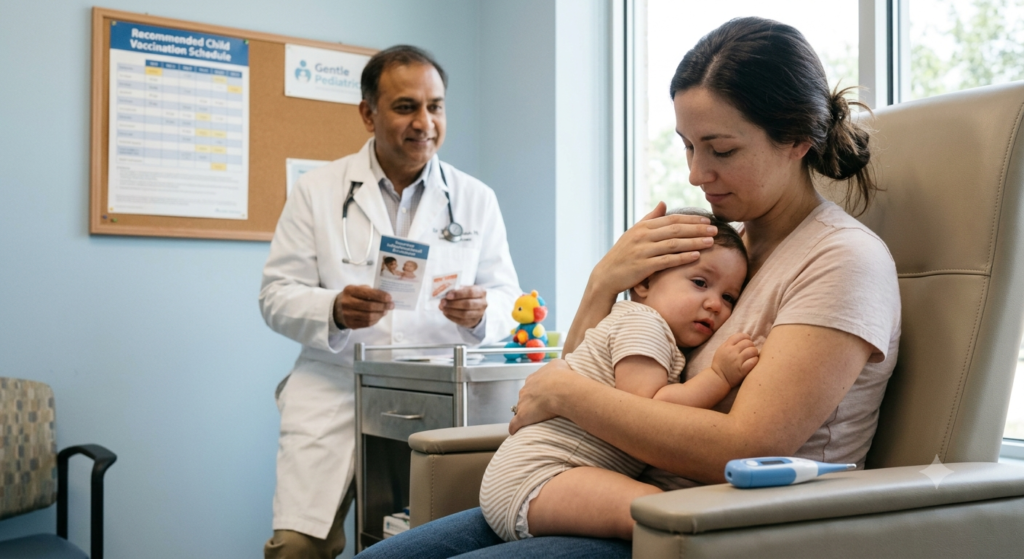
Quick Answer: A mild fever after vaccination is usually a normal sign that your child’s immune system is building protection and typically resolves within 24–48 hours. Keep your child comfortable with fluids, rest, and lightweight clothing, and monitor their symptoms. However, any fever of 100.4°F (38°C) or higher in an infant under 3 months requires immediate medical evaluation, even after vaccination. Contact your pediatrician if the fever persists, worsens, or is accompanied by concerning symptoms, and seek emergency care for signs of a severe allergic reaction. As a parent, it’s natural to pay close attention to your child after they receive a vaccine. You may notice they’re sleepier than usual, a little fussy, or even develop a mild fever later that day. One of the most common questions parents ask me is, “My child has a fever after their vaccination. Should I be worried?” I understand why this can be concerning. The good news is that, in many cases, a mild fever after vaccination is a normal sign that your child’s immune system is responding as expected. However, age matters tremendously; a fever in a young infant under 3 months always requires immediate medical attention. As a board-certified pediatrician with more than two decades of experience caring for infants, children, and adolescents, I have guided thousands of families through routine immunizations. In this guide, I’ll explain why fever can occur after vaccination, how to care for your child at home, when to call your pediatrician, and why staying on your child’s vaccination schedule is one of the best ways to protect their long-term health. Is a Fever After Vaccination Normal? Yes, in many cases it is. A mild fever after vaccination is a common and expected response. Vaccines work by helping the immune system recognize and fight harmful germs. As the immune system builds protection, it may produce a temporary fever. This does not mean your child has the disease the vaccine is designed to prevent. Instead, it usually means the immune system is responding appropriately. Most post-vaccination fevers are: Mild Temporary Short-lived Not harmful Many children continue eating, drinking, and playing normally despite a low-grade fever. Why Do Vaccines Sometimes Cause Fever? Vaccines teach the immune system how to recognize viruses or bacteria without causing the actual illness. As the immune system responds, it releases natural chemicals that help build immunity. This immune response may also cause temporary symptoms such as: Mild fever Soreness where the shot was given Redness or swelling at the injection site Fatigue Fussiness Mild loss of appetite These symptoms usually improve on their own within one to two days. Which Vaccines Are More Likely to Cause a Fever? Several routine childhood vaccines can occasionally cause a mild fever. Examples include: DTaP (Diphtheria, Tetanus, and Pertussis) Pneumococcal vaccine MMR (Measles, Mumps, and Rubella) Varicella (Chickenpox) Influenza vaccine COVID-19 vaccines when recommended for eligible children The timing of a fever depends on the type of vaccine: Inactivated vaccines (like DTaP, Flu, and Pneumococcal): Fevers typically start within 24 hours of receiving the injection and last 24 to 48 hours. Live attenuated vaccines (like MMR and Varicella): Fevers often appear late, typically 7 to 12 days after vaccination, and may be accompanied by a temporary, mild rash as the live weakened virus replicates slightly to build long-term immunity. What Temperature Is Considered a Fever? A fever is medically defined as a body temperature of 100.4°F (38.0°C) or higher (measured rectally, which is the most accurate method for infants). CRITICAL AGE EXCEPTION: In infants 3 months of age (90 days) or younger, ANY fever of 100.4°F (38.0°C) or higher is considered a medical emergency requiring immediate evaluation by a doctor to rule out serious bacterial infection, EVEN if they received their 2-month routine vaccines earlier that day. Never assume a fever in an infant under 3 months is solely a routine vaccine reaction without medical consultation. For children over 3 months, how your child looks, breathes, and behaves is just as important as the number on the thermometer. A child with a mild fever who is drinking fluids, interacting normally, and resting comfortably is reassuring. How Long Does the Fever Usually Last? Most vaccine-related fevers: Begin within one to two days after vaccination Last less than 48 hours Improve without complications If the fever lasts longer than expected or continues to worsen, your child should be evaluated by a healthcare provider. How Can Parents Help at Home? Most children recover with simple supportive care. Here are several ways to help your child feel more comfortable. 1. Encourage Fluids Offer plenty of fluids to help prevent dehydration. Depending on your child’s age, this may include: Breast milk Formula Water Oral rehydration solutions if recommended Older children should continue drinking regularly throughout the day. 2. Let Your Child Rest The immune system works best when children get enough rest. If your child wants to nap or take it easy for the day, that’s perfectly reasonable. Most children return to their normal activity level quickly. 3. Dress Your Child Comfortably Choose lightweight clothing rather than heavy blankets. Keeping the room comfortably cool may also help your child feel better. 4. Watch the Injection Site Some soreness or redness around the injection site is common. A cool, clean compress may help reduce discomfort. Avoid rubbing or massaging the area aggressively. 5. Safe Use of Fever-Reducing Medications Do NOT pre-medicate: Routine use of fever reducers before or immediately after vaccination is not recommended, as studies show it may slightly reduce the initial antibody response to certain vaccines. Acetaminophen (Tylenol): Can be used for pain or fever in infants over 2 months of age after consulting your pediatrician for correct weight-based dosing. Ibuprofen (Motrin/Advil): NEVER give ibuprofen to infants under 6 months of age unless specifically directed by your pediatrician. It is only approved for babies 6 months and older. NEVER give Aspirin: NEVER give aspirin to children or teenagers under any circumstances due to the risk of Reye’s Syndrome, a rare
Childhood Pneumonia: Symptoms, Treatment, and When to Worry

Pneumonia can feel scary as a parent. To pediatricians, it’s a serious respiratory infection that goes beyond a simple cold. Our goal is to help parents recognize symptoms early, understand treatment options, and know exactly when it’s time to seek help. This guide offers a trusted pediatric perspective, offering reassurance and clear steps for care. 1. What Is Childhood Pneumonia? Pneumonia is an infection of the lungs that inflames the air sacs (alveoli), which may fill with fluid or pus. It’s caused by various pathogens—viruses like RSV or the flu, bacteria like Streptococcus pneumoniae, or, rarely, fungi. For pediatricians, identifying the cause is key to effective treatment. 2. Why Pediatric Pneumonia Matters Children, especially infants and toddlers, are at greater risk for serious illness when pneumonia develops. Pediatric lungs are still growing, and infections can interfere with oxygen exchange, hydration, and overall development. Complications like pleural effusion, dehydration, or even hospitalization are why pediatricians treat pneumonia with extra care. 3. Common Causes and Risk Factors Viral causes include RSV (Respiratory Syncytial Virus), influenza, and parainfluenza.Bacterial causes include Streptococcus pneumoniae, Haemophilus influenzae, and Mycoplasma pneumoniae—more common in school-aged children.Risk factors: Young age (infants <2 years) Premature birth or low birth weight Chronic conditions: asthma, congenital heart disease, immunodeficiency Exposure to smoke or crowded living situations Not up-to-date on vaccines For parents who’ve read our guides on pediatric influenza prevention and RSV in infants, you know how prevention ties directly to infection risk. 4. Recognizing the Symptoms Pneumonia symptoms vary by age and severity: Mild or viral pneumonia (often following a cold or flu): Persistent cough Low-grade fever Mild difficulty breathing Decreased appetite More serious bacterial pneumonia: High fever (102–104°F) Rapid or labored breathing Wheezing or grunting sounds Chest pain or abdominal pain Dehydration (dry mouth, fewer wet diapers) Lethargy or irritability Infants may present with: Poor feeding Vomiting Head bobbing while breathing Apnea (pauses in breathing) Quick identification of these signs helps pediatricians make timely diagnoses and treatment decisions. 5. When to Call the Pediatrician Contact your pediatrician right away if your child has: Difficulty breathing or fast breathing (over 50 breaths per minute in infants, over 30 in older children) Blue lips or nails Fever above 102°F lasting more than 24 hours Chest indrawing (skin pulling between ribs) or grunting breaths Refusal to eat or drink Confusion or unresponsiveness Fever in infants under 3 months Quick medical attention can prevent serious complications and speed recovery. 6. How Pediatricians Diagnose Pneumonia Diagnosis typically involves: Physical exam – listening for crackles, wheezing Pulse oximetry – measuring oxygen levels in blood Chest X-ray – confirming infection and distinguishing between viral and bacterial Lab tests – sometimes blood work or nasal swabs to detect specific pathogens Pediatricians combine testing results with clinical observations to decide on the best treatment plan. 7. Treatment Approaches A. Viral Pneumonia Usually managed at home Comfort care: rest, fluids, fever control (acetaminophen, ibuprofen) Monitoring breathing and hydration Oxygen support only if needed B. Bacterial Pneumonia Requires antibiotics (amoxicillin, azithromycin, or broader agents) Typically a 7–14 day course Possible hospital admission if the child is very young, dehydrated, or has breathing trouble 8. When Hospital Care Is Necessary Pediatricians recommend hospital care if your child: Needs supplementary oxygen Lies unresponsive to home treatment Has dehydration or feeding issues Shows signs of complications (effusion, severe distress) Is under 6 months old with influenza-pneumonia In the hospital, children can receive oxygen, IV fluids, targeted antibiotics, and close monitoring. 9. Supporting Recovery at Home After hospital discharge or during home treatment: Hold oral antibiotics for the full course Resume normal eating with nutritious meals Keep daily hydration up—fluids are key Encourage gentle activity, then increase as recovery continues Schedule follow-up appointments with your pediatrician Consider influenza or RSV recovery overlap—refer to those guides 10. Preventing Pneumonia in Children Pediatricians recommend: Keeping up with vaccinations: flu, PCV13/PCV15 (for pneumococcus), Hib Promoting handwashing and respiratory etiquette Encouraging breastfeeding and good nutrition in infants Avoiding secondhand smoke and crowded spaces Keeping asthma and chronic conditions under control A combination of prevention strategies gives children their best chance against respiratory infections. 11. Long-Term Follow-Up Healthy recovery includes: Monitoring growth, nutrition, and sleep Checking lung function in recurrent or severe cases Ensuring family health habits support well-being year-round Families who’ve followed resources like our influenza and RSV guides already recognize the value in proactive pediatric partnerships. 12. When Parents and Pediatricians Work Together Your observations—especially around breathing, appetite, and behavior—are essential. Pediatricians combine that insight with clinical expertise. Together, we: Catch pneumonia early Tailor treatment to your child’s needs Provide ongoing support during and after recovery Ultimately, the strongest outcomes occur when parents trust pediatric guidance and communicate concerns openly. 13. Empowered Pediatric Care Pneumonia in a child is scary, but pediatricians stand ready to help every step, from diagnosis to prevention. With timely intervention, careful treatment, and vigilant follow-up, most children recover completely and continue thriving. Here’s what to do now: Keep pediatrician contact info on hand Watch closely for signs of pneumonia Seek evaluation early if you’re concerned Follow recommended vaccines and prevention strategies Partner with your child’s pediatrician for long-term wellness Pneumonia doesn’t have to steal childhood—it’s manageable, treatable, and, with the right care, fully recoverable.