

What Are the Best Ways to Prevent Sports Injuries in Kids?
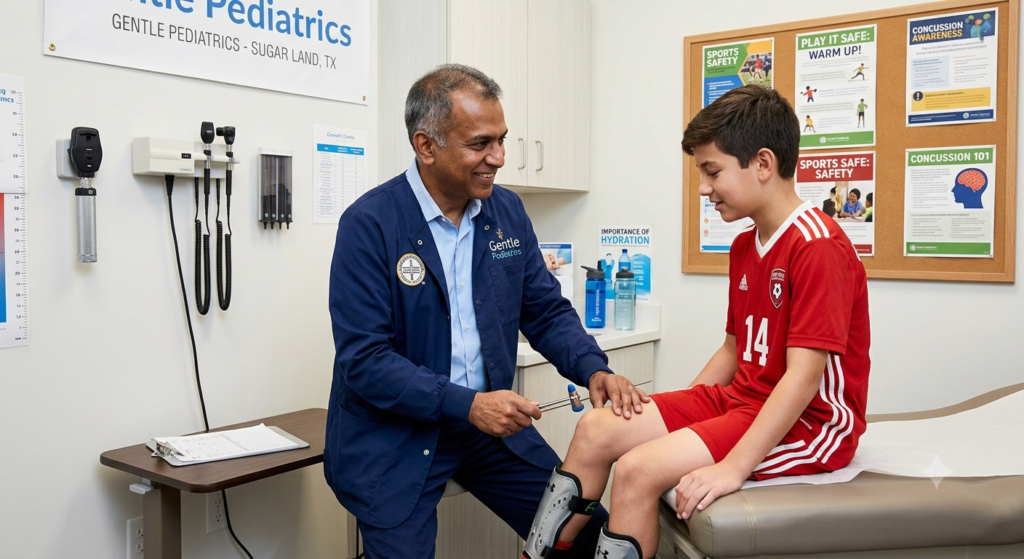
Quick Answer: Parents can help prevent many sports injuries by making sure children get a sports physical, warm up properly, use well-fitted protective equipment, learn safe techniques, stay hydrated, eat balanced meals, and get enough rest. Children should not be encouraged to play through pain, and head injuries should always be taken seriously. Gradually increasing training also helps protect growing bodies. Most importantly, children should feel comfortable speaking up when something does not feel right. Sports can be one of the best parts of childhood. Kids get exercise, build confidence, learn teamwork, and make friendships. But parents also know that sports come with some risk of injury. I often speak with parents who want their children to stay active while avoiding preventable injuries. The good news is that many sports injuries can be reduced with simple habits such as proper warm-ups, good equipment, enough rest, hydration, and learning safe techniques. As a board-certified pediatrician with more than two decades of experience caring for infants, children, and adolescents. I believe children should be encouraged to enjoy sports while also learning how to listen to their bodies. This guide breaks down how parents can prevent their children from getting injured when playing sports. Why Are Children More Vulnerable to Sports Injuries? Children and teenagers are still growing. Their bones, muscles, joints, tendons, and growth plates are developing, so repetitive stress or sudden trauma can sometimes cause injury. The American Academy of Pediatrics (AAP) notes that common youth sports injuries include sprains, strains, growth-plate irritation, and stress fractures. Sports injuries can happen in several ways. A child may fall, collide with another player, twist an ankle, or land incorrectly. Other injuries develop gradually when a child trains too much without enough recovery. For example, repeatedly throwing a baseball, serving a volleyball, running long distances, or jumping during basketball can place repeated stress on certain parts of the body. This is why injury prevention should not focus only on protective equipment. A child’s training schedule, technique, nutrition, hydration, sleep, and overall health all matter. Helpful Ways to Prevent Sports Injuries in Children 1. Get a Sports Physical Before the Season One of the most important steps parents can take is arranging a preparticipation physical evaluation, commonly called a sports physical. The AAP recommends that young athletes receive a sports physical as part of routine health supervision. Ideally, the evaluation should happen in the child’s medical home, and the AAP recommends having it about six weeks before the first preseason practice when possible. This gives families time to address any health concerns that come up. During a sports physical, the pediatrician can review your child’s medical history, medications, previous injuries, family history, and current health. The examination also considers areas such as the heart and musculoskeletal system. If you are looking for a sports physical in Sugar Land scheduling this visit before the season begins can give your child and family an opportunity to discuss safe participation. 2. Always Warm Up Before Playing A child should not go from sitting in the car to immediately running at full speed on the field. A proper warm-up gives the body time to prepare for physical activity. Depending on the sport, this may include light jogging, movement exercises, dynamic stretches, and sport-specific activities. Children should also cool down after exercise. The AAP recommends proper warm-up and cool-down exercises as part of preseason and in-season conditioning. I also encourage parents to make warm-ups a normal part of practice rather than something children skip when they are running late. 3. Use the Right Protective Equipment Protective equipment cannot prevent every injury, but properly fitted equipment can reduce the risk of certain injuries. Depending on the sport, children may need: Properly fitted helmets Mouth guards Shin guards Knee or elbow pads Protective eyewear Appropriate athletic shoes Sport-specific protective equipment The equipment needs to fit the child correctly. A helmet that is too loose, shoes that are worn out, or protective gear that is the wrong size may not provide the protection it is designed to offer. The AAP recommends appropriate, properly fitted protective equipment and reminds parents that safety gear does not eliminate every risk associated with sports. 4. Teach Proper Sports Technique Good technique is another important part of injury prevention. Children should learn how to perform movements correctly and should be given age-appropriate instruction. This may include learning how to land after jumping, change direction safely, tackle according to the rules, throw properly, or use the correct form during strength exercises. Coaches and athletic trainers can play an important role here. Parents should also feel comfortable asking whether a coach teaches injury-prevention techniques as part of regular training. Proper technique is particularly important when children are learning a new sport or returning after an injury. The AAP recommends reinforcing proper technique throughout the season. 5. Do Not Ignore Pain One of the most important messages I give young athletes is simple: pain should not always be pushed through. Children sometimes worry that telling an adult about pain means they will have to stop playing. They may try to hide an injury because they do not want to disappoint their teammates. But continuing to play through pain can sometimes make an injury worse. The AAP specifically advises young athletes to stop an activity if it hurts rather than continuing to exercise through pain. Parents should pay particular attention to pain that keeps returning, gets worse during activity, causes limping, or continues after the child stops playing. In a growing child, pain that is very localized over a bone deserves medical evaluation even when there is little swelling or movement limitation. 6. Give the Body Enough Rest Young athletes need recovery time. Training every day without adequate rest can increase the risk of overuse injuries. The AAP recommends at least one day off each week and at least one month away from training in a particular sport each year. It also encourages children to participate in a variety of
Same-Day Pediatric Appointments: How Quick Care Helps Children Recover Faster

Quick Answer: A same-day pediatric appointment gives parents a timely way to have new, worsening, or concerning nonemergency symptoms evaluated by a pediatrician. It can help clarify the cause of symptoms, determine whether testing or treatment is needed, and provide safe home-care guidance. Common concerns include fever, ear pain, cough, vomiting, diarrhea, rashes, and sore throat. Same-day care does not replace emergency treatment. For severe breathing difficulty, seizures, blue lips, loss of consciousness, or significant dehydration, seek emergency care immediately. When your child wakes up with a fever, develops a painful earache, starts vomiting, or suddenly develops a bad cough, waiting several days for an appointment can be stressful. Parents naturally want to know what is wrong and what they can do to help their child feel better. As a board-certified pediatrician with more than two decades of experience caring for infants, children, and adolescents, I have seen how quickly a child’s condition can change. Sometimes, a minor illness improves with rest, fluids, and observation. Other times, symptoms need to be evaluated sooner. The American Academy of Pediatrics recommends the pediatrician’s office, or “medical home,” as the preferred setting for most nonemergency acute illnesses in children because it provides ongoing, coordinated care. The AAP also encourages pediatric practices to improve access through options such as enhanced scheduling, extended hours, and same-day care. Here, I will break down how quick care can help children recover quickly. What Is a Same-Day Pediatric Appointment? A same-day pediatric appointment means your child can be evaluated by a pediatric healthcare provider on the day you contact the office, when an appointment is available, and the child’s condition is appropriate for office-based care. It does not mean every childhood illness requires immediate medical treatment. Instead, same-day visits give parents a way to have a child’s new or worsening symptoms assessed without unnecessarily waiting several days. Common reasons parents may seek same-day pediatric care include: Fever Ear pain Sore throat Persistent or worsening cough Cold or flu symptoms Vomiting or diarrhea Mild dehydration concerns Rashes Pink eye Minor injuries Breathing symptoms that are mild and not rapidly worsening Painful urination Symptoms of a possible infection The AAP lists problems such as ear infections, sore throat, rashes, gastrointestinal illnesses, colds, coughs, allergies, and minor injuries among conditions that may need medical care but do not necessarily require an emergency department. Why Can Quick Pediatric Care Help? One important benefit of seeing a pediatrician promptly is that you can better understand what is causing your child’s symptoms. A fever, for example, can occur with many different illnesses. A cough can be caused by a viral infection, asthma, allergies, or other conditions. Ear pain may come from an ear infection, congestion, or another problem. A pediatric examination helps put those symptoms into context. Early evaluation can also help parents understand what to watch for at home, whether testing is appropriate, how to manage symptoms safely, and when follow-up is needed. That does not mean a same-day appointment will always make an illness disappear faster. Many childhood illnesses are caused by viruses and improve naturally with time. The value of prompt care is often knowing what your child needs and avoiding unnecessary delay when medical evaluation is appropriate. When Should Your Child Be Seen the Same Day? I encourage parents to contact their pediatrician when a child develops symptoms that are concerning, worsening, or interfering with normal activities. For example, your child may need same-day evaluation for: 1. Fever With Other Concerning Symptoms A fever is often part of the body’s response to infection. What matters is the child’s age, overall appearance, symptoms, and how long the fever has lasted. A child with fever who is drinking fluids, interacting normally, and improving may not need emergency care. But fever combined with worsening symptoms may require a same-day assessment. The AAP specifically recommends prompt evaluation for some children with fever accompanied by symptoms such as ear pain, sore throat, or worsening cough. 2. Ear Pain Earaches are common in children, particularly after respiratory infections. If your child suddenly develops ear pain, trouble sleeping because of ear discomfort, fever, or drainage from the ear, a pediatric examination can help determine whether an ear infection or another condition is present. 3. Worsening Cough A cough does not always require a same-day appointment. However, if your child’s cough is becoming worse, lasting longer than expected, repeatedly returning, or occurring with wheezing or other symptoms, it is reasonable to contact the pediatrician. A child’s medical history matters here. A child with asthma, for example, may need a different evaluation than a child who simply has a mild cold. 4. Vomiting or Diarrhea Children can become dehydrated more quickly than adults. If your child is vomiting repeatedly, cannot keep fluids down, is having frequent diarrhea, or is showing signs of dehydration, medical advice is important. For mild symptoms, your pediatrician can explain how to provide fluids and what warning signs to watch for. Same-Day Care Can Reduce Unnecessary Worry One thing I have learned from caring for families is that uncertainty can sometimes be harder than the illness itself. Parents may spend hours wondering: “Is this just a cold?” “Does my child need antibiotics?” “Should I be worried about this rash?” “Is this fever too high?” “Why is my child still coughing?” A timely pediatric appointment gives families an opportunity to ask those questions. During a visit, I look at the child’s symptoms along with their medical history, age, development, medications, allergies, and overall appearance. That broader picture helps guide the next step. Sometimes the best plan is home care and observation. Sometimes testing is appropriate. Sometimes treatment is needed. And sometimes a child needs a referral to another specialist. Same-Day Pediatric Appointment in Sugar Land: What Can Parents Expect? If you are searching for a same-day pediatric appointment in Sugar Land, the first step is to contact your pediatrician’s office and explain what is happening. When you call, be prepared to provide information such as: Your
What Are the Most Common Nutritional Deficiencies in Teenagers?

Quick Answer: Teenagers have increased nutritional needs during rapid growth, making deficiencies in iron, calcium, vitamin D, zinc, and vitamin B12 common concerns. Skipping meals, restrictive diets, limited food variety, heavy menstrual periods, and intensive sports can increase risk. A balanced children’s meal plan with nutrient-rich foods can help prevent deficiencies. Parents should watch for fatigue, poor concentration, growth changes, or restrictive eating and consult a pediatrician before starting supplements or assuming symptoms are caused by a deficiency. According to the American Academy of Pediatrics (AAP), adolescents commonly fall short of recommended amounts of calcium, iron, zinc, and vitamin D. The teenage years are a time of rapid growth, physical changes, increased activity, and growing independence. At the same time, many teenagers begin making more of their own food choices. Breakfast may be skipped, lunch may come from a vending machine, and dinner may sometimes be replaced by fast food or a quick snack. As a board-certified pediatrician who provides adolescent care at Gentle Pediatrics, I understand why nutrition can become challenging during adolescence. Teenagers are busy with school, sports, friends, homework, and other activities. They may also become more interested in dieting, vegetarian or vegan eating, or changing their body shape. These factors can make it harder for some teenagers to get all the nutrients they need. In this guide, I will break down common teenage nutritional deficiencies in detail. Why Are Teenagers at Risk for Nutritional Deficiencies? Teenagers have increased nutritional needs because their bodies are growing rapidly. Bones are developing, muscle mass is changing, blood volume increases, and hormonal changes are taking place. At the same time, eating habits can become less consistent. Some common reasons teenagers may not get enough nutrients include: Skipping breakfast or meals Eating mostly processed or fast foods Avoiding fruits and vegetables Drinking sugary beverages instead of nutrient-rich drinks Following restrictive diets Avoiding dairy products Eating a vegetarian or vegan diet without careful planning Having heavy menstrual periods Participating in intensive sports Having a limited appetite Experiencing an eating disorder or disordered eating Micronutrients, which include vitamins and minerals, are needed in relatively small amounts but are important for growth, development, and overall health, as noted by the CDC. Common Deficiencies in Teenagers 1. Iron Deficiency Iron deficiency is one of the nutritional concerns I pay particular attention to during adolescence. Iron helps the body make hemoglobin, a protein in red blood cells that carries oxygen throughout the body. It also supports muscle function and normal growth and development. Teenage girls can have a higher risk because menstrual blood loss increases their iron needs. Teenagers following vegetarian or vegan diets may also need careful planning. The AAP notes that iron from plant foods is not absorbed as efficiently as iron from animal foods. For ages 14–18, the recommended daily amount is 12 mg for boys and 15 mg for girls. Good sources of iron include: Lean meat and poultry Fish and seafood Beans and lentils Tofu Iron-fortified cereals Nuts and seeds Dark leafy greens Pairing plant-based iron sources with foods containing vitamin C, such as oranges, strawberries, tomatoes, or bell peppers, can improve iron absorption. Signs of iron deficiency may include fatigue, weakness, difficulty concentrating, pale skin, headaches, or reduced exercise tolerance. These symptoms can have many causes, so parents should not assume that a teenager needs an iron supplement without medical advice. 2. Calcium Deficiency The teenage years are extremely important for bone development. Calcium provides structure to bones and teeth and also plays a role in muscle and nerve function. Teenagers ages 14–18 need about 1,300 mg of calcium each day. Yet some teenagers avoid milk and other dairy products. Others replace nutritious meals with foods that provide calories but relatively little calcium. Good sources include: Milk Yogurt Cheese Calcium-fortified plant milks Calcium-fortified tofu Broccoli Kale Bok choy Canned salmon or sardines with bones The AAP notes that calcium intake can be particularly low among adolescent girls who avoid dairy products. 3. Vitamin D Deficiency Vitamin D works closely with calcium to support healthy bones. It also has roles in muscle, nerve, and immune function. Teenagers ages 14–18 need about 600 IU (15 mcg) of vitamin D daily. Vitamin D can come from certain foods, fortified products, and the body’s production after sun exposure. However, sun exposure is not a simple treatment for deficiency because factors such as skin type, location, season, clothing, and sunscreen use affect vitamin D production. Excessive ultraviolet exposure also increases skin cancer risk. Food sources include: Fatty fish Egg yolks Fortified milk Fortified plant beverages Fortified cereals Vitamin D deficiency is not something I recommend diagnosing based on symptoms alone. If a teenager has risk factors or concerns, their pediatrician can determine whether testing is appropriate. 4. Zinc Deficiency Zinc is another nutrient that deserves attention during adolescence. It supports growth, immune function, wound healing, and normal development. Teenagers who eat a very limited diet may not get enough zinc. Plant-based diets can also require careful planning because some plant foods contain compounds that reduce zinc absorption. Teen males aged between 14 and 18 years need 11 mg of zinc per day, while female teens require 9 mg. Sources include: Meat Seafood Dairy products Beans Nuts Seeds Whole grains Fortified cereals 5. Vitamin B12 Deficiency Vitamin B12 helps maintain healthy blood and nerve cells and is needed to make DNA. Teenagers ages 14–18 need about 2.4 mcg per day. Vitamin B12 is naturally found mainly in animal-based foods, including meat, fish, poultry, eggs, and dairy products. Some fortified cereals and nutritional yeast products also contain B12. This is particularly important for teenagers following a vegan diet. A carefully planned vegan eating pattern can provide good nutrition, but B12 needs special attention because plant foods do not naturally provide reliable amounts of this vitamin. What Deficiency Signs Should Parents Look for? Nutritional deficiencies do not always cause obvious symptoms in the beginning. A teenager may simply seem more tired than usual or have difficulty keeping up with normal activities. Parents