

Key Signs Your Child May Have a Hearing Problem

Quick Answer: Children may have a hearing problem if they do not react to loud sounds, turn toward voices, frequently say “What?” or “Huh?”, speak unclearly, struggle to follow directions, or regularly use high TV or tablet volume. Ear infections and fluid buildup can also cause temporary hearing difficulties. If you notice these signs, talk with your pediatrician about hearing screening or an audiology evaluation. Early identification can support healthy speech, language, learning, and social development. As a parent, it can be easy to assume that your child is simply not listening when they do not respond to you. Maybe your toddler ignores you when you call their name, your preschooler keeps saying “What?” or your older child turns the television volume higher than usual. Sometimes, these behaviors are just part of being a child. But they can also be signs that your child is having trouble hearing. As a pediatrician, I have seen how important hearing is to a child’s speech, language, learning, and social development. Hearing problems are not always obvious, and a child can develop hearing changes even after passing a newborn hearing screening. The good news is that hearing concerns can often be identified with simple screening and appropriate follow-up. In this article, I will explain the key signs parents should watch for and when it is time to talk with a pediatrician. Why Is Hearing Important for a Child’s Development? Children learn a great deal by listening. From the first months of life, babies begin responding to voices, sounds, and conversations around them. Hearing difficulties can affect how a child develops speech and language. They may also make it harder for a child to follow directions, participate in class, interact with other children, or communicate their needs. The CDC recommends that parents speak with their child’s doctor promptly if they suspect a hearing problem rather than waiting to see whether it improves on its own. Early identification gives children a better opportunity to receive appropriate support when needed. What Are the Key Signs of a Hearing Problem? Hearing problems can look different depending on a child’s age. Parents often notice changes in everyday behavior before anyone formally identifies a hearing concern. Here are some signs I encourage parents to watch for. 1. Your Baby Does Not React to Loud Sounds Young babies usually respond to sounds in their environment. A baby may startle, blink, become quiet, or move when exposed to a sudden loud noise. If your baby consistently does not seem to notice loud sounds, it is worth discussing with your pediatrician. Parents should also watch how their baby responds to familiar voices and sounds as they grow. 2. Your Baby Does Not Turn Toward Sounds As babies develop, they generally become more aware of where sounds are coming from. The CDC lists not turning toward the source of a sound after about 6 months as one possible sign of hearing loss. If your baby turns toward you when they can see you but does not respond when you call from behind, mention this at the next pediatric visit. 3. Speech Seems Delayed or Unclear Hearing and speech development are closely connected. A child who cannot hear speech clearly may have difficulty learning and copying sounds and words. You may notice that your child is using fewer words than expected, is difficult to understand, or does not seem to be progressing with language. Speech delay does not always mean hearing loss. There can be many reasons for delayed speech. However, hearing should be considered as part of the evaluation. 4. Your Child Frequently Says “Huh?” or “What?” Older children may not tell you that they cannot hear properly. Instead, they may ask you to repeat yourself frequently. You may notice that your child says “What?” several times during conversations or seems to understand you only when you are facing them. This can be especially noticeable when there is background noise. 5. Your Child Turns the TV or Tablet Volume Up Does your child regularly turn the television volume higher than everyone else prefers? One possible explanation is that your child is having difficulty hearing at a normal volume. This does not automatically mean there is a hearing problem. Children may simply prefer loud entertainment. But if increased volume happens along with other signs, I recommend bringing it to your pediatrician’s attention. The CDC includes unusually high TV or radio volume among possible signs of hearing loss. 6. Your Child Does Not Follow Directions Sometimes parents believe their child is ignoring them or not paying attention. But if a child repeatedly does not follow simple instructions, hearing should be considered, especially when the child responds normally when they can see you. The CDC notes that difficulty following directions can sometimes be mistaken for inattention when hearing loss is actually involved. Can Ear Infections Affect a Child’s Hearing? Yes. Ear infections are common during childhood, and they can temporarily affect hearing. An infection or fluid buildup behind the eardrum can interfere with how sound travels through the middle ear. A child may therefore complain that their ear feels blocked or may not respond normally to sounds. According to the American Academy of Pediatrics, hearing difficulty can continue for several weeks during or after an ear infection while fluid clears from the middle ear. This is one reason I encourage parents not to ignore repeated ear infections or ongoing hearing concerns. If your child has ear pain, fever, drainage from the ear, or noticeable difficulty hearing, an examination can help determine what is causing the problem. When Should a Child Have a Hearing Screening? Newborn hearing screening is an important first step. The CDC recommends that all babies receive hearing screening by 1 month of age. If a baby does not pass the screening, a complete hearing evaluation should be completed by 3 months, with early intervention beginning by 6 months when hearing loss is confirmed. These are commonly known as the 1-3-6 benchmarks. But
When Should Parents Get Their Child’s Vision Checked?
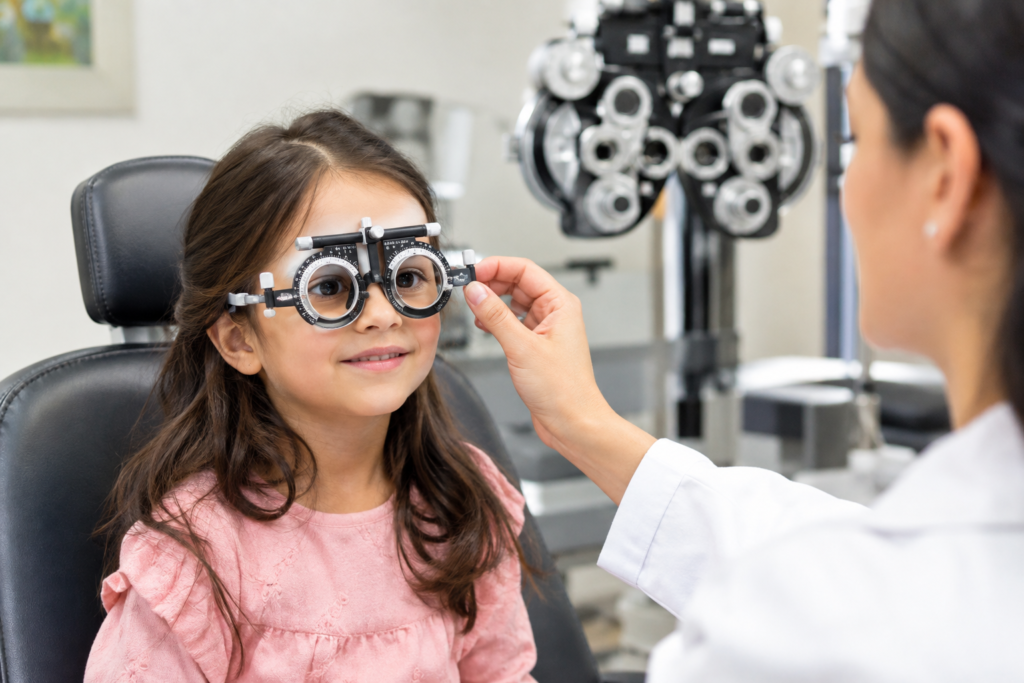
Quick Answer: Children’s vision should be checked regularly, starting in infancy and continuing throughout the school years. Routine vision screening can identify problems that children may not recognize or report. The USPSTF recommends screening at least once between ages 3 and 5, while AAPOS recommends repeat screening every one to two years after age 5. Watch for squinting, headaches, covering one eye, sitting close to screens, reading difficulties, or eye misalignment. Failed screenings or concerning symptoms may require a comprehensive eye exam. As a parent, you may assume that your child can see well if they can read, play, watch television, and move around without bumping into things. But children do not always realize that their vision is different from normal. A child may simply think that everyone sees the world the same way they do. This is one reason routine child vision screening is so important. Vision problems can sometimes be present without obvious symptoms, and finding them early can make a meaningful difference in a child’s development and learning. As a board-certified pediatrician with more than two decades of experience caring for infants, children, and adolescents, I regularly discuss vision with parents during routine pediatric visits. This guide explains when your child’s vision should be checked, what warning signs to watch for, and when a child needs a more complete eye examination. Why Is Vision Screening Important for Children? Good vision plays an important role in childhood development. Children use their eyes to learn, read, write, play sports, recognize faces, and interact with the world around them. The CDC notes that an uncorrected vision problem can sometimes interfere with learning and a child’s ability to reach their full potential. Some vision problems are easy to notice. Others are not. A child may not complain about blurry vision because they have never experienced anything different. They may simply adjust by sitting closer to the television, holding books near their face, or relying more heavily on one eye. Routine screening gives healthcare providers an opportunity to look for potential problems before they become more difficult to manage. What Is Child Vision Screening? Vision screening is different from a complete eye examination. A screening is designed to identify children who may have a vision problem and need further evaluation. It can be performed by trained healthcare professionals, including pediatricians, and may also occur through schools or community programs. Depending on the child’s age, screening may include: Checking visual acuity Looking at how the eyes move Checking whether the eyes are properly aligned Examining the pupils Checking the red reflex Using an instrument or photoscreening device Asking about family history and vision concerns A screening does not necessarily diagnose a specific eye condition. If a child does not pass a screening, we may recommend an evaluation by an optometrist or ophthalmologist for a more detailed examination. When Should a Baby’s Vision Be Checked? Vision assessment begins very early in life. During infancy, pediatricians look at the eyes and assess important parts of visual development. This can include checking the red reflex, pupils, eye movement, and how the infant’s eyes appear and function. Parents should pay attention to whether their baby appears to track objects as expected. For example, the American Association for Pediatric Ophthalmology and Strabismus (AAPOS) notes that an infant who is not tracking well after about 3 months, has an abnormal appearance of the eye, or has an unusual red reflex should be evaluated promptly. Other concerns worth discussing with your pediatrician include: Persistent eye crossing Eyes that do not move together A drooping eyelid Persistent tearing or discharge Unusual appearance of the pupil A family history of serious childhood eye disease Parents do not need to diagnose a problem themselves. If something about your baby’s eyes looks unusual, bring it to your pediatrician’s attention. Vision Screening During the Toddler Years Toddlers are still developing their ability to communicate what they see. That makes traditional eye-chart testing more difficult. Depending on the child’s age and ability to cooperate, healthcare providers may use different screening methods. Instrument-based screening, including photoscreening, can help identify certain focusing problems and risk factors for amblyopia in young children. Amblyopia, sometimes called “lazy eye,” occurs when normal vision does not develop properly in one or both eyes. Early detection matters because treatment is generally easier when problems with visual development are identified at a younger age. What About Preschool Children? The preschool years are especially important for vision screening. The U.S. Preventive Services Task Force (USPSTF) recommends that children ages 3 to 5 receive vision screening at least once to identify amblyopia or its risk factors. The American Association for Pediatric Ophthalmology and Strabismus also provides age-specific screening guidance. For children between 3 and 5 years, screening can include visual acuity testing or photoscreening, depending on the child’s age and ability to participate. At this age, parents may notice signs such as: Squinting Sitting very close to the television Holding books unusually close Covering one eye Frequent eye rubbing Difficulty recognizing things from a distance Avoiding activities that require visual concentration These signs do not automatically mean your child has a vision disorder. They do mean it is worth discussing the concern with your child’s healthcare provider. How Often Should School-Age Children Have Their Vision Checked? Vision screening continues after preschool. AAPOS recommends vision assessment for children age 5 and older, with repeat screening every one to two years after age 5. Children who cannot meet age-appropriate visual acuity thresholds or who have other concerns may need referral for a comprehensive eye examination. Vision can change as children grow. A child who passed a screening last year may develop a problem later. That is why vision should remain part of routine preventive care rather than being treated as a one-time test. Warning Signs Parents Should Not Ignore Children do not always tell parents when something is wrong with their vision. Sometimes the clues appear in their behavior. I encourage parents to watch for changes
Why Does My Child Keep Scratching Their Skin at Night?
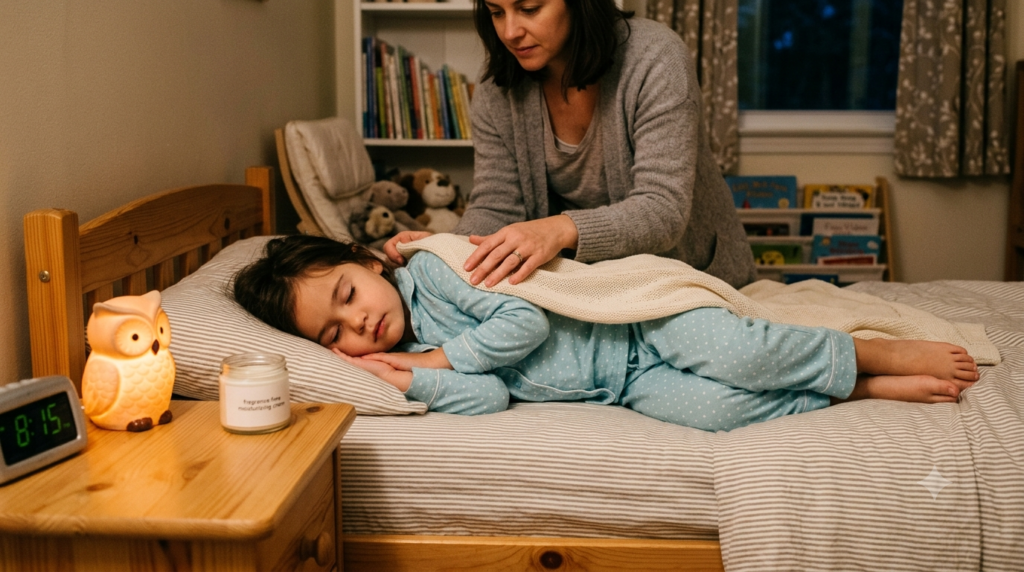
Quick Answer: Nighttime itching in children can result from dry skin, eczema, contact dermatitis, insect bites, allergies, or scabies. Heat, sweating, dry air, and irritating products may make itching worse at bedtime. Parents can help with short lukewarm baths, fragrance-free products, regular moisturizing, cool sleepwear, and short fingernails. If itching persists, disrupts sleep, causes sores, spreads, or affects other family members, consult a pediatrician to identify the cause and provide appropriate treatment. Seeing your child wake up repeatedly at night because their skin is itchy can be frustrating and concerning. Parents often notice that their child seems comfortable during the day but starts scratching intensely after going to bed. Sometimes the cause is simple dry skin. In other cases, nighttime itching may be related to eczema, an irritation or allergic reaction, insect bites, or a contagious skin condition such as scabies. The important thing is not to assume that every itchy rash has the same cause. As a board-certified pediatrician with more than two decades of experience caring for infants, children, and adolescents, I encourage parents to look at the pattern of itching, examine the skin carefully, and seek medical guidance when symptoms persist or interfere with sleep. This guide explains some common reasons children scratch at night and what parents can safely do. Why Does Itching Get Worse at Night? Itching can seem more noticeable at bedtime for several reasons. During the day, children are distracted by school, play, activities, and other things around them. At night, there are fewer distractions, so they may become more aware of skin discomfort. Heat and sweating can also worsen itching in some children, particularly those with eczema. The American Academy of Dermatology notes that overheating and sweat can trigger eczema flare-ups. Dry air, irritating clothing, fragranced products, and certain detergents may also contribute to skin irritation. However, intense nighttime itching has another important possible cause: scabies. That is why the location and appearance of the rash matter. Common Causes of Nighttime Itching in Children Several conditions can cause children to scratch their skin at night. Common possibilities include: Dry skin Eczema Contact dermatitis Insect bites Scabies Allergic reactions Skin infections Irritation from soaps, detergents, or fabrics The same symptom can have very different causes. For this reason, I do not recommend treating every itchy rash with the same medication. Eczema Is a Common Cause Eczema, also called atopic dermatitis, is one of the most common causes of chronic itchy skin in children. It often causes areas of dry, itchy, irritated skin. Children may scratch until the skin becomes raw or develops small cracks. The American Academy of Pediatrics explains that eczema can make it difficult for children to sleep, while scratching can increase the risk of skin infection. Eczema often begins during early childhood, although it can also develop later. Parents may notice: Dry or rough skin Itchy patches Recurrent rashes Red, brown, purple, or gray areas depending on skin tone Cracked skin Scratching that becomes worse at night Eczema is not contagious. Treatment focuses on protecting the skin barrier, reducing inflammation and itching, and identifying triggers. Could Dry Skin Be the Problem? Sometimes the explanation is much simpler. Dry skin can become itchy, particularly when children take long, hot baths or showers or when the air is dry. Certain soaps, bubble baths, fragrances, and detergents may also irritate sensitive skin. If your child’s skin looks dry or flaky without a significant rash, improving the skin-care routine may help. The American Academy of Dermatology recommends short baths with warm rather than hot water, mild fragrance-free cleansers when needed, and regular use of thick creams or ointments to moisturize the skin. Could Something Be Irritating Your Child’s Skin? Contact dermatitis occurs when the skin reacts to something that touches it. Possible irritants include: Fragranced soaps Laundry detergents Fabric softeners New clothing Lotions Personal-care products Certain fabrics Adhesives If the rash appears mainly where something touches the skin, contact irritation may be worth considering. For example, a rash around the waist could potentially be related to clothing or detergent, while irritation around the neck may have another cause. Keeping a simple record of when the rash appears and what your child has been exposed to can be helpful when speaking with a healthcare provider. Could It Be Scabies? One important cause of nighttime itching is scabies. Scabies is caused by a microscopic mite that burrows into the upper layer of the skin. The CDC identifies intense itching, especially at night, and a pimple-like rash as common symptoms. In older children, scabies commonly affects areas such as: Between the fingers Wrists Elbows Armpits Waist Buttocks Groin In infants and very young children, the rash can also involve the head, face, neck, palms, and soles. Scabies can spread through prolonged, direct skin-to-skin contact. If one family member has intense nighttime itching, particularly if other household members have developed similar symptoms, talk with a healthcare professional. Scabies requires specific treatment. Simply applying a moisturizer or ordinary anti-itch cream will not eliminate the infestation. What Does Scratching Do to the Skin? Scratching may provide temporary relief, but it can create a cycle that makes the problem worse. When children repeatedly scratch, they can damage the skin’s protective barrier. This may lead to: Cuts Bleeding Crusting Increased irritation Skin thickening Bacterial infection The American Academy of Dermatology notes that repeated scratching can cause sores and increase the risk of infection, particularly with conditions such as scabies and eczema. This is one reason controlling the underlying itch is more important than simply telling a child to stop scratching. How Can Parents Help at Home? If your child’s itching appears mild and there are no concerning symptoms, several skin-care measures may help. 1. Keep Baths Short and Lukewarm Use warm rather than hot water. Long, hot baths can dry the skin and may worsen irritation. For children with eczema, the AAD recommends limiting bathing time and using mild, fragrance-free cleansers when needed. 2. Moisturize Regularly Apply a thick, fragrance-free